



Your preparation is coming to an end, and in a few days you'll be taking the start of your race, but do you already know what nutritional strategy you're going to adopt? In this article, I'll guide you through how to eat on race day.

Objective: hydration and energy intake
First of all, keep in mind that the longer your race, the more important it will be to maintain good hydration and sufficient energy intake to avoid dehydration and limit hypoglycemia and reduced performance.
As you sweat during exercise, your body regulates your body temperature and eliminates heat in the form of sweat. This sweat is made up of water, but also of numerous minerals such as sodium, potassium, zinc and magnesium, which are essential for cellular exchanges and maintaining good hydration. It’s therefore important to compensate for these electrolyte losses with a drink adapted to your level of perspiration, but also to the climate and duration of your effort.
On average, we lose between 1.3 and 1.5L of sweat per hour of effort, but this figure can rise for people who sweat a lot, or when it’s hot, sometimes reaching up to 3L of loss per hour. So you can see how important it is to stay well hydrated during a long effort.
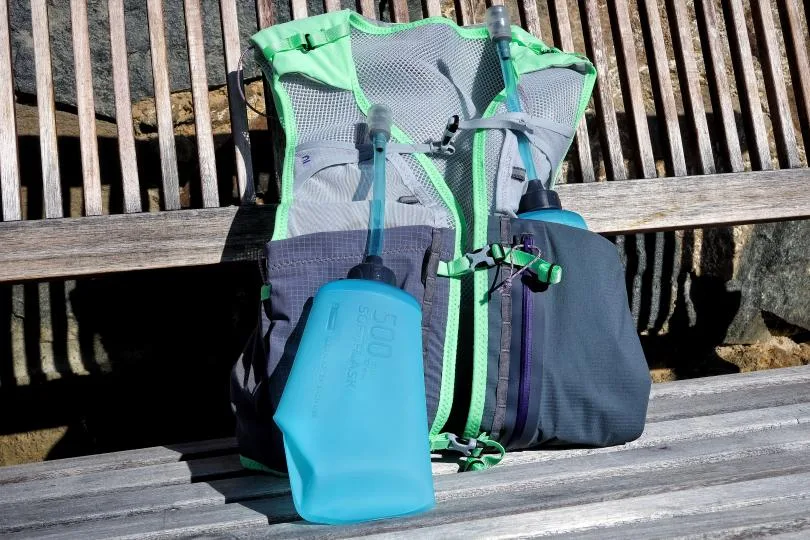
Choosing the right sports drink
For efforts lasting more than 1 hour, I recommend you take along an exercise drink , also known as an isotonic or slightly hypotonic drink. This should consist of :
- Sodium between 500mg and 1150 mg/L of beverage
- Minerals such as magnesium, potassium and B vitamins, particularly B1, which is mandatory in exercise drinks.
- Quality carbohydrates such as a combination of simple carbohydrates (dextrose, glucose, fructose) and complex carbohydrates (maltodextrins) to optimize digestive comfort and limit hypoglycemia. In terms of quantity, we generally recommend a concentration of between 50 and 80g of carbohydrates/L of drink, i.e. an average of between 25 and 40g per 500mL.
- Only for efforts in excess of 4 hours: BCAAs, which are branched-chain amino acids (a component of proteins) that help limit central fatigue during long efforts. An intake of 1 to 2g/h of effort seems sufficient.
There are many energy drinks on the market, and choosing one can be a real headache . First of all, I’d advise you to look at the list of ingredients and choose the drink that’s the shortest to avoid adding additives and preservatives. Some brands, such as Nutripure, Apirun, Meltonic, Naak and Maurten, make a real effort to produce well-balanced, rather “clean” drinks in this respect.
Anticipate!
Comment soutenir La Sportive Outdoor?
L'une des façons de nous soutenir est de faire vos achats via nos sites partenaires.
L'idée n'est évidemment pas de vous pousser à la consommation: n'achetez que ce dont vous avez besoin mais, lorsque vous le faites, passer par nos liens nous aide car nous touchons ainsi une petite commission sans aucun coût supplémentaire pour vous.
Vous pouvez par exemple en ajouter certains en favoris pour vos prochains achats. Pensez à accepter les cookies de nos partenaires dès l’arrivée sur leur site.
- i-Run: jusqu'à -50% pour les Running Weeks
- Ekosport: -20% extra sur les nouveautés rando et bivouac
- Intersport: des offres sur la randonnée (notamment)
- Muule: 15% de promo avec le code VIP15
- Decathlon: pas mal de bons plans
- Lyophilisé&Co: lyophilisés, nutrition sportive et matos de bivouac
Pour plus de façons de nous soutenir, c'est ici.
I strongly advise you to test your nutritional strategy beforehand , so that you adopt the one that suits you best, both in terms of digestion and taste.
In this article, I’ve mentioned a few brands, but there are obviously others that also meet all these quality criteria, so you need to test what suits you best.
A bit like running shoes, some products will suit some people, while others won’t: “you wouldn’t run a marathon in new shoes”.
Solid foods
During your effort, your body primarily uses carbohydrates stored in the form of glycogen to produce energy. As your run becomes longer or more intense, these reserves are depleted, leading to fatigue and a drop in performance.
If your drink is well dosed, it will compensate for some of these losses, but it’s a good idea to consume solid foods to supplement your energy intake and compensate for a certain urge to chew. Once again, your intake should be adapted to your individual needs and tolerance.
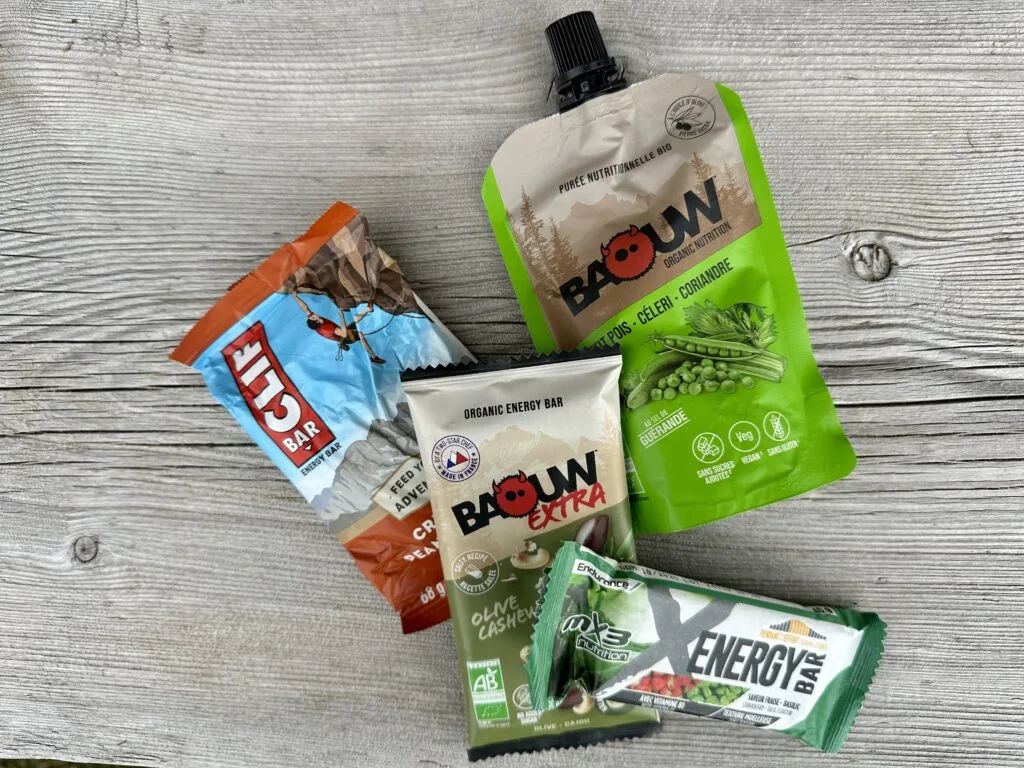
There are many different brands of energy bars and compotes, so it’s important to choose the one you like best in terms of taste , but also the one you can tolerate in terms of digestion. You should also check the list of ingredients to make sure it’s not too long, a sign of the presence of numerous additives.
Also check that it does not contain too much fat (lipids), too little fiber or too much protein, which could slow digestion and disrupt transit.
Read also
In practice, what strategy should you adopt?
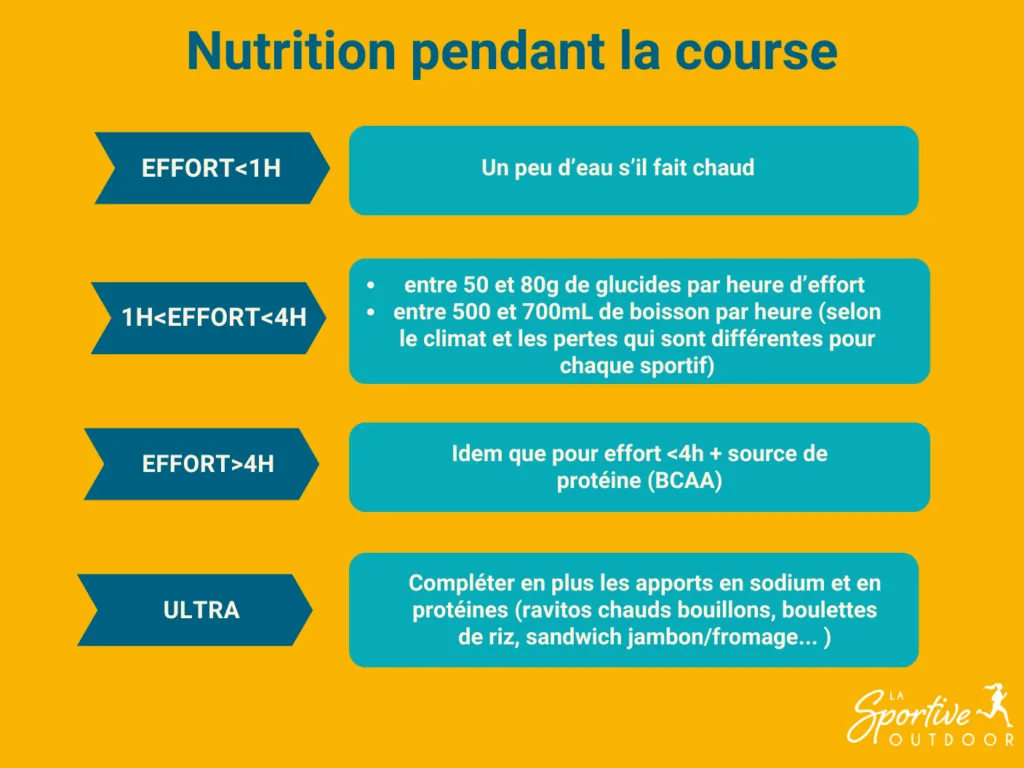
- For efforts lasting less than 1 hour: there’s no need to adopt any particular strategy. Take some water with you if it’s hot and you’re used to drinking.
- For efforts of 1 to 4 hours : on average, you need between 50 and 80g of carbohydrates per hour of effort. These carbohydrates can be provided by your drink (on average 30g) and supplemented by a solid food such as an energy bar (on average 15 to 20g). I advise you to drink as soon as you start exercising, and then regularly in small sips, every 7 to 10 minutes. You’ll generally need between 500 and 700mL per hour, depending on the climate and the losses, which are different for each athlete. Solid intake can also be divided into ½ bar, ½ compote every 20 to 30 minutes on average.
- For efforts over 4 hours: you can adopt the same strategy as above, but include a source of protein, in particular BCAAs. To do this, you can choose an energy bar or compote containing between 2 and 5g of BCAAs, to be consumed every 2 hours on average. Some brands, such as Naak, Baouw or Meltonic, offer products adapted to longer efforts and increased BCAA requirements.
- For ultra-trailers, I also recommend hot meals with broth, rice balls or ham and cheese sandwiches, which can supplement your sodium and protein intake.
In short, proper nutrition and hydration during the race help to maximize your performance, prevent complications such as cramps or dehydration, and ensure optimal recovery after exercise.
Bibliography
- Burke, Louise M., et al. Contemporary Nutrition Strategies to Optimize Performance in
- Distance Runners and Race Walkers. Mar. 2019, https://doi.org/10.1123/ijsnem.2019-
- 0004.
- Burke, Louise M., et al. “Carbohydrates for Training and Competition.” Journal of Sports
- Sciences, vol. 29, no. sup1, Jan. 2011, pp. S17-27, https://doi.org/10.1080/02640414.2011.585473
- Asker Jeukendrup: “The optimal ratio of carbohydrates”. Available at https://www.mysportscience.com/post/the-optimal-ratio-of-carbohydrates