


My 7 tips for preparing your first ultra bike race

While the challenge of a long-distance cycling event may seem intimidating at first, serious preparation enables you to tackle this first ultra-cycling experience with peace of mind. Between physical and mental training, choice of equipment, effort management and food strategy, every aspect plays a key role. I'd like to share with you my advice on how to turn this event into a successful adventure!
1. Choosing the race
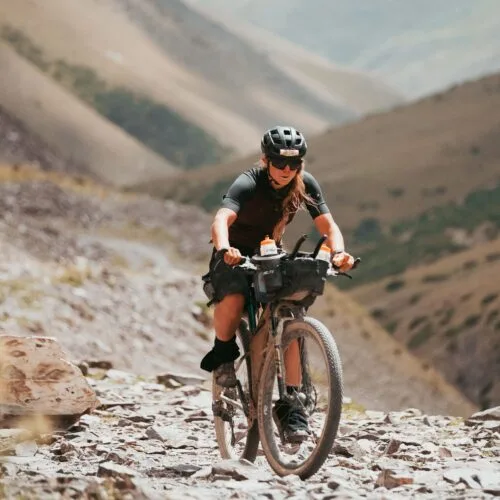
The first step is to choose your event, taking into account both your aspirations and your abilities. Choose an event that motivates you and makes you dream, while remaining achievable with your current level and available training time. Factors to take into account include distance, altitude difference, terrain, climate and isolation. Some events also require you to plot your own route between checkpoints, so take this extra preparation time into account.
It’s best to start with shorter events and gradually increase the distance and difficulty, as the experience will be all the better for it. Road races are often logistically more accessible: access to refreshments, accommodation and repairs in the event of equipment problems is easier. On the other hand, gravel and mountain bike formats are generally more isolated and demanding, both for the body and the equipment. So it’s best to venture out only after you’ve gained more experience.
Many races offer refreshment and accommodation solutions at checkpoints, but some, like the Race Across France, also allow you to drop off a bag beforehand, providing additional material security. This option can therefore be a good starting point for a beginner, making it easier to manage equipment and autonomy.
A race at an affordable price, with a good atmosphere, on superb quiet roads in the Auvergne and with a great organization that I recommend for a first experience is theUltr’Arverne des Copains-Cyfac.
The budget
The entry fee for an ultra event varies according to distance, reputation and level of organization, generally ranging from €100 to €500. Added to this are ancillary expenses, such as transport to the race venue, any accommodation on the course and the purchase of specific equipment for the event.
Comment soutenir La Sportive Outdoor?
L'une des façons de nous soutenir est de faire vos achats via nos sites partenaires.
L'idée n'est évidemment pas de vous pousser à la consommation: n'achetez que ce dont vous avez besoin mais, lorsque vous le faites, passer par nos liens nous aide car nous touchons ainsi une petite commission sans aucun coût supplémentaire pour vous.
Vous pouvez par exemple en ajouter certains en favoris pour vos prochains achats. Pensez à accepter les cookies de nos partenaires dès l’arrivée sur leur site.
- i-Run: jusqu'à -50% pour les Running Weeks
- Ekosport: -20% extra sur les nouveautés rando et bivouac
- Intersport: des offres sur la randonnée (notamment)
- Muule: 15% de promo avec le code VIP15
- Decathlon: pas mal de bons plans
- Lyophilisé&Co: lyophilisés, nutrition sportive et matos de bivouac
Pour plus de façons de nous soutenir, c'est ici.
2. Define your goal
The second step is to define your objectives. There are two types of objective: results-based and performance-based:
- An objective result is, for example, a ranking (top 10) or victory in your category. This can be motivating and encourage you to surpass yourself, but it can also lead to disappointment if you don’t achieve it, as it doesn’t depend solely on you. What’s more, it can be complicated to determine where you stand when you’re a first-time ultra racer, so I recommend focusing on the performance objective first.
- A performance objective can be a time objective over a specific distance or to improve one’s time over a course. Its success depends essentially on individual performance. So it’s a good idea to have at least one performance objective and possibly a secondary result objective.
To increase your chances of success, your goals should be ambitious but realistic, time-bound and quantifiable, and you should avoid goals that are too vague.
The goal “I want to take part in a long-distance race” will then become “I want to finish the Race Across France 1000km in 4 days“. This is an ambitious but achievable goal for someone who is new to long-distance cycling, but who already has a few years of cycling behind her and is well trained. With the date of the race set, the objective is defined in time and quantifiable, since you have to ride 250km a day to reach it.
A final type of objective is theprocess objective. These are the intermediate steps to be taken during training. These are specific actions to be implemented in order to progress, refine your skills and maximize your chances of success on race day. This may involve improving endurance, working on carbohydrate absorption on the bike, or concentration.
Setting goals is essential for maintaining motivation throughout your preparation and keeping track of your progress. Write them down on a post-it note and place it where you can see them every day, to keep you focused on your ambitions.
3. Physical training
Now that your goal has been set, it’s time to move on to the fun part: training!
But beware: theexcitement of starting out can lead you to do too much too quickly, with the risk of injury. The key to good preparation is regularity and progressiveness. It’s better to do several short outings during the week than one very long one at the weekend.
Endurance, however, remains the basis of all long-distance preparation. You need to get your body used to sustaining prolonged effort, often at low intensity, while optimizing the use of energy reserves. To achieve this, it’s essential to gradually increase the volume of training by incorporating long outings, up to 6 hours in a row, at least once a week.
But preparing for a long-distance race doesn’ t just mean racking up the hours in the saddle. A good training plan must also include split sessions to improve power and resistance to muscular fatigue, as well as recovery periods to allow the body to assimilate the training and avoid excessive fatigue which can lead to injury. You can refer to the article on training for a cyclosportive (in progress!). Ultra training will be much the same, but will include more long, low-intensity rides.
How do you structure a split session?
A split session consists of three phases:
- a gradual warm-up
- cycles alternating targeted effort and recovery, and
- a return to calm.
For example, to work on muscular endurance and resistance to fatigue, you can plan a session as follows:
- start with a 10-minute warm-up, gradually increasing the intensity.
- Link up three 10-minute repetitions of sustained effort, above your aerobic threshold, followed by 5 minutes of active recovery.
- Finally, finish with 10 minutes of relaxation to promote muscle recovery.
It’s also a good idea to include one or two muscle-strengthening sessions a week, especially for the upper body. Sheathing and strengthening the back, shoulders and arms helps prevent premature fatigue, distributes forces more evenly during exercise and helps avoid lower back and neck pain by maintaining good posture on the bike.
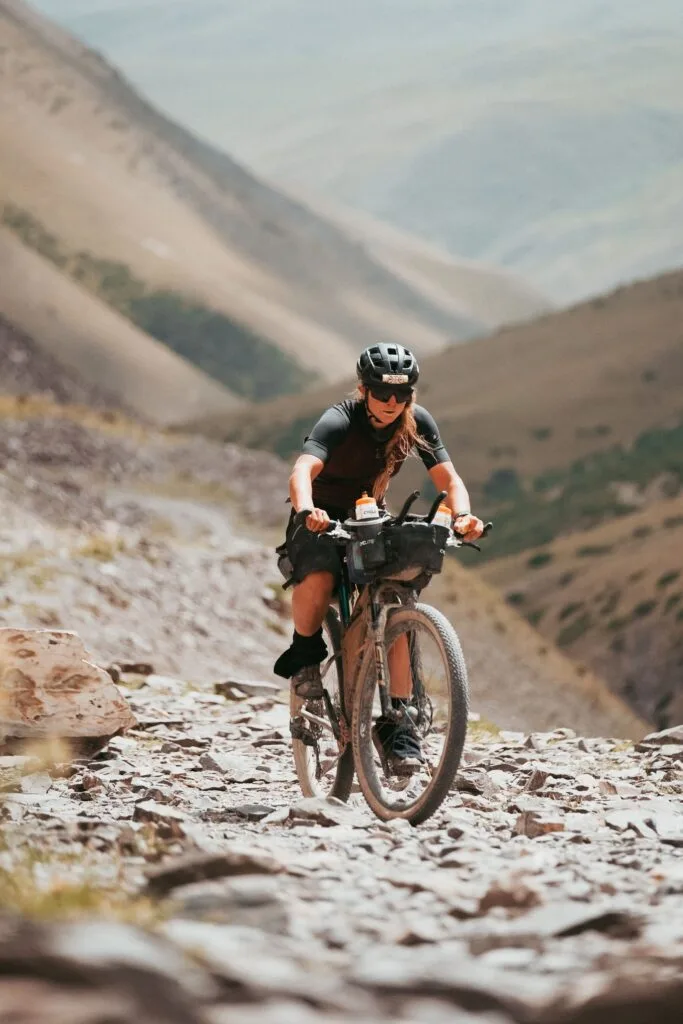
Training should also include specific outings that reproduce race conditions. You can simulate portions of the event by riding at night, in the rain, or by riding several days in a row, to better understand the challenges of D-day. If the route includes portaging, you can also train for this constraint.
Plan training weekends on terrain with a similar mileage/climb ratio to your event, using the same equipment. Take advantage of these outings to test your equipment and nutrition, so you can adjust your choices and avoid unpleasant surprises on race day. Pay particular attention to recovery after these sequences, as they lead to considerable physical fatigue, and these rest phases will allow your body to adapt and come back stronger.
It’s also essential to approach the event with a rested mind and a fit body. To this end, plan a week of recovery before the event. This doesn’t mean doing nothing, but reducing your training volume by half and concentrating on a healthy lifestyle. The two most important pillars of good recovery are sleep and nutrition. You can also practice relaxation exercises or self-massages.
If you’re looking for personalized support to help you plan your training around your constraints and lighten your mental load, hiring a coach can be an excellent option for optimizing your preparation. I offer my services on the Nolio platform, so don’t hesitate to contact me to discuss your needs.


4. Mental preparation
A long-distance cycling event is as much a physical challenge as a mental one. The body can go very far, but it’s the mind that guides it, and just like the body, the mind has to be prepared.
To this end, training in real-life conditions also helps to reinforce the ability to manage moments of mental fatigue. The aim is to get used to dealing with unforeseen situations and getting out of your comfort zone. You can ride in difficult conditions such as rain, cold, night, heat or wind to develop your mental stamina. However, there’s no need to push yourself to the limit on every outing: preserving the pleasure of riding remains essential so as not to compromise your motivation in the long term.
Even with meticulous planning, elements such as the weather, mechanical breakdowns or aches and pains can be beyond our control. It’s therefore important to remain flexible and adapt to the hazards that can arise on the road, but if you have an established plan of action for each situation, you’ll be able to tackle these challenges more serenely and effectively.
Long distances test motivation and patience. There will be difficult moments when you want to give up, and that’s where your resilience comes in. To overcome pain and fatigue during the race, it’s essential to find positive resources. Learn to accept these moments, focus on the scenery, remember the motivations that drove you to take on this challenge and think about the final goal and the sense of pride you’ll feel when you’ve overcome this ordeal.
To avoid being overwhelmed by discouragement, you can also set yourself intermediate goals, such as reaching the next bakery where you’ll enjoy your favorite pastry. By focusing on these small steps, the challenge becomes more affordable, and the rewards help to keep you motivated.
In short, mental preparation is just as important as physical preparation. By anticipating the unexpected, learning to manage moments of doubt and building your resilience, you’ll be ready to overcome the odds and achieve your goal, whatever comes your way.
5. Nutrition and hydration
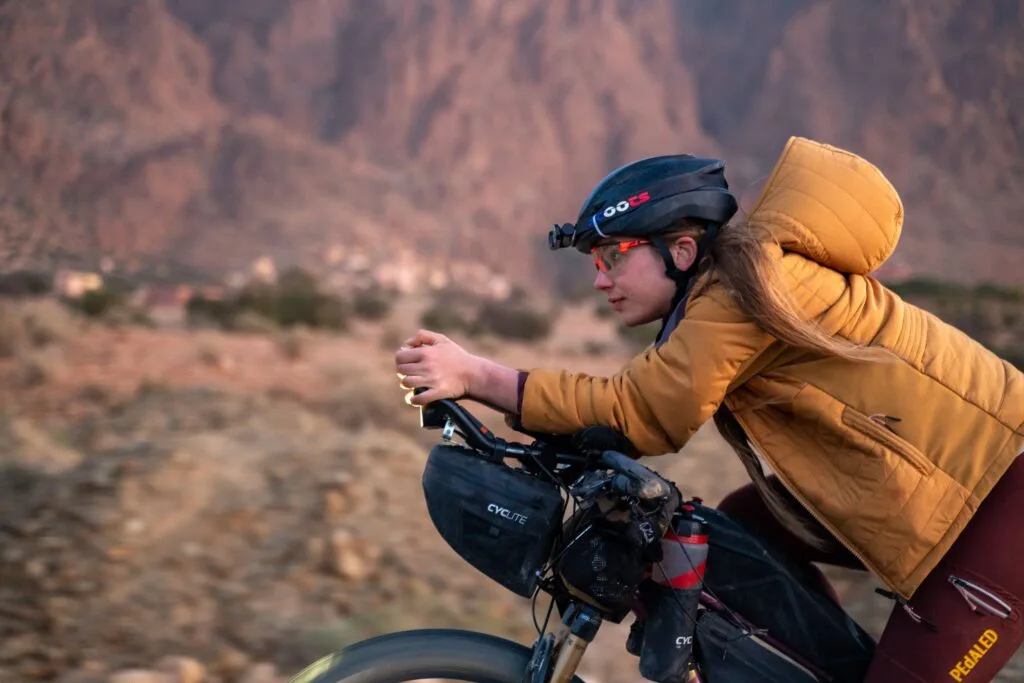
During a long-distance cycling event, nutrition plays a key role in preserving your energy and maximizing your performance. Your body needs a regular supply of calories and nutrients to maintain a high level of performance.
Carbohydrates are the main source of energy your body needs, enabling you to maintain your level of effort without depleting your glycogen reserves too quickly. It is recommended to consume at least 60g of carbohydrates per hour. Havea look at Alice’s article on running nutrition (which concerns trail running but also applies to cycling).
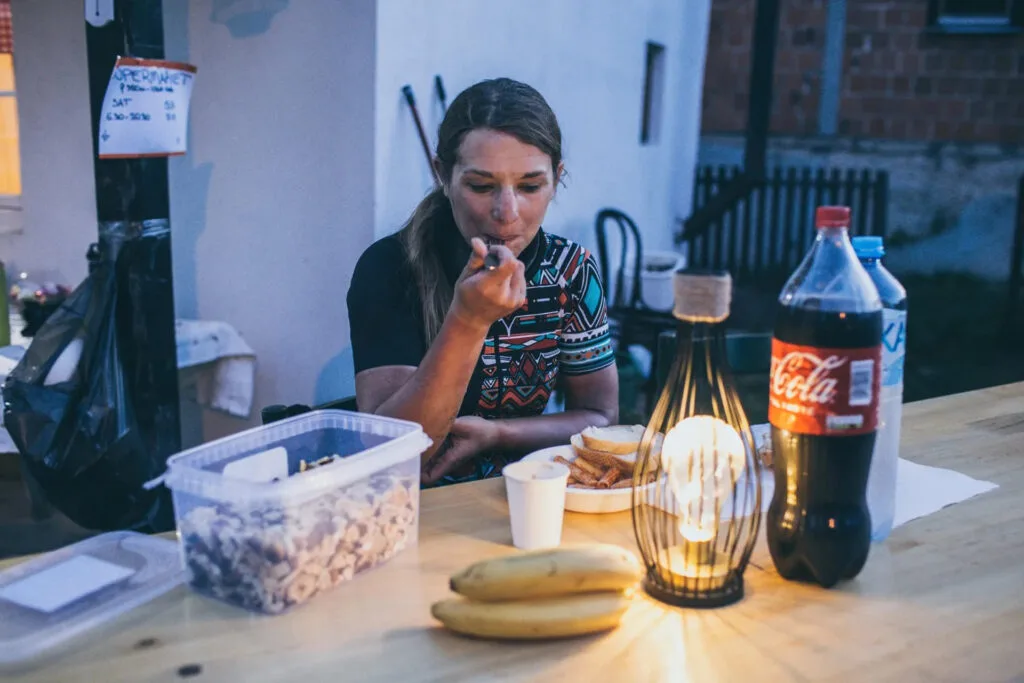
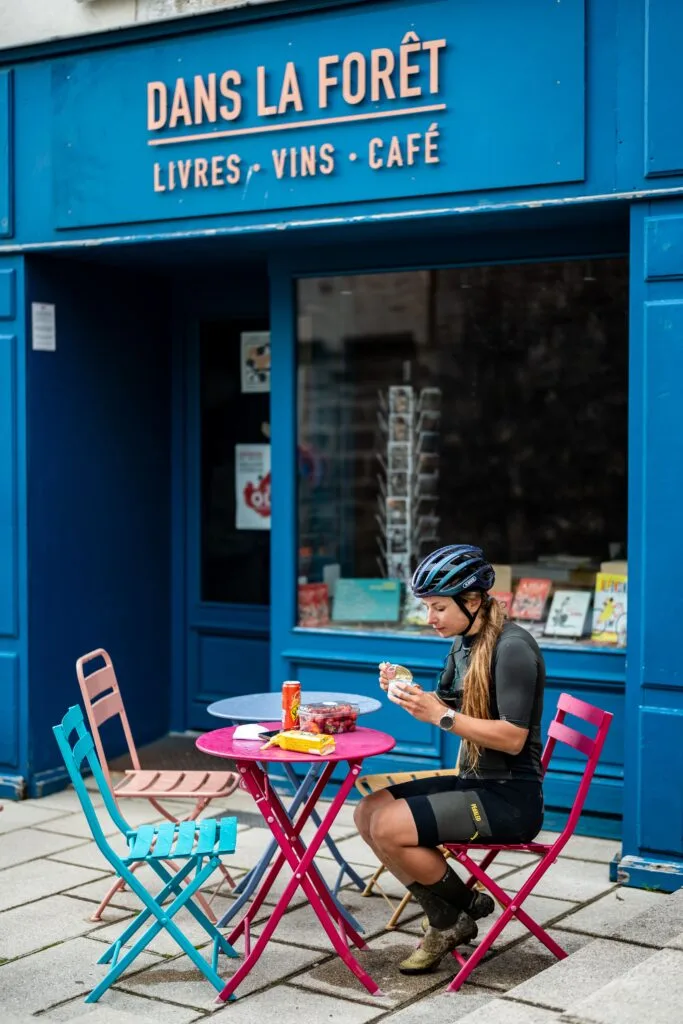
Eat regularly in small quantities , alternating between sweet and salty foods to avoid saturation. Salty foods are particularly important to compensate for sodium loss through perspiration and prevent dehydration.
Hydration is just as essential, especially in hot weather. Electrolytes, such as sodium, potassium and magnesium, are crucial to maintaining your body’s water balance. Consider adding electrolyte tablets to your water, or opt for isotonic drinks, which combine both hydration and energy. These drinks also provide more carbohydrates while reducing the risk of digestive upsets.
In ultra, you’ll have to deal with the resources available on the course, which won’t always be optimal. Find out beforehand and test different foods and drinks during your long rides to determine what suits you best. Every cyclist has different food preferences and digestive tolerances.
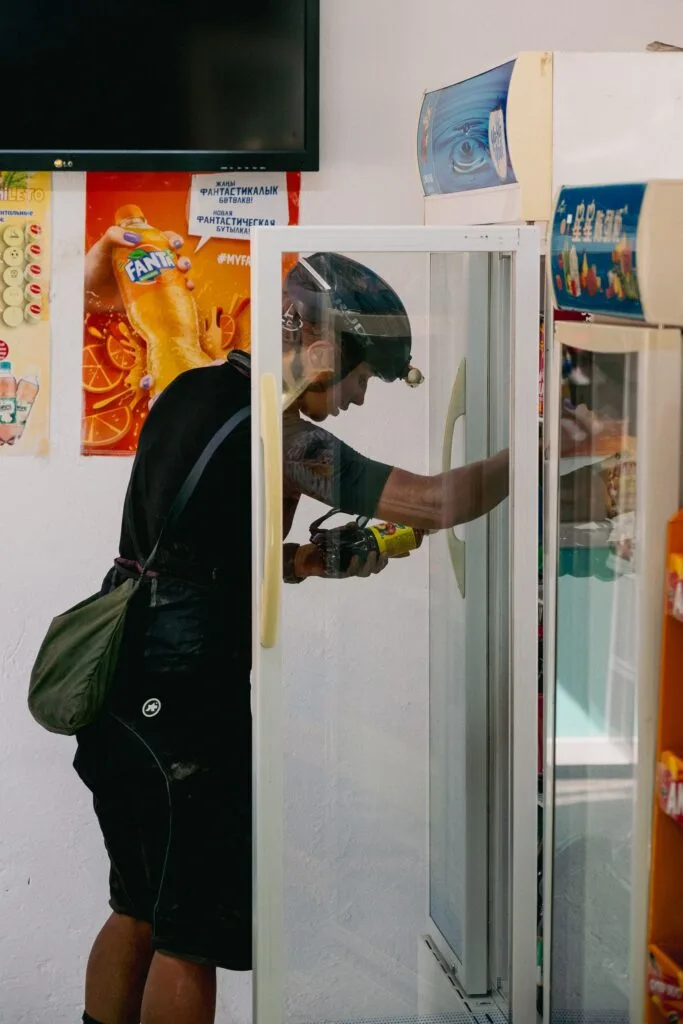
It’s also essential to manage your food stock to avoid being caught short, especially before nightfall or in isolated areas. Try to always have some food on hand, and identify the refreshment points on your route and their opening times. Gas stations, which are open at more flexible times, can be an excellent alternative for quick refueling.
Don’t forget that the mental dimension of eating is just as important. Eat things you enjoy to keep your spirits high. In any case, it’s difficult, if not impossible, to cover all the calories you’re going to burn during a long event, so now’s not the time to count calories.
6. Equipment and logistical preparation
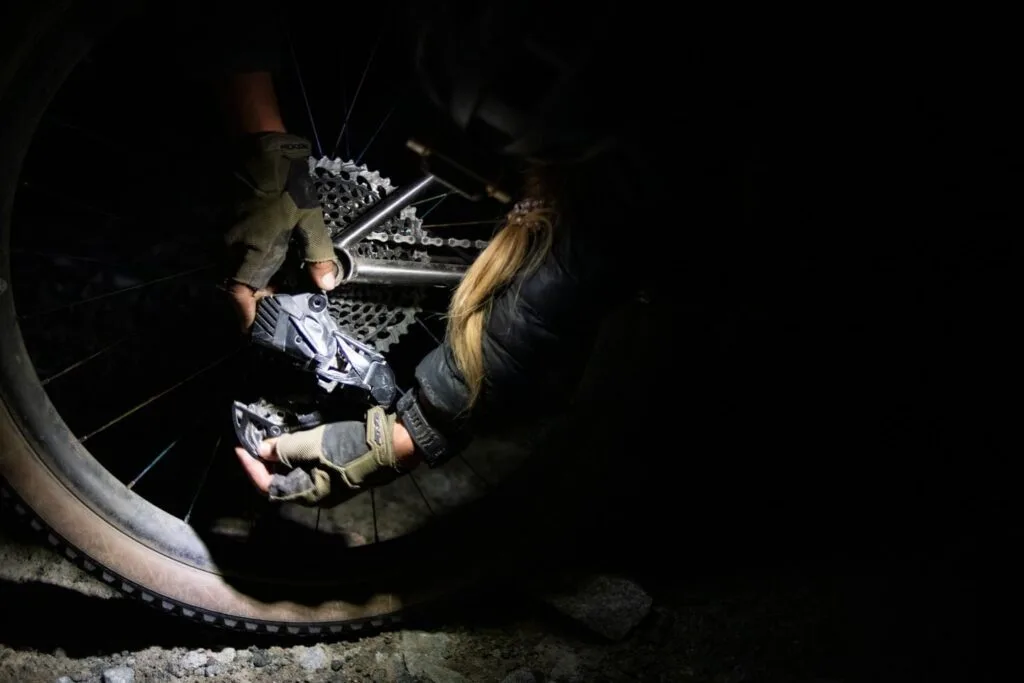
Before you set off, make sure your bike is in perfect working order. A complete overhaul at your local bike shop will allow you to replace worn parts and prevent breakage. But even with a well-prepared bike, equipment is put to the test on such events, and mechanical glitches are always a possibility: take along a repair kit and learn basic repairs, such as changing an inner tube or fitting a quick link.
Spending hours or days in the saddle calls for a comfortable, efficient posture. A postural study carried out several months before the event can be a good investment to avoid pain and injury. Nerve compression is common in ultra-sports, particularly carpal tunnel syndrome, caused by prolonged pressure on the hands. Extenders can limit these strains by allowing you to vary your support and take the strain off your back, shoulders and hands. Likewise, a well-chosen saddle and cycling shorts adapted to your morphology are essential to avoid crotch pain.
Adapting your tires to the terrain is essential. Slightly reduced pressure absorbs vibrations better and improves comfort, which in turn translates into better performance over time.
When it comes to gearing, opt for a gear ratio that’s easy enough to handle. As fatigue accumulates, it becomes more difficult to maintain a high cadence. The right gearing will help you manage long climbs and preserve your legs over time.
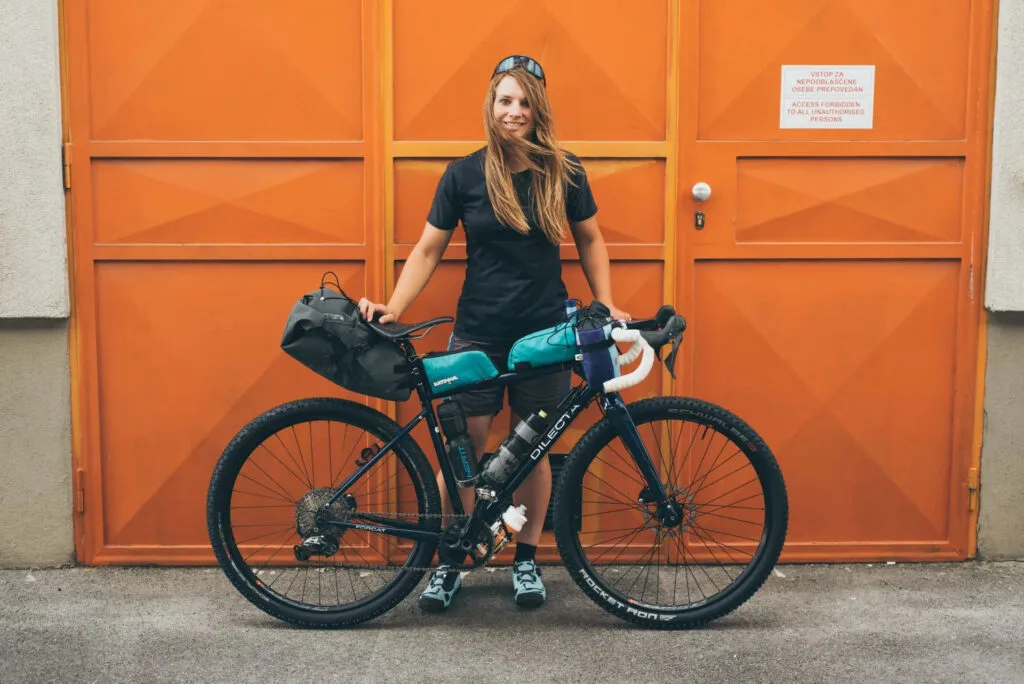
The equipment you take with you on the bike will depend on the format of the event and your objectives. Depending on whether you plan to bivouac or sleep in a hotel, the climate and isolation of the route will influence your choice of equipment. For inspiration, check out the configurations used on similar races, for example on bikepaking.com.
As mentioned in the paragraph on training, it’s essential to train with all your equipment. If your event includes night sections, check the power and autonomy of your lighting. Ride with your panniers to get used to the extra weight and find the right weight distribution for good stability. A handlebar pannier can affect handling, while a saddlebag can create a pendulum effect. Also remember to organize your belongings in a practical way so that you have quick access to the things you need on a regular basis. Knowing exactly where everything is will save you time during stops.
Find out in advance about refreshment points, possible accommodation and the main difficulties of the route. This will help you set off calmly, make it easier to deal with unforeseen circumstances and plan and check your progress.
Finally, effort management is essential. Don’t get carried away by the adrenalin at the start. It’s best to set off cautiously, even if it means being overtaken by faster competitors. Many of them will pay for their excesses, and you’ll find them again the very next day!

7. Managing sleep
Not sleeping doesn’t train. So it’s crucial to arrive rested before the race. Ultra cyclists have long advocated all-nighters, but lack of sleep has many adverse effects, including reduced thermoregulation, reduced alertness, loss of balance, loss of lucidity, hallucinations and even the risk of falling asleep on the bike. Athletes are now tending to sleep more to help their bodies and minds recover better, so they can get on the bike faster and be more lucid when making decisions.
Sleep time will depend on the individual, but will tend to increase with the length of the race. While it’s possible to take only micro-naps for up to 3 days of racing, it’s advisable to allow yourself several hours of sleep a day for longer races. You can incorporate a sleep routine or relaxation techniques such as meditation to fall asleep quickly and optimize your rest periods. If you’re feeling tired but need to push yourself a little further, for example to reach a hotel, there are a few tricks you can use to combat temporary drowsiness: a dose of caffeine, a sugar shot or even singing to stay awake.
Finally, you’ll have to choose between sleeping outdoors or in a hotel, each of these options having its advantages and disadvantages. Spending the night outdoors offers great flexibility, allowing you to stop almost anywhere, but sleep is often less restful. Hotels, on the other hand, offer greater comfort, with the possibility of showering and recharging, but they are more expensive and can be time-consuming. Opting for this solution also allows you to lighten your luggage, although it is advisable to have a minimum of equipment to be able to sleep outside in case of unforeseen circumstances.

Conclusion
In ultra racing, every detail is important: successful preparation relies as much on physical and mental training as it does on good diet management and the right choice of equipment. This will make all the difference between enduring the event and making the most of your first long-distance experience. You now have all the keys you need to make a success of your first ultra bike race, and good luck with your preparations!