
Listen to your female body when you exercise with Blandine L’Hirondel

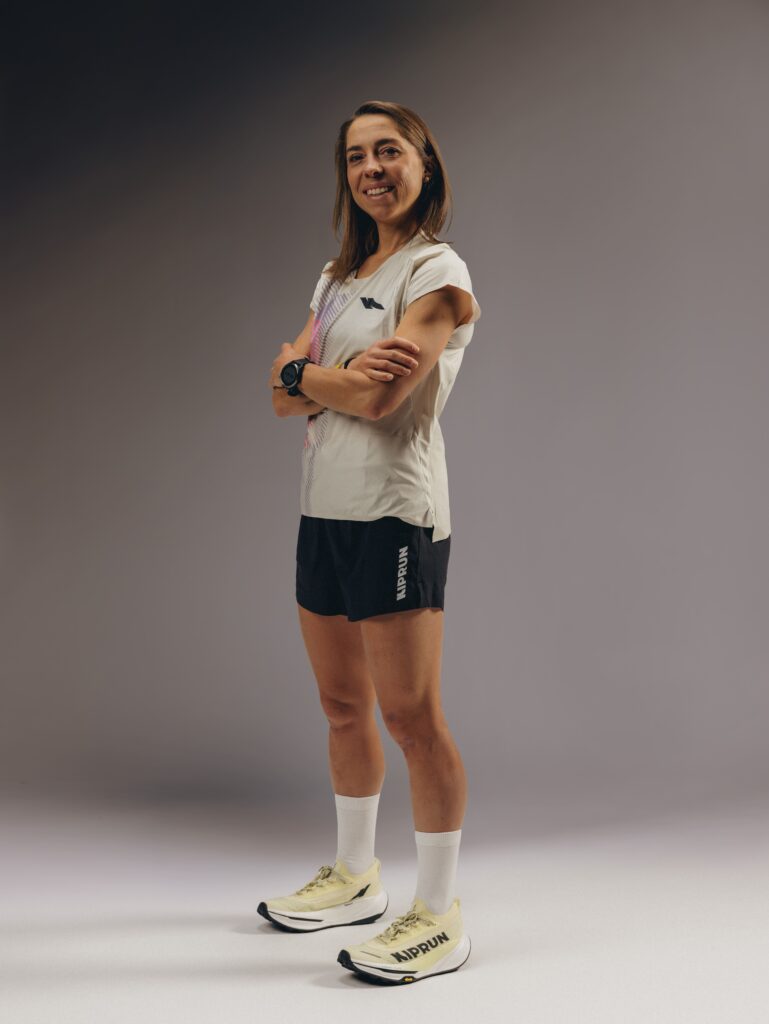
In this episode of the podcast La Sportive Outdoor, I welcomed Blandine L'Hirondel, elite traileuse and gynecologist at the head of the Instagram account "La gynéco sportive", which popularizes scientific knowledge related to the health of sportswomen.

Watch the video interview
Listen to the podcast
Episode summary
In this new episode of the podcast La Sportive Outdoor, we welcome a guest with an exceptional profile: Blandine L’Hirondel. At nearly 35, she combines a career as a top-level trail and ultra-trail athlete with her work as a gynecologist. Through her Instagram account, “La Gynéco Sportive”, she is committed to lifting taboos and popularizing the science around sportswomen’s health. .
A trail between paths and doctor’s surgery
Blandine L’Hirondel always knew she would become a doctor. She decided to specialize in obstetrics and gynecology, a comprehensive medical and surgical specialty that enables her to follow her patients over the long term, and to perform surgery, ultrasound and even imaging. . Paradoxically, it was only during her specialist studies that she discovered sport and trail running..
In developing this dual expertise, she noted a major gap in medical training concerning the specificities of women athletes.. In response to the distress felt by many women, and to convey a global message, she created her informative account, where she shares reviews of scientific literature..
RED-S syndrome: a little-known warning sign
One of the major issues addressed isamenorrhea (absence of menstruation), which affects many sportswomen as a result of intensive training or inadequate nutrition. Blandine points out that the absence of menstruation is the extreme point of the RED-S syndrome (Relative Energy Deficit in Sport).
She compares the human body to a telephone in power-saving mode: when energy is low, the body pauses non-vital functions such as ovarian activity to preserve the brain and heart.. This syndrome has serious long-term consequences:
- Bone health: Bone fracture (osteopenia or osteoporosis) can lead to stress fractures.
- Cardiovascular health: Increased risk of hypertension and heart disease due to lower estrogen levels.
- Mental health: mood disorders, depressive syndromes and chronic fatigue.
- Performance: Repeated muscular injuries, frequent infections and unexplained drop in sporting performance.
Cycle training?
Blandine points out that, according to the most recent meta-analyses, there is no proven benefit in systematically organizing your training according to the phases of your menstrual cycle. However, certain physiological variations deserve special attention:
- Ovulation: The estrogen peak can increase ligament laxity, almost doubling the risk of cruciate ligament rupture in pivot sports.
- Luteal phase (before menstruation): Progesterone promotes muscle rigidity, which can increase the risk of stretching or tearing.
- Contraception: The pill often masks the possibility of RED-S, as the bleeding observed is not “real” menstruation, but hormone-deprivation menstruation.
Pregnancy, postpartum and menopause: staying in motion
Contrary to popular belief, sport is not harmful to the fetus. It is even beneficial in reducing the risk of gestational diabetes or pre-eclampsia, and promotes the child’s neurocognitive development.
Comment soutenir La Sportive Outdoor?
L'une des façons de nous soutenir est de faire vos achats via nos sites partenaires.
L'idée n'est évidemment pas de vous pousser à la consommation: n'achetez que ce dont vous avez besoin mais, lorsque vous le faites, passer par nos liens nous aide car nous touchons ainsi une petite commission sans aucun coût supplémentaire pour vous.
Vous pouvez par exemple en ajouter certains en favoris pour vos prochains achats. Pensez à accepter les cookies de nos partenaires dès l’arrivée sur leur site.
- i-Run: jusqu'à -50% pour les Running Weeks
- Insta360: de (très) grosses promos sur plein de caméras sportives pour les French Deals
- Ekosport: -20% extra sur les nouveautés vélo de route et VTT
- Intersport: des offres sur la randonnée (notamment)
- Muule: 15% de promo avec le code VIP15
- Compressport: 10% de réduction avec le code WELCOME-COMPRESSPORT-26
- Decathlon: pas mal de bons plans
- Lyophilisé&Co: lyophilisés, nutrition sportive et matos de bivouac
Pour plus de façons de nous soutenir, c'est ici.
For the postpartum period, Blandine encourages a gradual return to work, based on listening to symptoms (pain, pelvic heaviness) rather than the strict six-week period often recommended in France.. She also stresses the importance of nutrition during breastfeeding to avoid stress fractures due to calcium deficiency..
Finally, to tackle menopause, the gynecologist recommends weight training and a high protein intake (up to 2.6 or 3 g/kg of body weight) to maintain muscle mass and protect bones..
Conclusion
Blandine L’Hirondel’s final message is one of confidence: the female body and its hormonal variations are a strength, not a weakness. She encourages all women to practice the activity that brings them joy, while remaining attentive to warning signals to preserve their health over the long term.