


Adapting sports training to the female menstrual cycle
Adapting your training to your menstrual cycle means first and foremost understanding it and understanding what works for you. Here, I present some theoretical advice, which should not be strictly applied, but rather taken into account and adapted to each woman's specific needs.
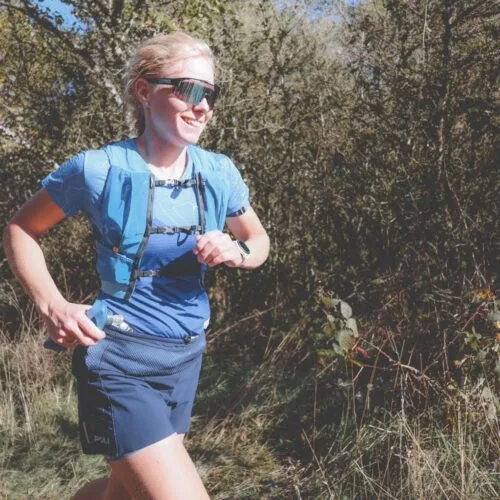
Reminder – The menstrual cycle
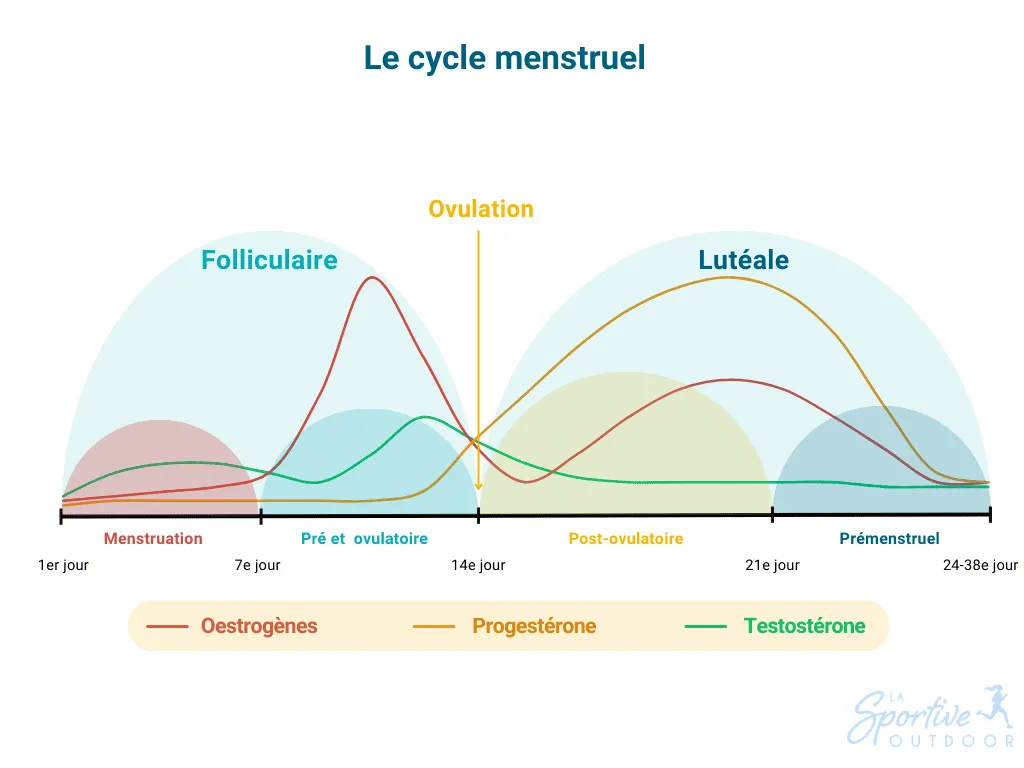
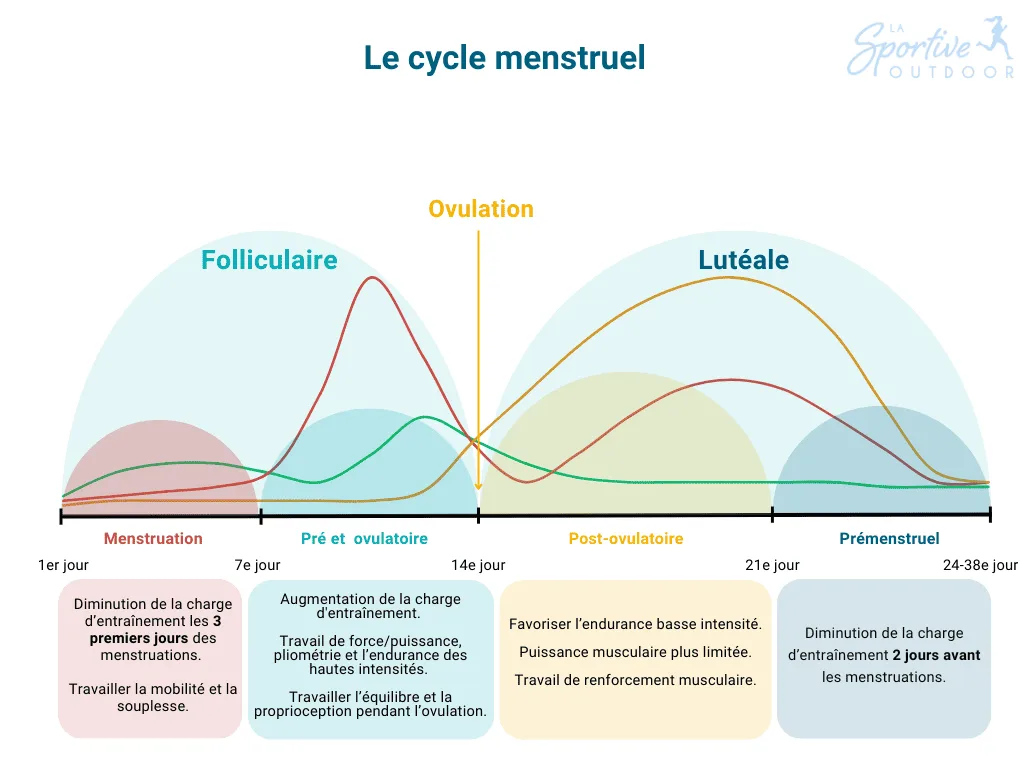
The menstrual cycle is made up of 2 phases: the follicular phase and the luteal phase, separated by ovulation. These 2 phases can be divided into 2 sub-phases, with menstruation and the pre-ovulatory and ovulatory periods in the follicular phase. Then the post-ovulatory and premenstrual periods of the luteal phase.
We’re particularly interested in three hormones: estrogen, progesterone and testosterone, which are involved in the functioning of the menstrual cycle. For more details, see my detailed article on the subject.
We’re all different!
In the rest of this article, I’ll give you some theoretical advice on hormonal changes. However, it’s up to each of you to adapt your training and implement what you feel is right for you.
Training during menstruation
From the first day of menstruation, hormones are at their lowest. The various menstrual symptoms (pain, fatigue, etc.) may be present and are specific to each woman. During this period, it’s important to pay attention to your iron levels, due to blood loss.
When it comes to sports, it’s important to pay attention to how you feel and how you perceive effort. It is advisable to reduce your training load during the first 3 days of menstruation, when symptoms are present. However, it’s a good idea to keep up a light level of endurance physical activity, which for some women helps to reduce symptoms and make it easier to cope with this difficult period of the cycle. Don’t hesitate to work on mobility and flexibility too.
Comment soutenir La Sportive Outdoor?
L'une des façons de nous soutenir est de faire vos achats via nos sites partenaires.
L'idée n'est évidemment pas de vous pousser à la consommation: n'achetez que ce dont vous avez besoin mais, lorsque vous le faites, passer par nos liens nous aide car nous touchons ainsi une petite commission sans aucun coût supplémentaire pour vous.
Vous pouvez par exemple en ajouter certains en favoris pour vos prochains achats. Pensez à accepter les cookies de nos partenaires dès l’arrivée sur leur site.
- i-Run: jusqu'à -50% pour les Running Weeks
- Ekosport: -20% extra sur les nouveautés rando et bivouac
- Intersport: des offres sur la randonnée (notamment)
- Muule: 15% de promo avec le code VIP15
- Decathlon: pas mal de bons plans
- Lyophilisé&Co: lyophilisés, nutrition sportive et matos de bivouac
Pour plus de façons de nous soutenir, c'est ici.

Training during the pre-ovulatory and ovulatory phases
During this period, estrogen and testosterone levels rise. Our energy levels are at their highest. Our strength and endurance are enhanced and our psychological state is very positive for training.
Estrogens:
- Better calcium retention, helping to maintain bone density.
- Contributes to healthy tendons and ligaments.
- Increases ligament flexibility.
Watch out for flexibility!
Beware, this flexibility can more easily lead to injuries and sprains.
In terms of metabolism, estrogen not only enhances muscle glycogen storage (glucose stored in the muscles), but also promotes glycogen and fat utilization during exercise. Glycogen is the energy source we will use first. This energy source is limited by our reserves.
When glycogen is no longer available, our bodies draw energy from fat , which is found in greater quantities in women. Our body fat percentage then becomes an asset for physical effort, and especially for endurance efforts.
In this phase, the training load can be increased. Work on strength/power, plyometrics and high-intensity endurance. These sessions will be well accepted. During ovulation, we recommendadding balance and proprioception work to compensate for lax ligaments and tendons.
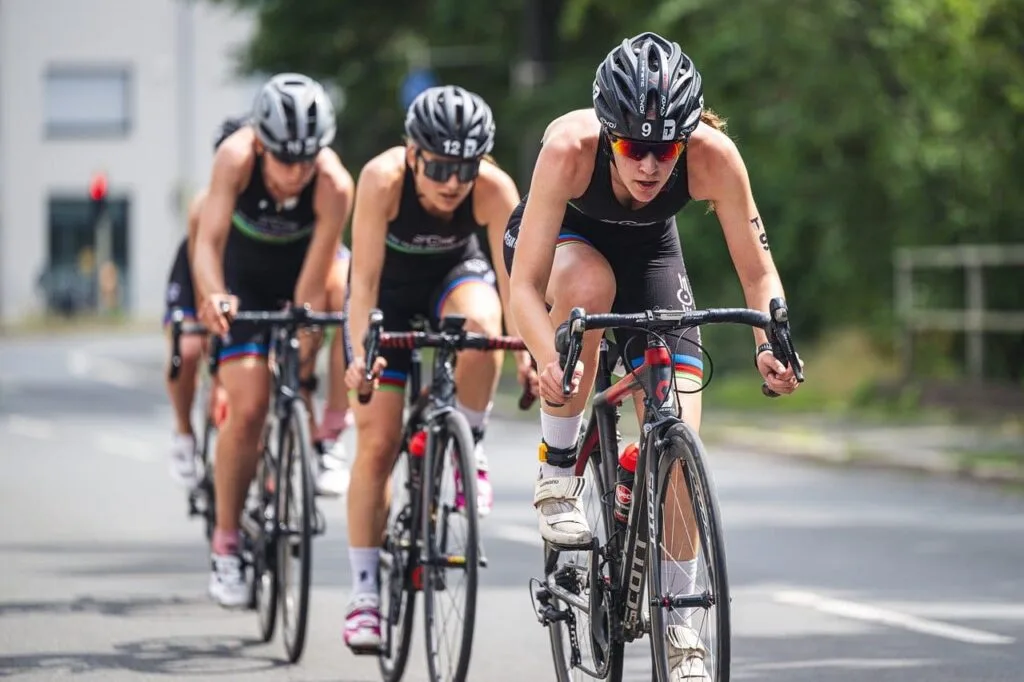
Post-ovulation training
At the moment of ovulation, the levels of the various hormones decrease. Then, during the post-ovulatory luteal phase, estrogen levels rise again, as do progesterone levels. This is a phase of calm and concentration, due to the increase in progesterone levels.
During this phase, the high concentration of progesterone in the middle of the luteal phase may have counteracted the benefits of estrogen and led to poorer performance. Progesterone increases resting body temperature, heart rate and respiratory rate. This has the following consequences:
- Rising body temperature leads to a disturbance in the sensation of heat
- Increased heart and respiratory rates may lead to greater fatigue or slight difficulty in exerting physical effort.
- This leads to changes in effort management.
Progesterone has an impact on body fluid balance, promoting water and sodium retention. This can lead to a feeling of swelling or weight gain, as the plasma volume circulating in the body may appear reduced due to the redistribution of fluids. It is therefore important to stay well hydrated during this phase of the cycle.
During this phase, you can opt for low-intensity endurance. Your muscular power will be more limited and high-intensity sessions less acceptable. Do some muscle-strengthening work to compensate for the potentially negative effects of progesterone on muscular performance.

Training during the premenstrual phase
The pre-menstrual phase is characterized by a drop in hormones and the appearance of pre-menstrual symptoms. We are in a negative psychological state during the pre-menstrual phase.
From a sporting point of view, it is recommended, depending on the individual woman, to reduce the training load 2 days before menstruation. This is the time when pre-menstrual symptoms start to appear. However, it’s a good idea to keep up a light level of endurance physical activity, as during menstruation. For some women, this helps to reduce symptoms and make it easier to cope with this difficult period of the cycle.

What impact does the cycle have on sports performance?
Today, very little data has been published on the influence of the menstrual cycle on aerobic or anaerobic exercise. Much remains to be studied in this field, but here are a few elements:
- On anaerobic power efforts, which are short, very intense efforts (from a few seconds to around 2 minutes of effort), hormonal changes in the menstrual cycle do not seem to influence performance.
- On the other hand, duringmaximal aerobic endurance efforts, which are characterized by prolonged, high-intensity efforts, generally sustained for 20 to 60 minutes (such as a 10 km race), there may be an impact on performance in the middle of the luteal phase.
- Several studies have also shown that the regulation of the autonomic nervous system (part of the nervous system responsible for the involuntary regulation of bodily functions) is altered during the menstrual cycle.Resting heart rate increases and HRV (heart rate variability) decreases throughout the menstrual cycle.
HRV as a monitoring tool
HRV is a measure of the fluctuation in time between heartbeats. It reflects the balance between the sympathetic and parasympathetic nervous systems, and is often used as an indicator of cardiovascular health and autonomic regulation.
- A high HRV is generally associated with better physical and mental health, indicating an ability to adapt to stress and recover.
- Low HRV can be linked to increased stress, health problems or lack of recovery.
It is increasingly used by trainers as a tool for monitoring general fitness.
What impact does the cycle have on injuries?
- The data show that muscular and tendinous lesions can occur approximately twice as often in the days preceding ovulation, although the link with changes in muscular-tendinous stiffness has not been demonstrated. There is, however, an increase in tendon and ligament laxity around ovulation and during the luteal phase.
- Hormones influence the response to muscle damage for up to 72 hours post-exercise.
- Another important point is that the energy deficiency known as RED-S (Déficit Energétique Relatif dans le Sport) increases the risk of injury for sportswomen.
Summary diagram
Bibliography
- Brar, T. K., Singh, K. D., & Kumar, A. (2015). Effect of different phases of menstrual cycle on heart rate variability (HRV). Journal of Clinical and Diagnostic Research, 9(10), CC01-CC04. https://doi.org/10.7860/JCDR/2015/13795.6592
- Julian, R., Hecksteden, A., Fullagar, H. H. K., & Meyer, T. (2017). The effects of menstrual cycle phase on physical performance in female soccer players. PLoS ONE, 12(3), 1-13.https://doi.org/10.1371/journal.pone.0173951
- Le Cornec A., ̎ Les spécificités des femmes sportives ̎, available at https://sdpo.com/les-specificites-femme-sportive-amandine-cornec/
- Emilie Rimbert’s book “Entraînez-vous comme une femme” (Train like a woman)
- Stacy Sims “Sportive” book
- Marco A, ̎ Heart rate variability (HRV) and the menstrual cycle ̎, available at “https://www.hrv4training.com/blog/heart-rate-variability-hrv-and-the-menstrual-cycle
- McNulty, K. L., Elliott-Sale, K. J., Dolan, E., Swinton, P. A., Ansdell, P., Goodall, S., Thomas, K., & Hicks, K. M. (2020). The Effects of Menstrual Cycle Phase on Exercise Performance in Eumenorrheic Women: A Systematic Review and Meta-Analysis. Sports Medicine, 50(10), 1813-1827. https://doi.org/10.1007/s40279-020-01319-3
- Oosthuyse, T., & Bosch, A. N. (2010). The Effect of the Menstrual Cycle on Exercise Metabolism. Sports Medicine, 40(3), 207-227. https://doi.org/10.2165/11317090-
000000000-00000 - Tiller, N. B., Elliott-Sale, K. J., Knechtle, B., Wilson, P. B., Roberts, J. D., & Millet, G. Y. (2021). Do Sex Differences in Physiology Confer a Female Advantage in Ultra-Endurance Sport? Sports Medicine, 51(5), 895-915. https://doi.org/10.1007/s40279-020- 01417-2
- Wiecek, M., Szymura, J., Maciejczyk, M., Cempla, J., & Szygula, Z. (2016). Effect of sex and menstrual cycle in women on starting speed, anaerobic endurance and muscle power. Acta Physiologica Hungarica, 103(1), 127-132. https://doi.org/10.1556/036.103.2016.1.13