
Nathalie Baillon – From engineer to ultra-cyclist
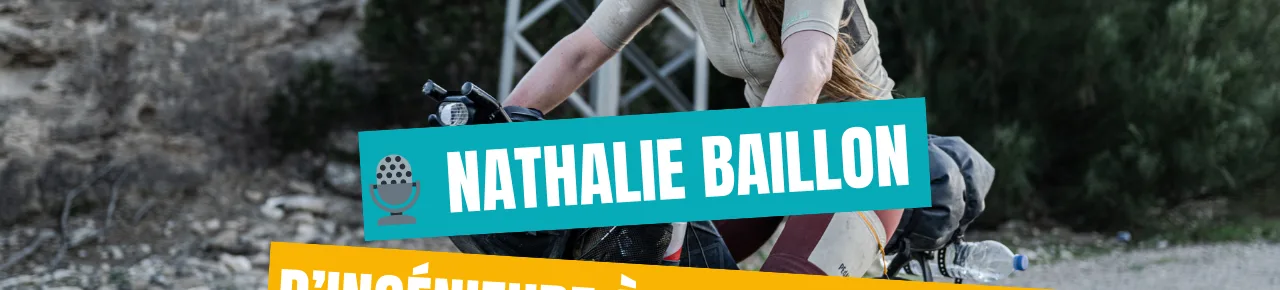
In this interview, Nathalie Baillon, cycling adventurer, ultra-cyclist, multiple winner of ultra races and holder of the record for crossing Europe from south to north, talks about her extraordinary career. How did her passion for ultra-cycling come about? How does one become an adventurer on a bike? What's her daily routine like?

Watch the video interview
Listen to the podcast
Read the interview
Welcome, Nathalie! Can you introduce yourself?
Yes, of course! So, I’m a long-distance cyclist, as you said, and I live in Isère, near Grenoble. I’m passionate about travel and outdoor sports, especially cycling. Initially, I trained as a software development engineer, but for the past two years I’ve been self-employed, making a living from my passion.
Discovering ultra-cycling
Quite a change, then! How did you get into ultra-cycling? How did you discover ultra-cycling?
In fact, it all came about after a cycling trip to New Zealand. At the time, I had left my job as an engineer in Munich and set off on a trip with my partner at the time. While I was there, I met some people who were taking part in the Tour Aoteaora, an event in which they had to cross the country from north to south as quickly as possible. It had taken us two or three months to cross New Zealand, but they did it in two weeks, with super-light panniers.
It inspired me, I thought it was so cool, and I thought I’d give it a try. I had super-heavy panniers, a 45-50 kilo bike, and I kept popping spokes because I was overloaded. Like many beginners, I had taken on too much. So this minimalist style really appealed to me. When I got back to France, I looked at what was being done in the ultra field and decided to go for it.
So you took the plunge! After New Zealand, what was your first ultra experience?
I started with the Borders of Belgium, which is not a race per se, but a brevet, a bit like Paris-Brest-Paris. These are events where you have a certain time to cover a certain distance. In this case, you had to cover 1,000 kilometers in less than 72 hours. I bought myself a pannier and set off, a few months after returning from New Zealand. Frankly, I didn’t know much about it, so at the starting line, I asked other people how they ate, how they slept… I learned on the job.
Comment soutenir La Sportive Outdoor?
L'une des façons de nous soutenir est de faire vos achats via nos sites partenaires.
L'idée n'est évidemment pas de vous pousser à la consommation: n'achetez que ce dont vous avez besoin mais, lorsque vous le faites, passer par nos liens nous aide car nous touchons ainsi une petite commission sans aucun coût supplémentaire pour vous.
Vous pouvez par exemple en ajouter certains en favoris pour vos prochains achats. Pensez à accepter les cookies de nos partenaires dès l’arrivée sur leur site.
- i-Run: jusqu'à -50% pour les Running Weeks
- Insta360: de (très) grosses promos sur plein de caméras sportives pour les French Deals
- Ekosport: -20% extra sur les nouveautés vélo de route et VTT
- Intersport: des offres sur la randonnée (notamment)
- Muule: 15% de promo avec le code VIP15
- Compressport: 10% de réduction avec le code WELCOME-COMPRESSPORT-26
- Decathlon: pas mal de bons plans
- Lyophilisé&Co: lyophilisés, nutrition sportive et matos de bivouac
Pour plus de façons de nous soutenir, c'est ici.
It was a bit different from cycling races, as people stopped for long periods to eat, which was a bit disturbing for me. To me, it was more efficient to sleep for two hours and eat quickly. Their aim was more to finish on time, whereas mine was more about optimizing time.
Then I went straight to the Race Across France: 2500 kilometers! Since it was called Race Across France, I wanted to cross the whole of France, not just part of it. I thought it would just be a long bike ride. But in reality, I had horrible saddle pains, knee problems, digestive problems, and problems with the equipment. It was a difficult experience. At the time, I didn’t know if I’d do it again, I even wondered if it was really for me. In the end, I went further. But I tell myself that if I had to do it all over again, I’d probably go a bit more gradually.


Yes, that’s exactly what I wanted to ask you! When I asked you about your first experience after New Zealand, I thought you were going to say you’d done 200 or 300 kilometers, not 1000! You didn’t start out gradually at all! Did you already have a lot of cycling experience before you started ultra, even if it wasn’t long-distance?
Yes, I started cycling when I was about 15, as a teenager. I was immediately passionate about it, but I didn’t ride as much as I do now. It was fairly regular, but there were phases when I didn’t ride at all. I loved to travel, but cycling was rarer. I was a bit afraid to travel by bike, I found it complicated. When I went away, it was more on foot. And then I did some training abroad, but I didn’t take my bike. Like a lot of beginners, you think it’s complicated, but in the end it’s not. When I was in France, during my studies, cycling was always quite present.
Was sport in general important to you, whether cycling or anything else?
Yes, completely! I’ve always loved outdoor sports, which helped me a lot because I was very shy. Team sports were complicated for me, as were performance sports like dance. It was impossible for me to perform in front of an audience. But with cycling, it was different. It was a liberation: I could progress at my own pace, without judgment, without feeling watched. And then, at the beginning, I rode a lot with my father, who was a reassuring figure.
And what attracted you to ultra-cycling? In New Zealand, you saw people traveling light, but you can travel light without traveling 2,500 kilometers! What made you want to start?
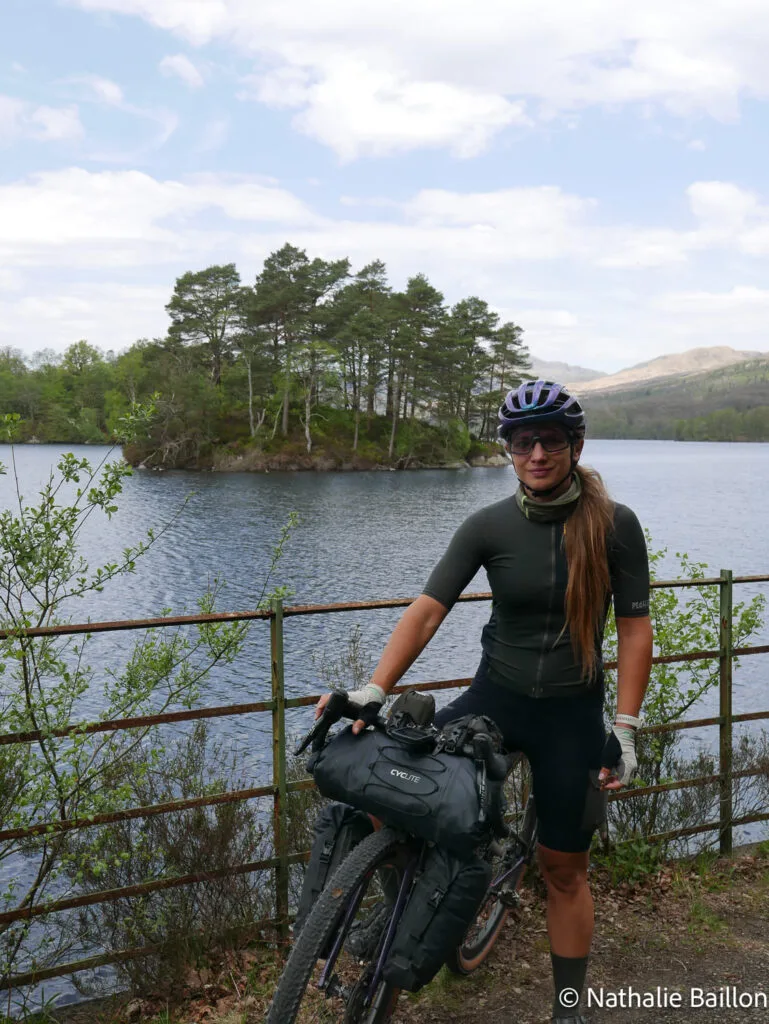
I think it was the desire to surpass myself, to see what I was capable of. I’ve always been drawn to adventure, even though, because of my shyness, I was often told I couldn’t do it, that I’d be too scared. I needed to prove to myself that I could do it. I’ve always loved adventurous stories, discovering other countries and cultures, and ultra-cycling allowed me to combine that with a personal performance. At the time, I wasn’t at all competitive, perhaps because of a lack of self-confidence, but I had this desire to progress, to become better. Ultra, it’s a mix of adventure and performance, and that’s what I like.”
Professional retraining
Great! When did you realize you wanted to make a career out of it? Your passion grew, and then you quit your job as an engineer to devote yourself full-time to cycling…
Initially, I never imagined I’d be able to make a living from cycling. It wasn’t in the cards. But I was passionate about it. After my trip to New Zealand, I came back to France and found a job in Grenoble so I could be close to the mountains and continue doing outdoor sports. I also do a bit of winter sports. Then I started doing ultra in parallel with my salaried job, and quickly got good results.
In the early days, I often won in the women’s category, as there was less competition than today. And I was regularly finishing in the top 10, or even second overall. I attracted the attention of sponsors. Then, during the confinements, I went through a complicated period, a period of depression, because I could no longer ride the way I wanted to.
So I decided to quit my job and think about a career change. It wasn’t enough to make a living from it, but it showed me that there might be something to build on in cycling. So I set up my own business, and since then I’ve diversified my activities: a bit of coaching, promoting events, taking part in training courses, like those at Terrasses du Lac where we organize women’s courses, writing articles, notably for La Sportive Outdoor, but also for magazines like L’échappée vélo. In short, I have a wide range of activities, but always in the world of cycling.
And what have been the biggest challenges in this conversion?
The hardest part was finding myself a bit on my own, with no real support. There are so many aspects to manage: the whole community management part, for example, to get yourself known, manage your social networks and do self-promotion. Then you have to manage the budget, find funding, approach brands… It’s a challenge, especially when you’re shy and introverted. At school, we’re taught to be good employees, not entrepreneurs. So there’s a whole world to discover. But it’s also very rewarding.
The daily life of an ultra-cyclist
Yes, I totally agree! Now, let’s talk about your daily life as an ultra-cyclist: it intrigues me. You don’t take up long-distance cycling overnight. It takes a lot of preparation. Can you tell us about your training, both physical and mental?
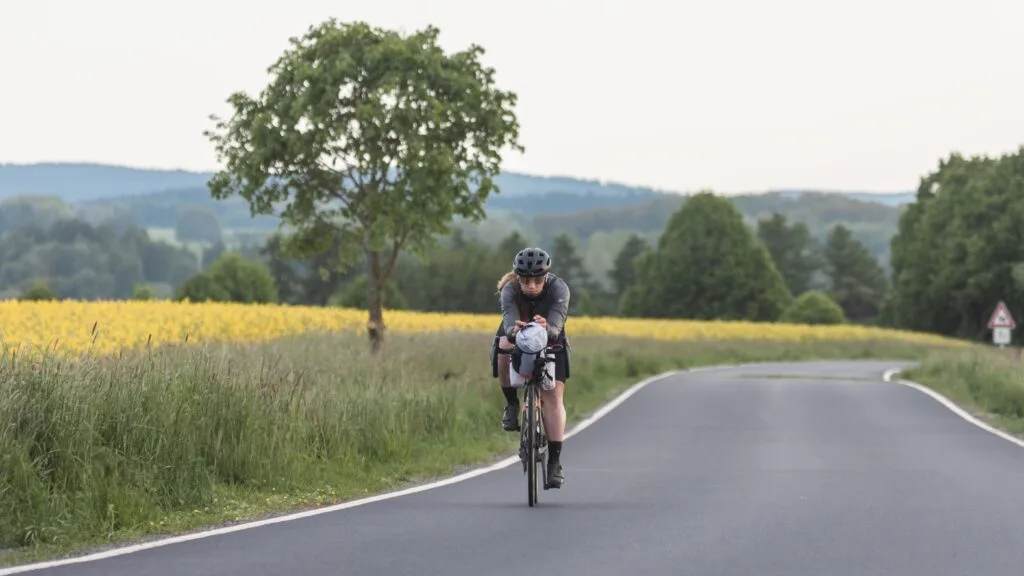
So I don’t have a physical trainer or a mental trainer. Once again, I’m a bit on my own. But I’m passionate about training, I’ve read a lot of books on the subject, so I know how to train. What’s more, I love to ride, and that helps a lot for the ultra. Secondly, I do a lot of travelling by bike, which prepares me well: in ultra, you run into the same problems as in travelling, whether it’s fickle weather or mechanical problems. I also train a lot by feel, with variations in intensity. It’s often said that in ultra, you should never stop; that’s partly true, but being able to ride faster without stopping too much is even better. So you need to work on your speed too, not just your endurance.
I used to take part in road races of around 800 to 1200 kilometers, which are completed quickly, in less than three days for the best. In that case, you optimize your time without really stopping. But on longer races, there’s a whole logistical aspect to take into account : sleep, strategy… I know myself well now, so I do a lot of volume when I’m in shape, then alternate with moments of recovery and intensity. And if I feel tired or unmotivated, I slow down a bit. I really adapt.
You listen to yourself a lot and adapt according to how you feel. And do you do any other sports in addition? Strength training, for example?
Not so much, in fact. Before the confinements, I did a bit of climbing in winter, which allowed me to strengthen myself in a more playful way than pure strengthening. In winter, I also go cross-country skiing and snowboarding, but that’s a one-off thing, more for fun than for training. I should be doing more strength training, but with the confinements, not being able to do it in a group has demotivated me. At home, I’m not interested in doing squats in my living room. I need to have fun, and I’m very much into having fun.
And on a typical day, how much time do you spend training?
It depends, but on average, I train about twenty hours a week, with big variations depending on the period. In competition, of course, it’s a lot more, because you’re riding non-stop. In general, I train six days a week with one or two long rides, sometimes between six and eight hours. Most of the time, my outings remain accessible to anyone, two or three hours, but I do them with more intensity.
Interesting! I was wondering if you do 300 kilometer rides every weekend. So, it’s very manageable on a daily basis!
Yes, that’s it. Consistency is important, but I don’t do very long distances all the time.

Ultra races
And what do you think is your greatest strength, enabling you to cover such incredible distances?
I think it’s passion, but also a good dose of tenacity. I’m very stubborn. For me, it’s harder to give up than to keep going, even when the going gets tough. In fact, I’ve never yet given up on an ultra race. So, yes, tenacity helps!
That seems to be an essential quality! And for women who would like to get started, what do you think are the most important aspects to consider before taking the plunge into ultra?
Do it gradually, unlike what I did! That way, you don’t get disgusted, you build up your experience, gain confidence and learn from your mistakes. Getting informed beforehand is essential, like reading online resources, blogs or YouTube videos. But it’s also important not to wait for everything to be perfect, because there will always be unforeseen circumstances. Even I still make mistakes and learn from them with every race.
I think that’s important! What’s more, I think that as women, we’re even more likely to wait until we’re ready before taking the plunge.
Yes, I think that’s why there are fewer retirements among women in ultra races than among men. Women don’t go into a race unprepared. A man might say to himself: ‘I’m strong, I can do it’, whereas a woman will be more cautious. But in the end, that’s a strength too.
And how do you choose which races to take part in?
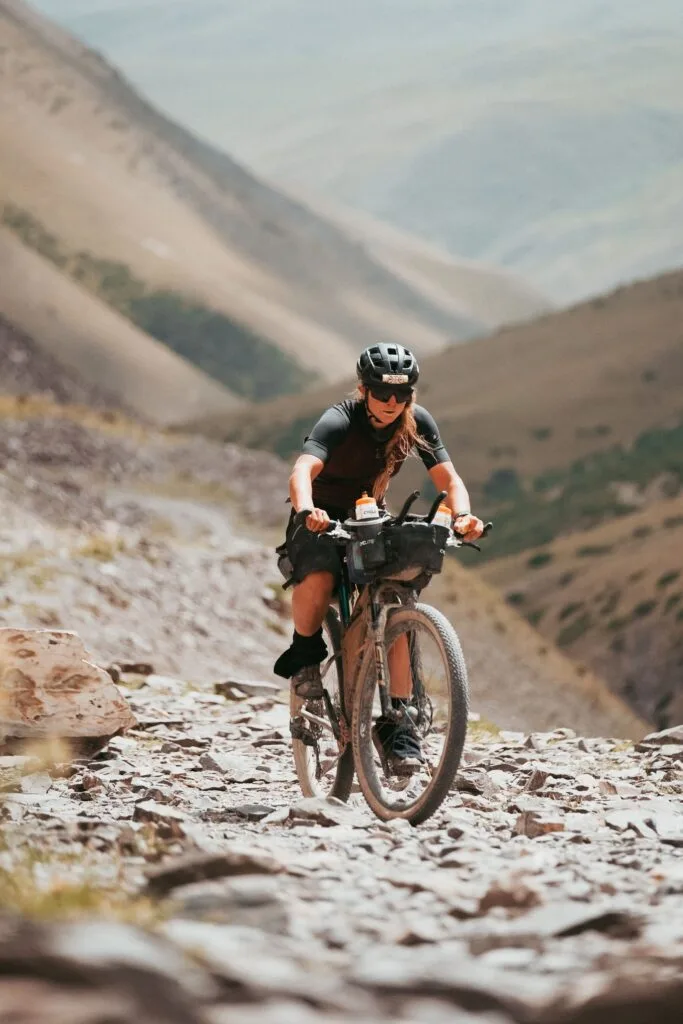
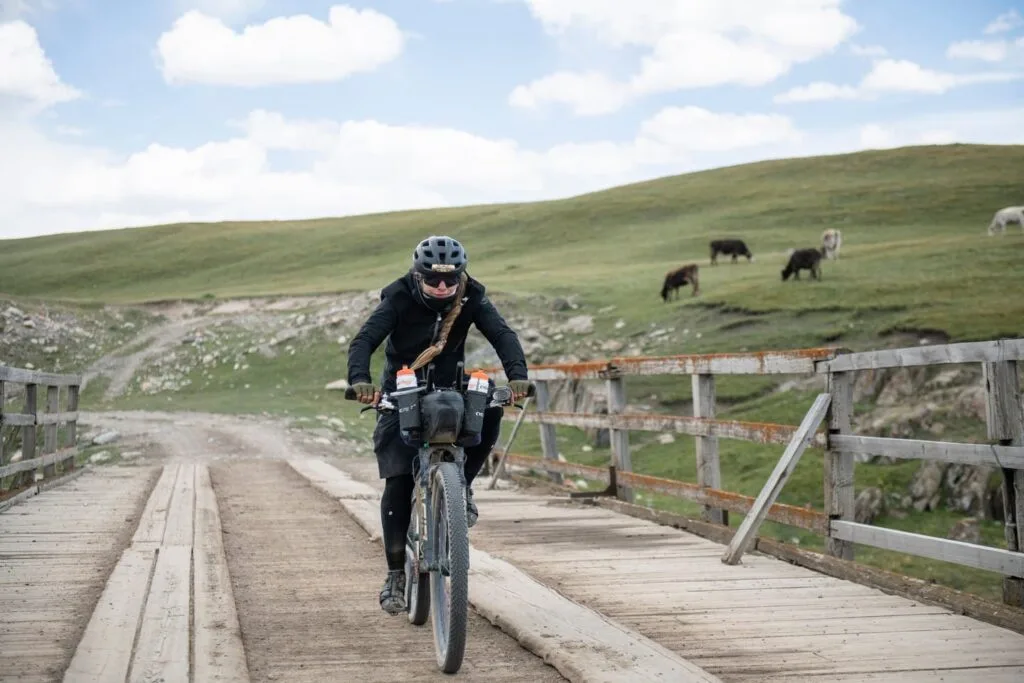
Mostly on a whim. If I see photos that make me want to discover a country or a landscape, I’ll want to take part. The challenge comes into play too. For example, the Silk Road Mountain Race in Kyrgyzstan: it’s an 1800-kilometer mountain bike race across the country. I wasn’t a mountain biker, and it was very isolated, so it was much more difficult than the road races in Europe, where you know you’ll always be able to find supplies. Over there, it was a different story, with the altitude and the conditions. But it was the challenge that attracted me. After winning several road races, I was less challenged and turned to off-road racing, where I’m less at ease. This is a real challenge for me.
And how do you manage refuelling and sleeping on this type of race?
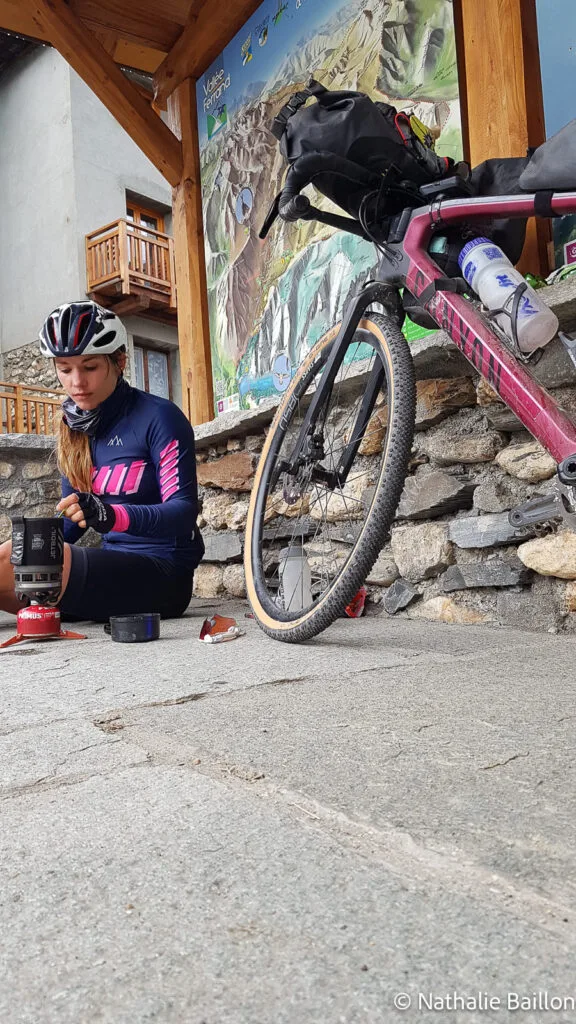
When there are few refreshment points, you have to plan everything in advance, and I always take something to eat with me. I like foods like compotes and Baouw bars, which are natural and full of micronutrients. When racing, I prefer quick, cold meals like sandwiches, which are fairly balanced and calorie-dense. It’s essential to have calories that are compact and easy to digest. In Europe, I like to stop off at bakeries for a sandwich or dessert… it’s comforting and full of calories! But it also depends on individual tastes.
And during the races, there are moments when you get fed up, when you think “what the hell am I doing here?” How do you overcome that?
Of course, this happens on virtually every race lasting more than two or three days. It’s almost inevitable. You have your ups and downs, and even if you’re passionate about it, riding twenty hours a day for a week can become difficult. Sometimes I set myself mini-goals to keep me going, telling myself that if I reach a certain point, I’ll be able to eat, rest a bit, and generally that helps my morale. Sometimes, just eating or sleeping is enough to lift my spirits. I often break goals down into small steps, and reward myself according to the goals I reach.
Personal evolution through ultra
You set yourself little “carrots”! What has ultra-cycling taught you about yourself, both physically and mentally?
It taught me that I was capable of much more than I imagined. I gained confidence in myself. I’ve appeared on podcasts, even on shows like Stade 2. Little by little, I’ve become more comfortable expressing myself in public. As with cycling, with practice you feel more at ease. This discipline has enabled me to emancipate myself and understand that you have to follow your dreams, despite the fears of others. At worst, if you fail, it doesn’t matter, you just learn and try again.
Family and community support
Thank you, that’s so inspiring! How did your family and friends react to your decision to take up ultra-cycling full-time?
My parents were a bit worried, as all parents are. Even before I made a career out of it, when I went on trips to remote places, they weren ‘t reassured. But by showing them that it was well thought-out, they ended up being reassured. Today, they fully support me .
Ultra-cycling can seem lonely. Have you managed to build up a support network?
Yes, even if I’m still quite alone in my practice, the ultra-cycling community is very nice. We often meet up at races, share advice… And on social networks, I have a community that encourages me a lot. It’s great when people tell me I’ve inspired someone to start bikepacking. I also have friends and family who support me, even if they’re not in the bikepacking business.
This support is really important. What about your sponsors?
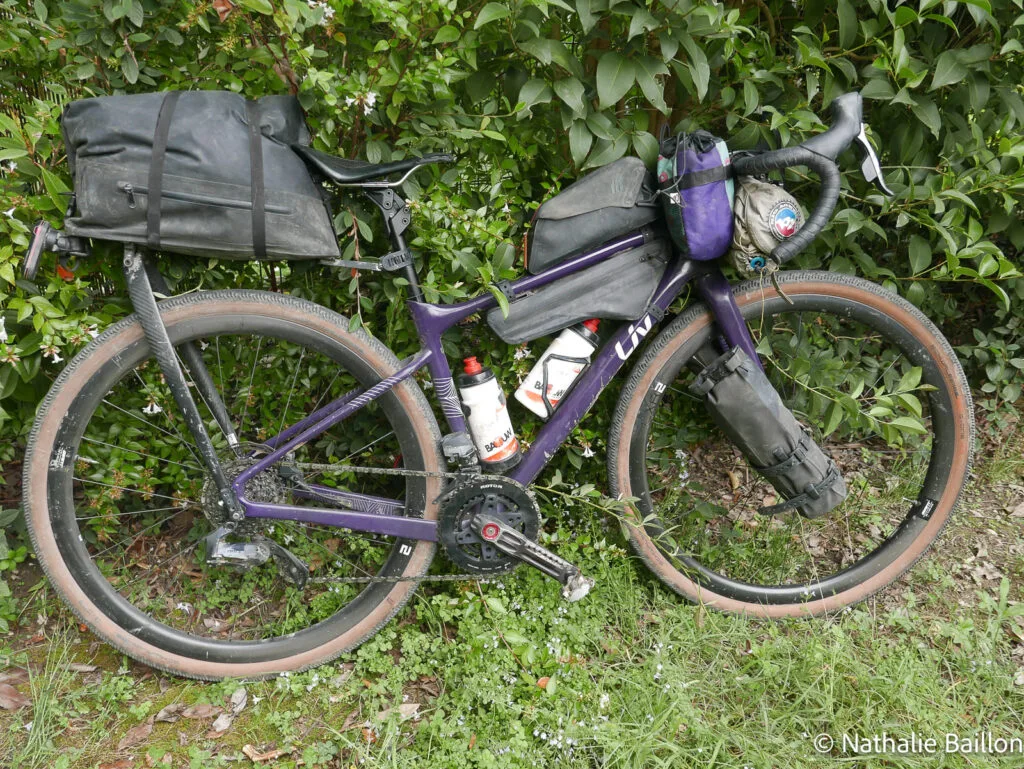
Yes, I have a few sponsors, like Liv, a women’s bicycle brand. It’s nice to have that kind of support.

Next targets
Great! And what are your next goals?
I’m still thinking about next year’s calendar, but in the long term, I’d like to do fewer races and concentrate on personal adventures. I’ve started to diversify with bike-skiing and bike-rafting adventures. The idea is to acquire new skills so I can be self-sufficient in even bigger adventures. Maybe more records, certainly races, but also slightly longer challenges. I’m still progressing and learning, and that’s what really motivates me.
Tips for women who want to start their own business
We can’t wait to see what happens! Finally, would you have any advice for women who want to take up ultra but haven’t yet dared to take the plunge?
As I said, you have to take it gradually, and don’t hesitate to find groups where you can ride with more experienced people. Taking part in training courses, for example, such as those we organize at Les Terrasses du Lac, gives you the confidence to ride with other women. You shouldn’t wait until you’re totally ready, but start with small adventures. For example, I did a 400-kilometer run in Alsace, near my parents’ home, without much preparation, just to test things out. It was a micro-adventure, but it helped me gain confidence. You have to take it one step at a time, and remember that most people are friendly.
Follow Nathalie
Thanks for sharing, Nathalie! Where can we find you online?
There’s my website, Nathalie Baillon, which is currently a showcase but which I’d like to develop, and I’m mostly present on Instagram and YouTube. There’s also Strava for those who want to follow my routes and retrieve GPX tracks.
- Website: https://www.nathaliebaillon.com/
- Instagram: https://www.instagram.com/nathalie_baillon/?hl=fr
- YouTube: https://www.youtube.com/@nathaliebaillon
- Strava: https://www.strava.com/athletes/5006295
Thank you very much Nathalie for this exchange! One thing I remember is that you work very much by feel, listening to your desires and your pleasure, and that’s a great lesson to learn. Whether we’re doing ultra like you or simpler things, the most important thing is to have fun! Thanks again, and see you soon!