


Supporting perimenopause and menopause with naturopathy
Menopause, or the period leading up to it, can be a very complicated time for some women, as the transformations can be so significant, both physically and psychologically. Let's take a look at the possible symptoms and causes, and (above all!) at what you can do to get through this period in the best possible conditions.
What is menopause?
Menopause is defined as the definitive cessation of menstruation for more than a year. This process may take several years to set in, in which case we speak of premenopause or perimenopause (= period of premenopause + 1 year after cessation of menstruation). The average age for menopause in France is between 48 and 52.
During the premenopause, the ovaries, our sex hormone-producing organs, respond less well to pituitary stimulation, asking them to produce estrogen and progesterone via LH and FSH (hormones produced by the pituitary gland). As a result, the menstrual cycle, which until now has been well regulated, becomes increasingly erratic, as the chemical messengers instructing it to function are no longer sent or are poorly decoded.
Estrogen and progesterone are sex hormones produced by the ovaries. They play many roles, as we shall see, and fluctuate during the hormonal cycle in response to potential future implantation. Perimenopause marks the beginning of the cessation of these secretions, a period during which they can be erratic and random. It is these fluctuations that are responsible for the particularly troublesome symptoms of perimenopause.
Most common symptoms
The most common symptoms of menopause are as follows:
- rule spacing
- menometrorrhagia (heavy bleeding during menstruation, bleeding between periods)
- hot flashes, especially at night
- Unstable mood, irritability for no reason
- Insomnia (whether or not related to hot flashes)
- Breast tension
- Decreased libido
- Headaches
- Bloated, swollen belly, even constipation
- Weight gain
- Dry skin, vaginal dryness
- Increased risk of osteoporosis (brittle bones)
- Cardiovascular imbalance, especially in cholesterol levels
That’s quite a list of joys, isn’t it? Fortunately, here are a few “tricks” you can try out to alleviate these various inconveniences.
Dietary and lifestyle advice
As a first line of defence against the inconveniences of menopause, particularly hot flashes, here are a few tips:
Comment soutenir La Sportive Outdoor?
L'une des façons de nous soutenir est de faire vos achats via nos sites partenaires.
L'idée n'est évidemment pas de vous pousser à la consommation: n'achetez que ce dont vous avez besoin mais, lorsque vous le faites, passer par nos liens nous aide car nous touchons ainsi une petite commission sans aucun coût supplémentaire pour vous.
Vous pouvez par exemple en ajouter certains en favoris pour vos prochains achats. Pensez à accepter les cookies de nos partenaires dès l’arrivée sur leur site.
- i-Run: jusqu'à -50% pour les Running Weeks
- Ekosport: -20% extra sur les nouveautés rando et bivouac
- Intersport: des offres sur la randonnée (notamment)
- Muule: 15% de promo avec le code VIP15
- Decathlon: pas mal de bons plans
- Lyophilisé&Co: lyophilisés, nutrition sportive et matos de bivouac
Pour plus de façons de nous soutenir, c'est ici.
- limit your consumption of spices, coffee, alcohol and tobacco
- Control stress as much as possible : practice slow, deep breathing whenever possible, and even meditation. Use calming plants or essential oils (valerian, passionflower, orange blossom, lavender, Roman chamomile… for example).
- engage in regular physical activity suited to your condition (ideally 1 day out of 2, i.e. 3 to 4 times a week).
- In terms of diet, meals inspired by the Mediterranean diet will be the most suitable during this period: fatty and white fish, eggs, poultry, vegetables and fruit, omega-3s in the form of nuts, seeds and oils, dairy products in small quantities and especially goat’s/sheep’s milk.
Micronutrition can also be a great help. Here are a few micronutrients to focus on:
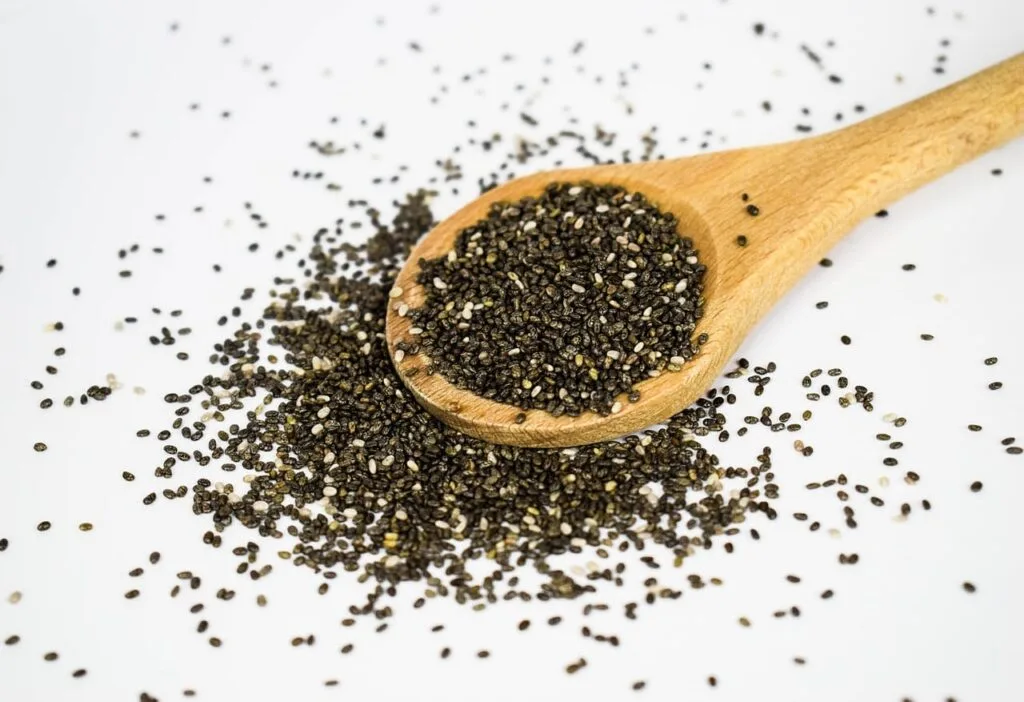
- omega 3: for their anti-inflammatory action and to help balance the omega 6/omega 3 ratio. Omega-3s are found in fatty fish, poultry products with the “blue-white-heart” label, seeds (flax, chia), nuts, rapeseed/flax/nut/cameline oil, etc.
- gamma-linolenic acid (omega 6 family) found in evening primrose and borage oils: for their moisturizing action on the mucous membranes and for reducing pre-menstrual and peri-menopausal symptoms (especially evening primrose).
- anti-oxidants (selenium, zinc, vitamins C and E, carotenoids, polyphenols, co-enzyme Q10, etc.) that are easily found in a colorful (fruit and vegetables), varied and balanced diet (animal and vegetable proteins, whole and semi-complete starches, seeds and nuts).
Support through plants
Phytoestrogens
These plants can be used to compensate for the lack of estrogen, which is responsible for most of the symptoms mentioned above. What’s more, estrogen deficiency can also be the cause of hyper-progesteronemia, i.e. an excess of progesterone. As progesterone is generally a “calming” hormone in all respects, it’s easy to see how an imbalance can cause problems, including :
- Headaches, migraines, nausea
- Aggressiveness, irritability, anxiety
- Daytime sleepiness, lack of energy
- Shortened cycles
- Bleeding periods
- Painful, large, heavy breasts
- …
Phyto-oestrogens help reduce hot flushes and dry mucous membranes; they are also recommended for preventing osteoporosis, cardiovascular accidents (more frequent during menopause) and cognitive decline.
In the diet, they are found mainly in soya bean products, but also in linseed and alfalfa sprouts.
Phyto-oestrogens are also found in phytotherapy , in particular :
- Soy: hot flashes, osteoporosis
- Sage: antioxidant, anxiolytic, antiperspirant, night sweats. In phytotherapy, sage officinale is used instead of clary sage for essential oils.
- Red clover: hot flashes, depression, nervousness, dryness, sleep, osteoporosis
- Black cohosh (cimicifuge)
- But also: chasteberry, yam, flax, alfalfa, hops…
These plants are usually taken as fluid extracts, capsules, mother tinctures or ampoules. Ask for advice to find the plant and galenic form best suited to your needs.
Caution is advised in cases of personal or family history of hormone-dependent cancer (breast, ovary, uterus, etc.). Certain plants are also not recommended in cases of thyroid dysfunction (hypo or hyper).
Gemmotherapy
This branch of phytotherapy uses plant buds, diluted between 20 and 200 times (similar to mother tincture and homeopathy).
The advantage of this approach lies in the fact that you can benefit from the plant’s “totum” (a concentration of all its properties) at a low concentration, making it perfect for chronic problems and/or fragile subjects.
The two plants most indicated for gemmotherapy in peri-menopausal contexts are cranberry (Vaccinium vitis idaea) and raspberry (Rubus idaeus). Gemmotherapy is taken with meals.
Essential oils
Aromatherapy can be used to support the fragile emotional state of menopause. Here are two essential oils that can help:
- Angelica (Angelica archangelica): we distill its roots, which have been known since Antiquity to soothe the nervous system and fear of the unknown. Its scent is quite distinctive, so if it doesn’t suit you, try the following oleoresin:
- Vanilla (Vanilla planifolia): not strictly speaking an essential oil, but it doesn’t matter to us, the use is the same! It’s very soothing and relaxing, and offers a sense of security, which will be very useful during the transitional phase of menopause. And to top it all off, it’s an aphrodisiac!
Finally, clary sage (salvia sclarea), in essential oil form, has remarkable properties for regulating the menstrual cycle and perimenopausal symptoms.
As with sage in phytotherapy, it shouldbe used with caution in women with a personal or family history of hormone-dependent cancers.
I hope these tips will help you get through this sometimes hectic period as serenely as possible!