

Overtraining – When the desire to perform puts us at risk

Overtraining is a complex phenomenon, which can manifest itself in psychological signs that it's worth knowing how to spot. Let's discover this through Juliane's story, which will also lead us to question the meaning of overtraining, which often doesn't happen by chance.
Summary
- Signals that are difficult to perceive and take into account
- The first sign: emotions out of control
- To confirm: question desire and pleasure
- To get better: stop and have fun
- Stopping is often difficult to accept
- The return of desire, pleasure and performance
- Which can lead to overtraining
- This would help avoid it in the future
Signals that are difficult to perceive and take into account
When you’re physically injured, it can be hard enough to accept. Even when your body is lighting up all the red lights, it’s a bit swollen, you’re hobbling, and it’s painful, it’s easy to tell yourself that it’s okay, it’s nothing, and it’ll go away on its own, especially if you’re not too careful.
So when it’s the psychological side of things that gets in the way, and the signals aren’t necessarily obvious or easy to decipher, it’s no easy task! In such cases, we don’t hesitate to push everything firmly under the carpet and bury our heads in the sand, so as to continue training as planned, especially if there’s a competition in the offing! 😊
The first sign: emotions out of control
Eventually, if you already know a sports psychologist, you’ll put in a good word for him or her, but only at the moment when it’s all over, when you start to panic because you can’t manage anything any more, and the tears spill over unasked for. Can’t you see what I’m talking about? Then follow me as I take you on a tour of Juliane’s story, which I hope may help you avoid the worst 😉
Juliane is a high-level kayaker. She’s almost 19 and I’ve been working with her for several months, providing both psychological support and mental preparation.
That day, she walked into my office, sat down and started crying. And that’s not like her, not at all. She explains that nothing’s going right, that she doesn’t understand a thing. No matter what she does, the times are bad, and that’s catastrophic because in two weeks’ time, it’s the European championships.
I know how important this competition is to her, and I also know that she’s a Stakhanovist when it comes to training. For her, the more you train, the more likely you are to win. Add to this the fact that sport is a crutch she uses to cope with the emotions that overwhelm her when family relationships become too strained, and you have the perfect cocktail for overtraining. So far, she’s managed to avoid it, but now I’m thinking it’s not impossible that, this time, the vase is actually overflowing.
Comment soutenir La Sportive Outdoor?
L'une des façons de nous soutenir est de faire vos achats via nos sites partenaires.
L'idée n'est évidemment pas de vous pousser à la consommation: n'achetez que ce dont vous avez besoin mais, lorsque vous le faites, passer par nos liens nous aide car nous touchons ainsi une petite commission sans aucun coût supplémentaire pour vous.
Vous pouvez par exemple en ajouter certains en favoris pour vos prochains achats. Pensez à accepter les cookies de nos partenaires dès l’arrivée sur leur site.
- i-Run: jusqu'à -50% pour les Running Weeks
- Ekosport: -20% extra sur les nouveautés rando et bivouac
- Intersport: des offres sur la randonnée (notamment)
- Muule: 15% de promo avec le code VIP15
- Decathlon: pas mal de bons plans
- Lyophilisé&Co: lyophilisés, nutrition sportive et matos de bivouac
Pour plus de façons de nous soutenir, c'est ici.

To confirm: question desire and pleasure
I ask him two questions which, in my opinion, are fundamental in this type of situation:
- Do you feel like going to training right now?
- Do you enjoy training?
She finds it in herself to face things head-on, and tells me that no, she has no desire or pleasure left, and that it’sdistressing her just as much as the level of her times. I can feel that she’s completely on the edge emotionally, and I say to myself that we’ve got to act fast if we want to have any chance of her going into the European Championships with a smile on her face.
I tell him about my idea of overtraining, and propose an action plan which, if this hypothesis is valid, should be able to help him quickly.
To get better: stop and have fun
“The order is as follows:
- Do not board the boat for at least 3 days
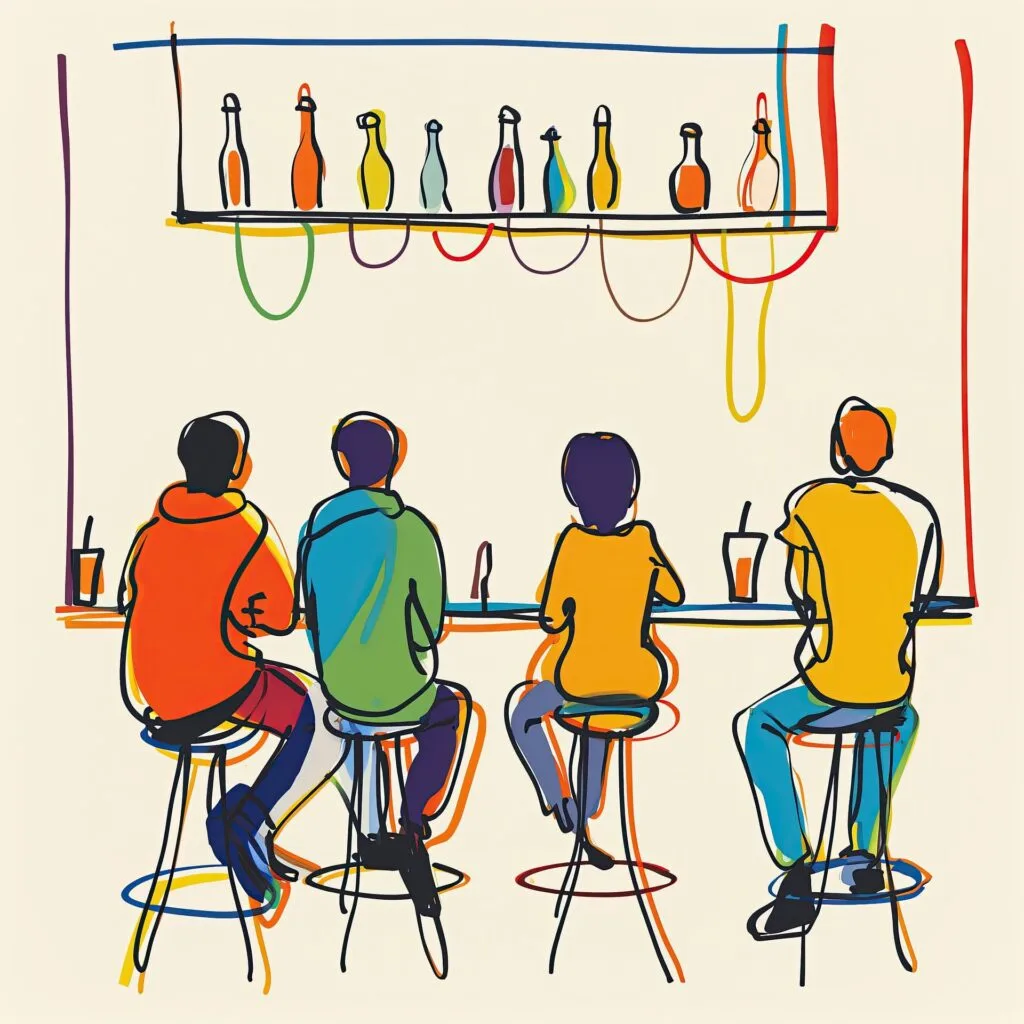
- Go out for a drink with your friends on Saturday night and drink at least one beer, and no more than two 😊
I know that for her, it’s absolutely inconceivable to go a single day without training, especially when the plan is set. In her mind, 3 days is a mountain. Ideally, I’d like to stop for a bit longer, but if I suggest it, she’ll just slam the door and carry on as usual.
I also know that she likes to see her friends, and that she loves beer, but that she forbids herself to go out, let alone have a drink, because she has only one thing on her mind: performing at the European Championships. She’s so serious that she forgets to have fun, and there’s no escape valve.
Stopping is often difficult to accept
When I tell her about this prescription, she looks at me with wide eyes, as if I’ve gone completely mad. She asks me if I’m really serious, and I tell her I am. She doesn’t dare yell at me, but I can see she wants to.
I explain to her that, in my eyes, it’s the only way to have a chance of saving the day and doing well on D-day, provided of course that I’m not wrong in my idea of overtraining and that we’re not too far advanced. She stops, thinks it over and tells me that she’s in so much pain and so lost that she doesn’t know what else to do. She’s willing to try out my idea, but for three days, no more. Phew! We decide to meet again the following week to take stock and decide what to do next.

The return of desire, pleasure and performance
Seven days later, she’s back in my office. I’m curious.
She sits up and smiles at me. She tells me she’ s feeling much better, that she’s relieved. She managed not to get on the boat for 3 days and decided to give herself a fourth day off, because she felt it was doing her good and the urge was starting to come back. She went out on Saturday night with some friends, had a beer and really enjoyed herself. She realized that she had missed it. She hadn’t realized how much she needed to unplug and take a breather. She got back on the boat the day before yesterday, because the urge was there. She enjoyed training and the times were perfect!
She regains her confidence and tells herself that all may not be lost for Europe. She thanks me warmly and apologizes for her rather aggressive attitude last time. I tell her she has herself to thank. She had the courage to listen to herself, to take care of herself, her body and her emotions, rather than continuing to pull at the rope as usual. Today, she’s reaping the rewards. She can put it symbolically in her little treasure box of positive experiences. She can use it throughout her life.
Even though Juliane’s story has a happy ending, and the situation could be turned around fairly quickly, I think it’s worth pausing for a moment to consider the following questions:
- What led Juliane to fall into overtraining?
- What could be done to avoid this in the future?

Which can lead to overtraining
Over-investment in performance
As I’m sure you’re aware, Juliane is a particularly performance-oriented sportswoman. You could even say that, for her, performance is ” over-invested “, i.e. it takes up an enormous amount of space in her life, to the detriment of friendships and all other forms of leisure.
You could say that Juliane “puts all her eggs in one basket”. For her, success is all that counts. Naturally, she devotes all her time and energy to it, even if it means sacrificing everything else, and burying her head in the sand when the signs arrive that “it’s too much”, whether they be fatigue, minor aches and pains, longer recovery times, slower times, less desire or less pleasure. For her, kayaking is serious business, and her motto could be ” no pain no gain “. In reality, she tries to reassure herself that the more she does, the more likely she is to win.
But, you may ask, why is it so important to win? And indeed, it’s THE question that often helps us understand the logic behind the extreme behaviours that lead us to put ourselves at risk.
There’s a reason why we cling so tightly to performance, denying the orange and then red lights that signal that it’s too much, that the limit has been exceeded. The vast majority of human beings are not masochists.
A fragile identity and low self-esteem
For Juliane, performing means ” being worth something ” and ” existing”. It’s a kind of ” crutch “, helping her to stand on her own two feet, despite her weakened identity and self-esteem.
If she lets go of this crutch all at once, psychologically, she runs the risk of collapsing. She has therefore built up a kind of balance, in which investment in sport and the quest for performance play a major role. For her, listening to her limits and letting up when she feels tired is tantamount to an admission of ” weakness ” and means she’s “useless” and “worthless”. But, of course, when she comes to see me, Juliane isn’t aware of any of this.

This would help avoid it in the future
Once you understand a little better what’s going on, you realize that it’s not that simple, and that it’s highly likely that Juliane will encounter further episodes of overtraining, or get injured, or be confronted at some point with RED-S syndrome.
Clearly, to avert this risk, it would be necessary for the company to gradually confront essential questions such as:
- What makes it so hard for me to accept my body’s signals when I go too far?
- Why do I practice this sport? What’s in it for me?
- Why is performance so important to me today? How did I get here?
Ideally, these questions will be asked in a therapeutic setting. Certainly, some of the answers will come from her personal history and may be difficult to accept. But they could open the door to the gradual construction of a new balance, in which there would be room for something other than sport, in which Juliane would be able to welcome her emotions and sensations and put them into words or images to get through them, rather than fleeing from them by rowing. In this balance, her self-esteem would no longer be threatened by “losing” or not following her training plan to the letter.
I used the term “ideally”, because in reality, Juliane didn’t start this work. She only scratched the surface. And then she went through some tough physical times, with serious infections and a serious injury. It was this, little by little, that forced her to distance herself a little from her purely performance-oriented sporting practice. But the groundwork had not been laid. Becoming aware of the crutches you rely on and daring to try and understand why they’re there, in order to learn to walk without them, is an extremely difficult and often painful process. What’s more, it can take a long time.
So it’s understandable that there may be great reluctance to commit to this, even if it means repeating the same deleterious but reassuring patterns. That said, in my opinion, it’s worth it. You always gain in freedom.
In short, overtraining can be much more complex than it seems. And if you feel that you’re locked into a way of working that no longer suits you, don’t hesitate: seek help! 😊