


My favorite mental preparation tools – The concentration bubble

Would you like to discover effective, easy-to-use mental preparation tools? Then this section is for you! Today, I'm telling you the story of Lina, who loved building her “concentration bubble”.

Systematic competition failures
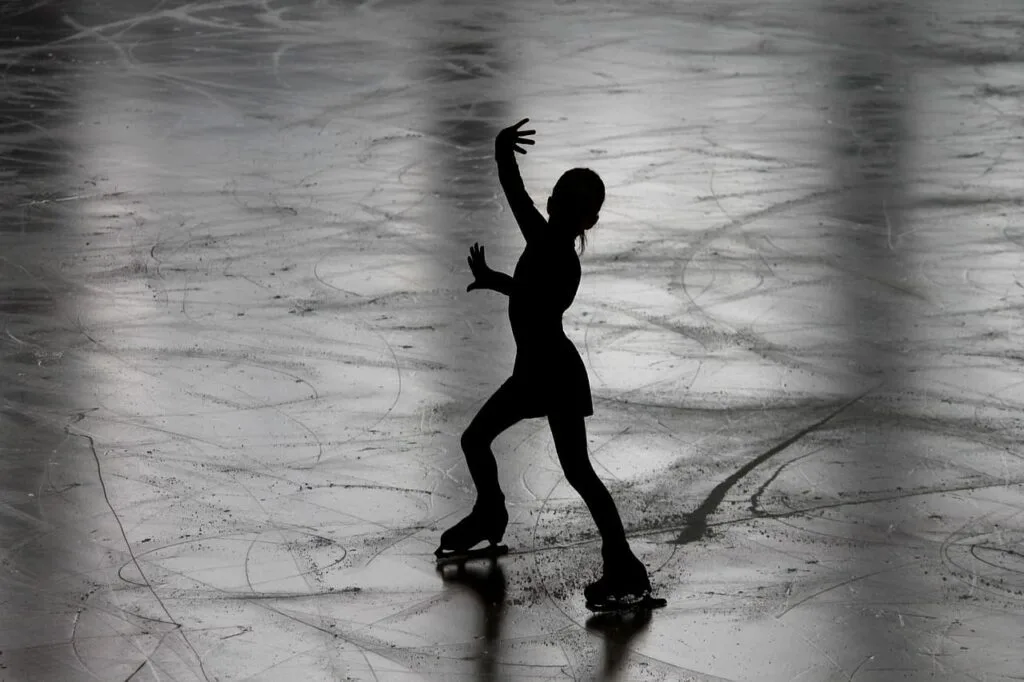
I remember our first date very well. Lina was 9 years old. She practices figure skating at a high level. It was her coach who asked her to come and see me, because she didn’t know how to help her anymore. Day-to-day training goes very well, but as soon as Lina enters a competition, everything goes wrong. In the end, she never manages to show the judges what she’s capable of.
Taking the time to build trust
When I question her to try and understand what’s going on, I hit a brick wall. Lina’s answers are vague. She has no idea what’s happening to her, says she doesn’t feel stressed or tense, and doesn’t see how I can help.
I don’t insist. I take the time to get to know this little girl , who already skates almost every day of her life. Little by little, the conversation becomes natural, and I can feel Lina opening up and starting to build a relationship.
Fear of criticism from the coach takes over.
After 20 minutes, she returns to the initial problem: ” You know, in fact, when we’re competing, before my runs, I’m scared. I’m scared because if I fall, I know that S. (her coach) is going to scold me. And that takes up all the space in my head. After that, I often don’t know what to do. “Here we are.
Finding your own resources
For my part, I know there’s very little chance of the coach changing her approach to post-competition debriefings. So I have to help Lina find the resources within herself to overcome her fear.
Use humor to lighten the mood
I start by trying to lighten things up and play things down, by asking her what kind of animal S. looks like when she gets upset. I see her eyes sparkle with mischief. She starts laughing: ” A big tiger! The first step has been taken!
Comment soutenir La Sportive Outdoor?
L'une des façons de nous soutenir est de faire vos achats via nos sites partenaires.
L'idée n'est évidemment pas de vous pousser à la consommation: n'achetez que ce dont vous avez besoin mais, lorsque vous le faites, passer par nos liens nous aide car nous touchons ainsi une petite commission sans aucun coût supplémentaire pour vous.
Vous pouvez par exemple en ajouter certains en favoris pour vos prochains achats. Pensez à accepter les cookies de nos partenaires dès l’arrivée sur leur site.
- i-Run: jusqu'à -50% pour les Running Weeks
- Ekosport: -20% extra sur les nouveautés rando et bivouac
- Intersport: des offres sur la randonnée (notamment)
- Muule: 15% de promo avec le code VIP15
- Decathlon: pas mal de bons plans
- Lyophilisé&Co: lyophilisés, nutrition sportive et matos de bivouac
Pour plus de façons de nous soutenir, c'est ici.

Visualize an imaginary bubble around you
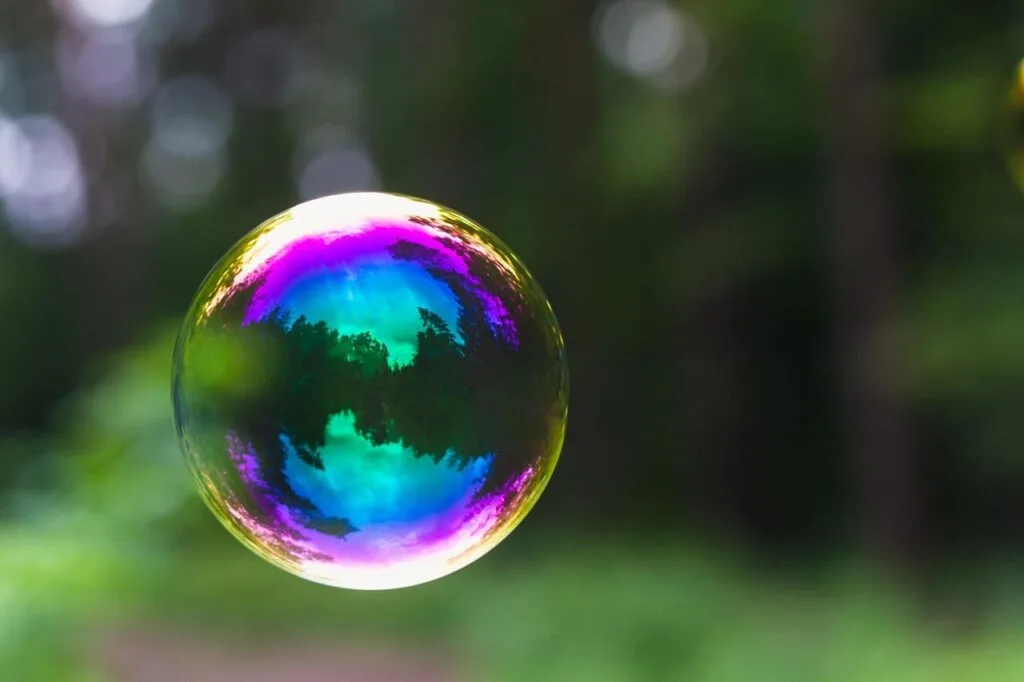
I suggest she closes her eyes, and imagines building a bubble around herself that would have the power to protect her from the competing tiger. She takes the time to choose the bubble’s shape, size, color, material, wall thickness, openings and degree of transparency. Then she takes care of the interior, putting in objects or photos to help her feel comfortable, safe and confident.
I then invite her to realize that when she’s in that bubble, it’s up to her to decide what she lets in or not. If something doesn’t do her any good, like certain words from her coach, or the judges’ gaze, then she can leave it outside, or even imagine the words bouncing off the wall of the bubble and flying away, without reaching her.
Drawing to raise awareness and anchor the bubble
When she opens her eyes again, I ask her if she’d like to draw what she’s visualized, and her smile speaks for itself! She takes her time, paying attention to details and colors, and little by little I see a large, round, multicolored bubble appear, containing Lina in her skater outfit, her cat, her blankie, and a photo of her parents. Outside the bubble is an impressive tiger. She finishes by tracing little zigzag lines all around the bubble, and proudly explains that these are little springs that send the tiger’s words to the other side of the Earth!
Daily visualization for automation
Of course, she leaves with her drawing, and I advise her to look at it every night for 10 days, and to imagine that at her next competition, she puts herself in her own bubble from the start of her warm-up, to feel reassured and confident.
The return of pleasure and performance
Two weeks later, on a Sunday evening, I receive a text message from Lina, who has borrowed her mother’s phone. I discover a photo of her on the top step of the podium, and this little note: ” Hi Sandra, it’s Lina. I just wanted to tell you that I’m French champion. I’m really happy. I used my bubble and I wasn’t even scared. “
This story is now 10 years old. I tell it regularly, to illustrate how effective the imaginary bubble can be. The key to Lina’s success was her extraordinary ability to appropriate the tool, and the regularity of her evening visualizations. This explains why she was able to use it so quickly in an emotionally demanding context. She was able to develop her ability not to let herself be destabilized, so as to be able to express herself fully in competition.
If you too feel that you could benefit from knowing how to put yourself “in your bubble” in certain situations, you can use Lina’s story as inspiration to create this imaginary protection in concrete terms. And if you find it too difficult to do it on your own, don’t hesitate to consult a sports psychologist specializing in sophrology or mental imagery!