


Invoxia Bike Tracker test – Our opinion on this GPS tracker for bikes

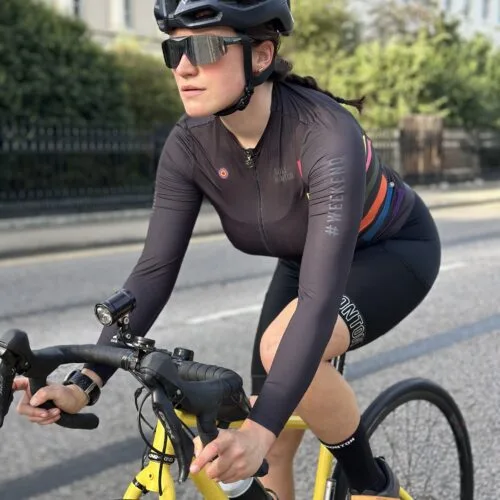
I tested Invoxia's Bike Tracker over several weeks spent cycling in France and Germany. Here's my verdict on its performance and ease of use.
My summary
What I liked
- Geolocation thanks to low-power networks
- A simple application
- Alert functions on the phone
What I liked less
- Frequent loss of localization
- Sudden battery drain
Video summary
How can Invoxia’s Bike Tracker be used?
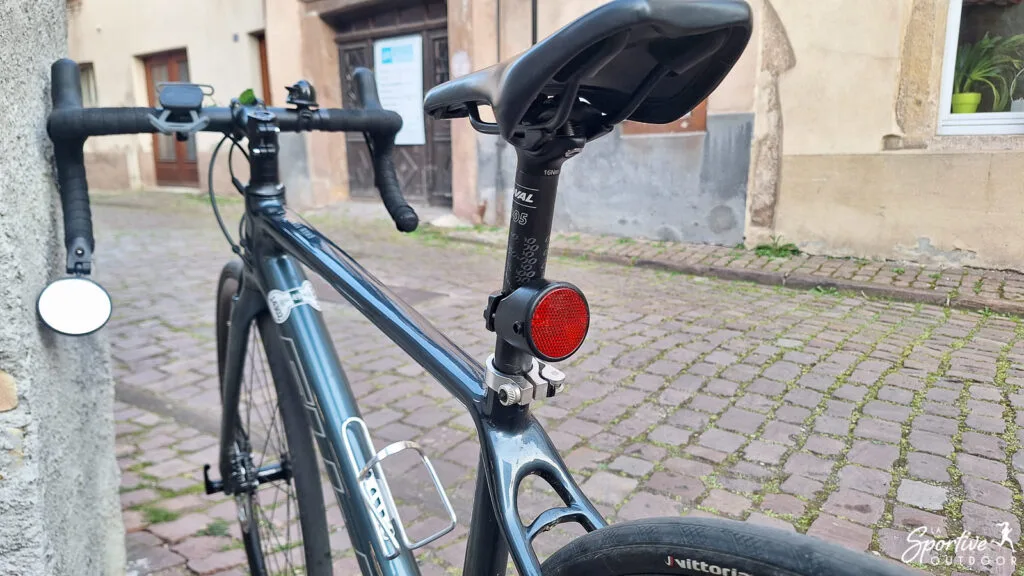
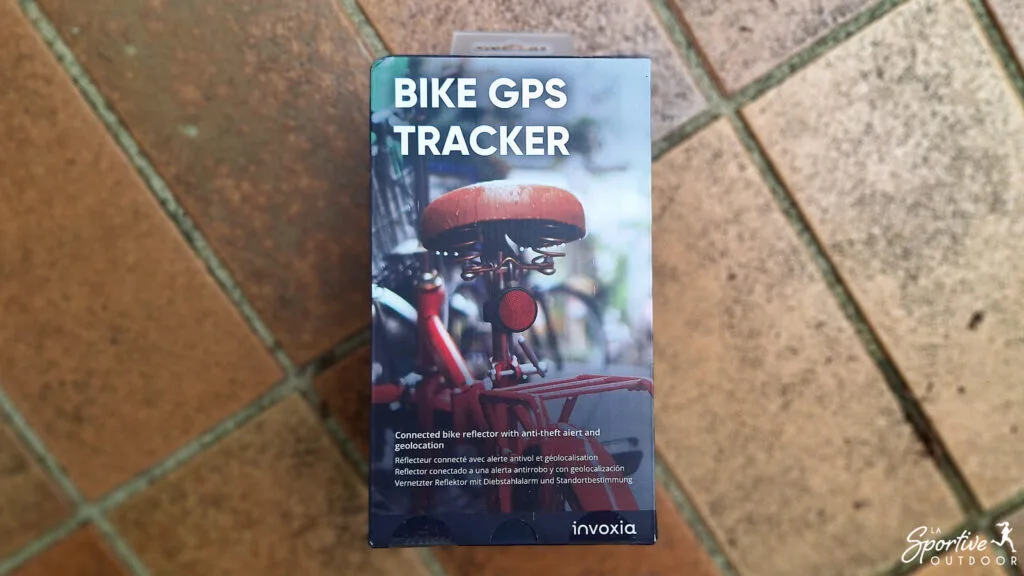
Invoxia’s Bike Tracker lets you geotag your bike at all times. The small tracker is encased in an accessory that looks like a rear reflector. It tracks the bike in real time and can alert the user via smartphone notifications when the bike leaves certain designated areas.
Unlike Bluethooth proximity trackers such as AirTags, this tracker uses surrounding WiFi networks and satellite signals to locate you at a distance. For this reason, it requires a subscription, the first three years of which are free with the purchase of the Bike Tracker.
It’s useful for urban cyclists who want to protect their bikes from theft and be able to locate them if necessary.
Features
- Dimensions: 42 x 24 x 17mm
- Weight: 15g
- Rechargeable battery: lithium-ion 300 mAh, 3.7V-1.11 Wh
- Geolocation: WPS (Wi-Fi Positioning System), GPS
- Connectivity: BT4.0 (BLE), WPLAN LoRa & SigFox (868mHz/915mHz)
- IP67 protection: complete protection against dust for extended periods, and protection for short periods of immersion in water less than 1m deep.
- Temperature range: 0°C to 40°C
- Temperature limits: -20°C to 60°C
- Guaranteed for two years in Europe, one year in the rest of the world
- Autonomy from three days to eight weeks depending on mode
The Invoxia brand
Comment soutenir La Sportive Outdoor?
L'une des façons de nous soutenir est de faire vos achats via nos sites partenaires.
L'idée n'est évidemment pas de vous pousser à la consommation: n'achetez que ce dont vous avez besoin mais, lorsque vous le faites, passer par nos liens nous aide car nous touchons ainsi une petite commission sans aucun coût supplémentaire pour vous.
Vous pouvez par exemple en ajouter certains en favoris pour vos prochains achats. Pensez à accepter les cookies de nos partenaires dès l’arrivée sur leur site.
- i-Run: jusqu'à -50% pour les Running Weeks
- Ekosport: -20% extra sur les nouveautés rando et bivouac
- Intersport: des offres sur la randonnée (notamment)
- Muule: 15% de promo avec le code VIP15
- Decathlon: pas mal de bons plans
- Lyophilisé&Co: lyophilisés, nutrition sportive et matos de bivouac
Pour plus de façons de nous soutenir, c'est ici.
Invoxia is a French brand specializing in connected GPS trackers. It offers discreet, stand-alone, SIM-free devices using low-power networks.
Our full Invoxia Bike Tracker test
Design
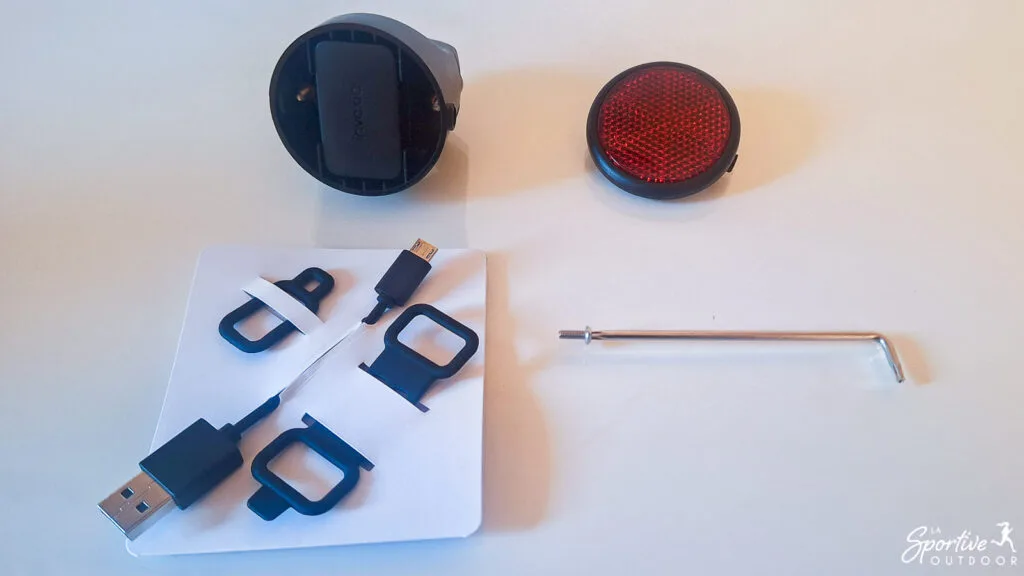
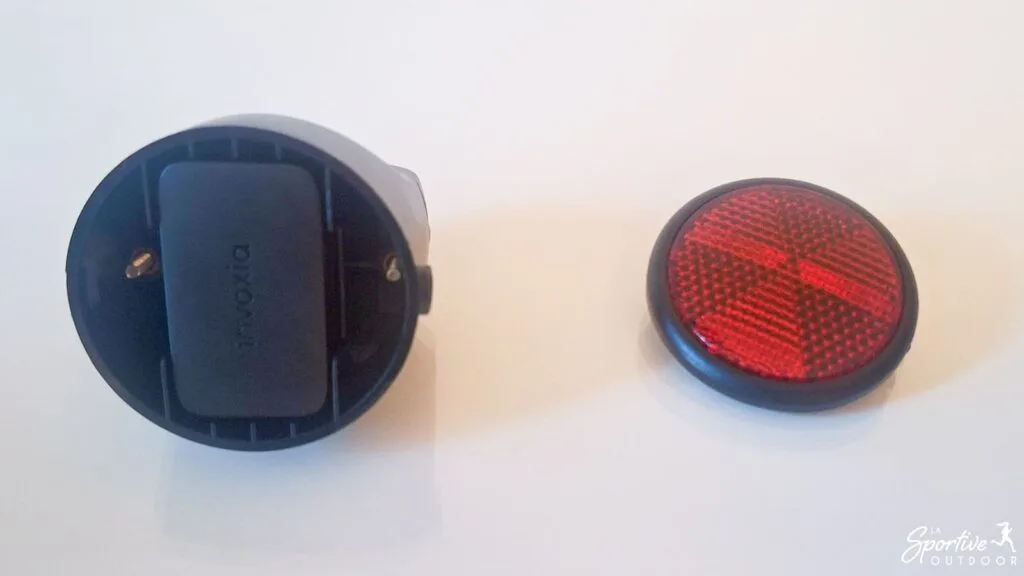
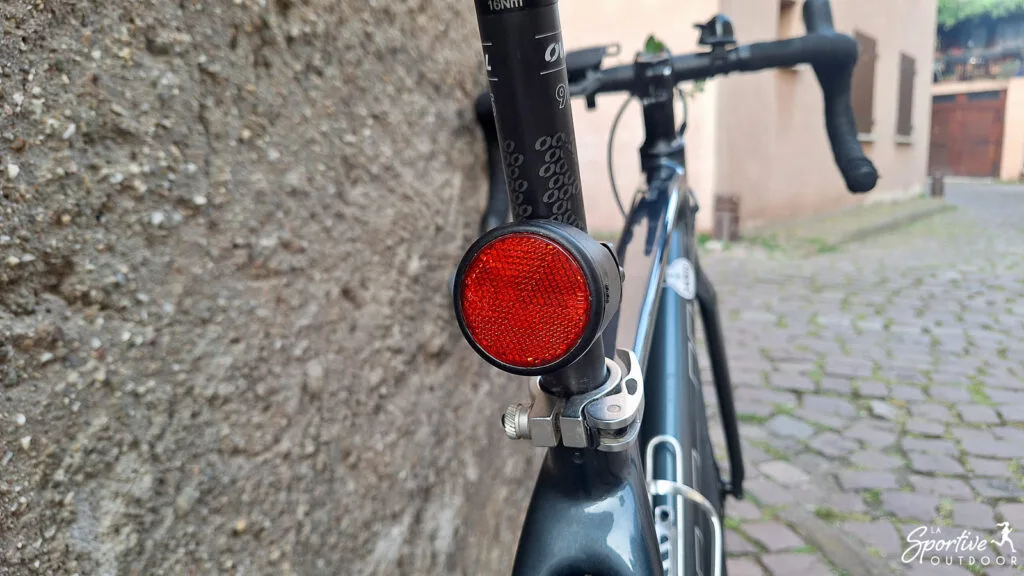
The small rectangular housing slides into a reflector , which in turn is mounted on the seatpost. Note that this format can only be fitted to conventional cylindrical seatposts, not to profiled ones.
A tracker is useful if it’s invisible to thieves, but the GPS technology used doesn’t allow the box to be placed completely hidden under the frame or in the seatpost, where it can’t pick up any signals.
Invoxia’s solution was to “disguise” it as a reflector. This approach will fool less perceptive thieves, but if you’re looking for a tracker on a bike, the unusual size of the reflector will quickly tip you off. It would then be very easy to break it open and extract the tracker.
At present, there’s no foolproof solution that offers remote geolocation and the ability to hide the tracker on traditional bikes, so Invoxia has found a good compromise. Some electric bikes, such as those fitted with a Bosch motor, would benefit more from a dedicated GPS tracker that installs in the motor, and is therefore completely invisible.
Installation
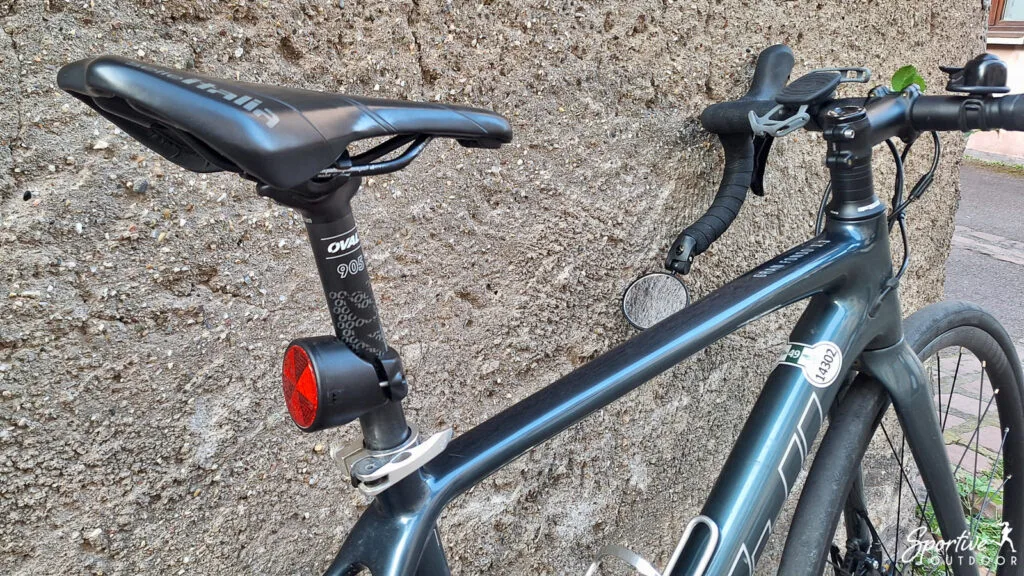
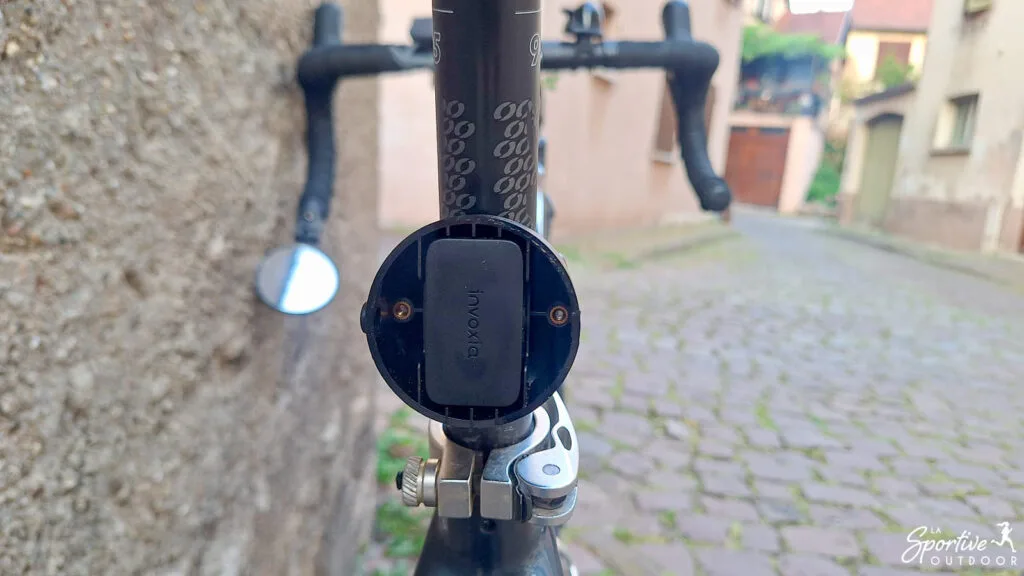
The marker is supplied with a small TORX wrench drilled for mounting. Installation is simple: the reflector attaches to the seatpost and the top is removable for inserting and removing the marker.
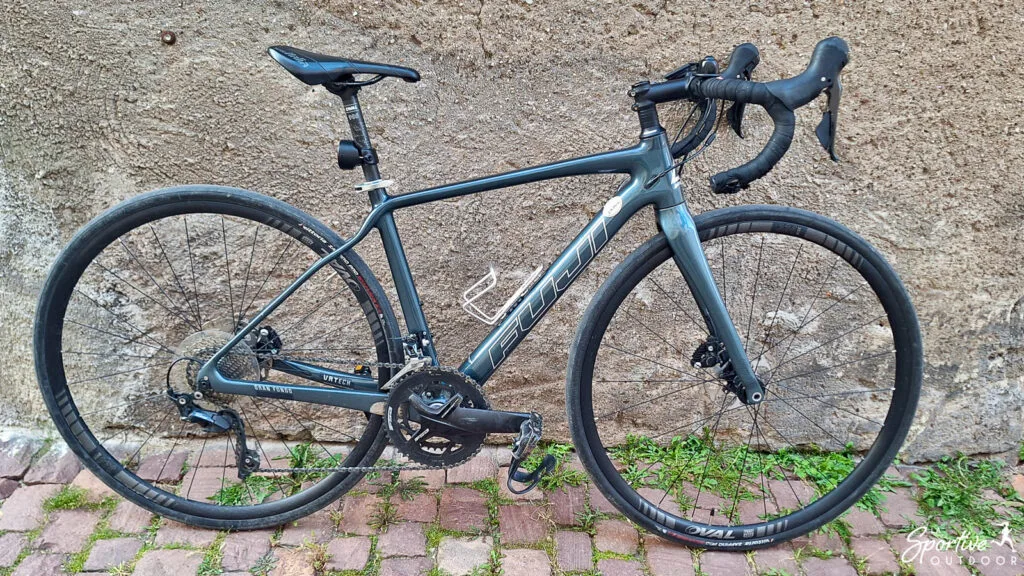
Invoxia specifies that the tracer should not be placed under or encircled by metal, in a pocket (as the body can also block signals) or any other place without a network. It is therefore preferable to attach it to the seatpost as specified by Invoxia.
In practice, I lost all track of the bike when it was in the boot of my van or stored in the garage of the building. So it’s essential to think carefully about the positioning of the bike and the tracker to get the most out of them.
Connectivity
The Invoxia Bike Tracker can be paired with all modern smartphones via Bluetooth.
In France, it uses the Lora network (Orange), which has poor coverage of Corsica and no coverage of overseas territories. In Europe, the Sigfox network covers many countries, with varying degrees of reliability. In Switzerland, it’s the Swisscom network. In the UK, there is currently no solution. Crossing a border means losing track of the bike, and the tracker has to be reset.
This tracker is therefore not suitable for frequent travellers or cross-border commuters. Disconnecting it and connecting it to a new network doesn’t take long, but the process is too involved to be done every day, and would consume more battery power.
Invoxia GPS application
Pairing the Invoxia Bike Tracker with the application is quick and easy, via Bluetooth.
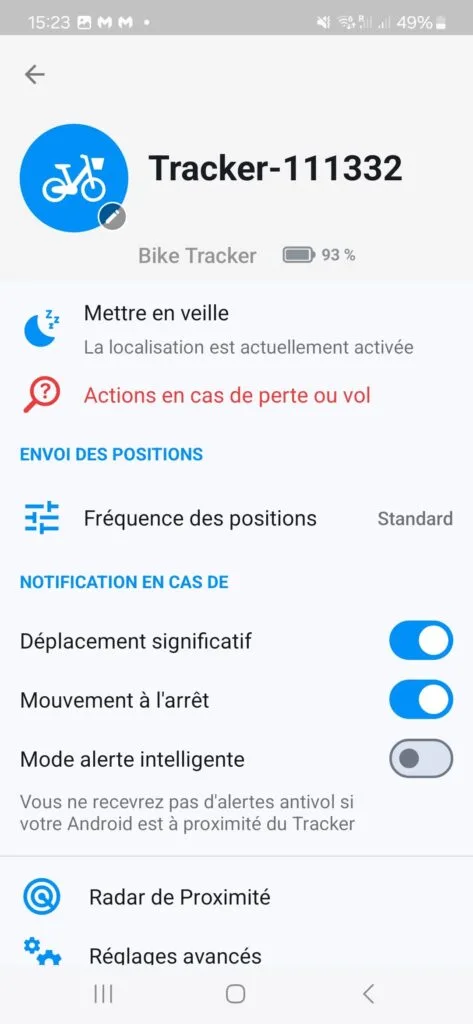
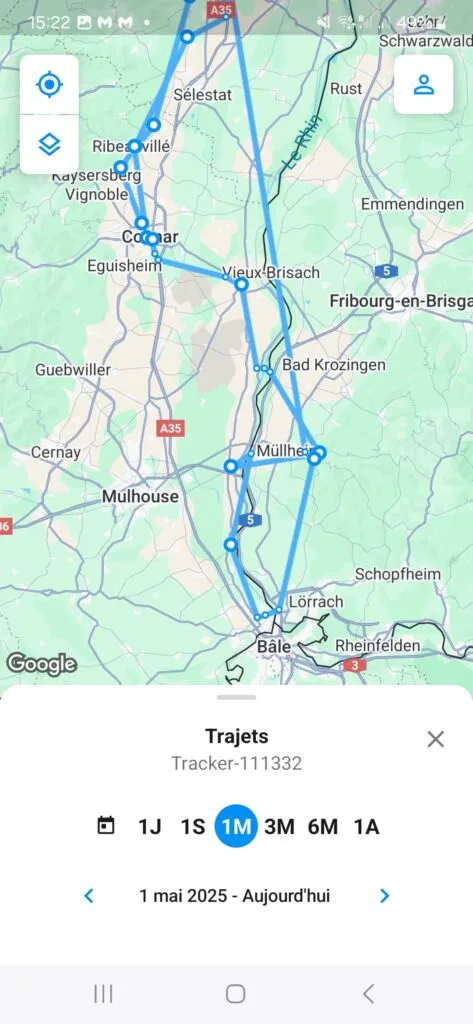
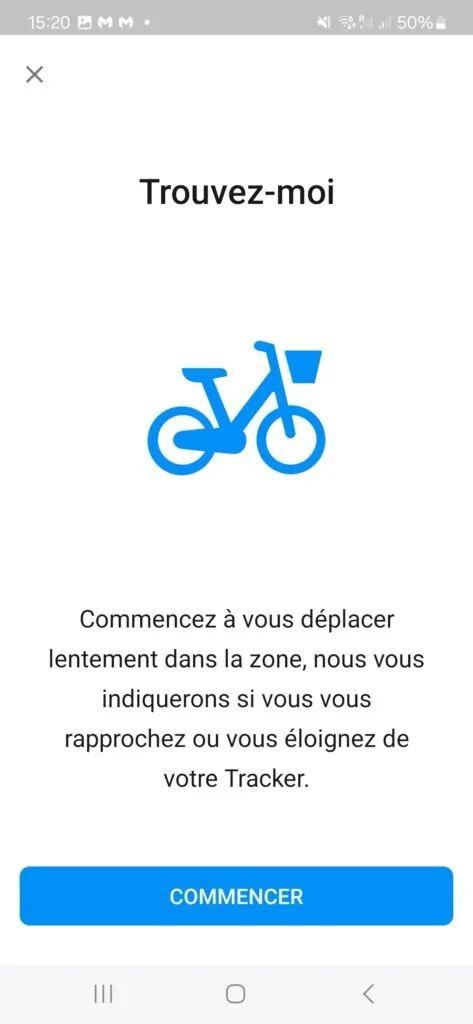
The application lets you set the geolocation frequency, and therefore the tracker’s autonomy, as well as other functions such as defining alert zones to be warned if the tracker leaves the zone. The application can also be used to track the tracker’s movements, or to find it when it’s nearby but you don’t know exactly where.
The interface is easy to navigate and theAI assistant is generally able to answer questions. I used the assistant when I was trying to figure out which network to connect to and how to change it, and the answers were focused and consistent.
Protection against theft and vandalism
The first feature allows you to track your bike in the event of an incident, as long as the tracker is still on the bike and has access to the network.
In the event of theft, you can also download a Theft File, containing information such as the tracker’s last known position. This document, sent to the authorities, can help them recover the bike. The Record of Theft also constitutes proof of the incident for insurance purposes.
You can create alert zones, and also receive notifications in the event of a shock or unexpected movement.
Autonomy
Tested in standard mode, with a position update every 10 minutes, Invoxia claims autonomy of up to eight weeks. In practice, I had to recharge it after two weeks. The battery level drops very slowly, until the connection is lost. Recovering the tracker dramatically reduces the battery, sometimes by as much as 25% all at once.
The tracker recharges in just a few hours using the supplied micro-USB cable.
Conclusion
Invoxia’s Bike Tracker is easy to use and competitively priced, especially when you consider the three-year subscription included with every new tracker. Bike Tracker is ideal for urban cyclists who want to protect their bikes from theft.
For frequent travelers or cross-border commuters, it’s best to use an international tracker, such as Invoxia’s Tracker GPS Pro (which you’ll need to conceal yourself), or Cycloop’s special bike tracker.
Geolocation works well, within the limits of the available network, and if you know how to place your bike in well-exposed locations.
All in all, Invoxia’s Bike Tracker does what it promises. No tracker is infallible, and getting your bike back, even when you know where it is, depends above all on the resources of the police at the time of the theft. A tracer is therefore no substitute for good insurance.
So before you decide to buy any tracker, I recommend you make a personal calculation between the cost of more generous insurance for your bike in the event of theft and the cost of the tracker and subscription each year.
For me, the decision is clear: I’d rather invest in a good lock and insurance so that I’m covered whatever happens, than attach a new element to my bike and have to keep an eye on its battery level.
Le produit nous a été envoyé par la marque. Cela ne change rien à notre opinion, les marques avec lesquelles nous travaillons comprenant que l’idée du test est de donner notre avis, avec ses points positifs et négatifs. Cet article contient des liens d’affiliation.