

10 days bikepacking in Scotland – Trip report
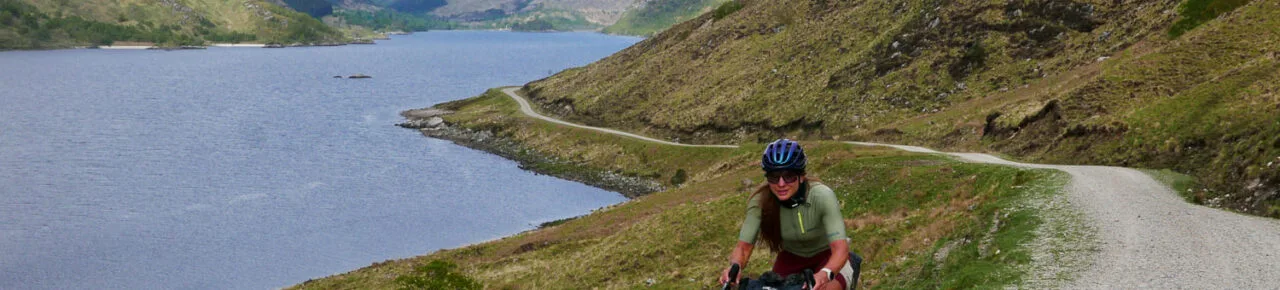
I'd been dreaming of cycling through the Scottish countryside for some time, with its many lakes surrounded by rolling green hills and the rugged coastline of the Highlands. Last May, I set off with my partner for Edinburgh, for ten days of bikepacking in Scotland. In this article, I share with you my day-by-day account of the trip.
Summary
- Video summary
- Stage 1- Edinburgh to Aberfoyle
- Stage 2 - Aberfoyle to Innerwick
- Stage 3 - Innerwick to Glen Nevis
- Stage 4 - Glen Nevis to Oban
- Stage 5 - Isle of Mull
- Stage 6 - Kilchoan to Traigh
- Stage 7 - Traigh to Carbost
- Stage 8 - Carbost to Dornie
- Stage 9 - Eilean Donan castle and Bealach na Bà
- Stage 10 - Shieldaig to Inverness
Video summary
Weather and mosquitoes
The month of May seemed ideal to us, with good weather on the whole (especially for Scotland, which doesn’t have a very good reputation in this respect!) and almost no blood-sucking midges. On the other hand, don’t forget your mosquito repellent if you’re planning to go camping, as we got quite a few off our bodies!
Stage 1- Edinburgh to Aberfoyle
Discover Edinburgh
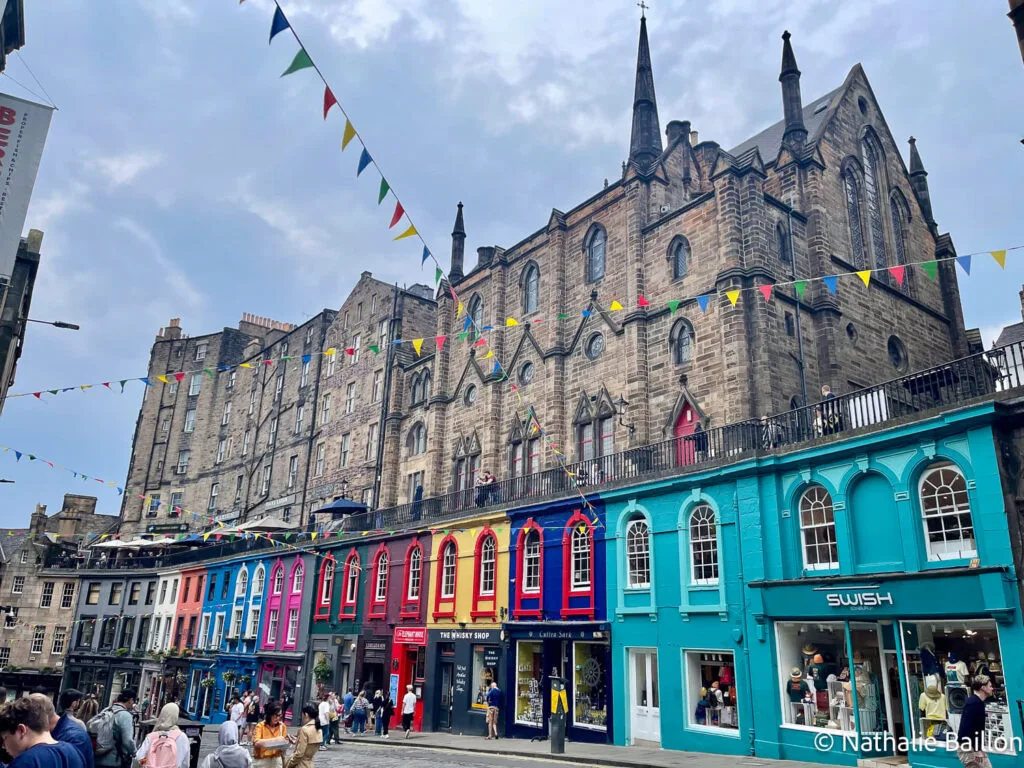
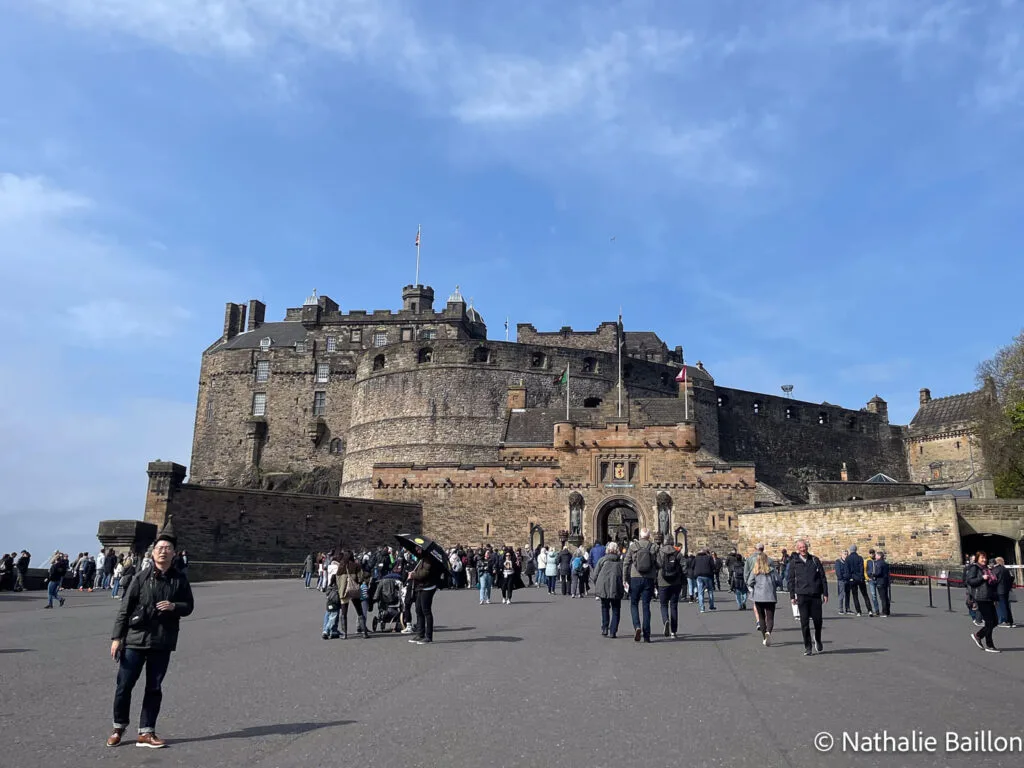
We set off from the charming city of Edinburgh, a UNESCO World Heritage Site. I was lucky enough to have a local contact, Matt, who gave us plenty of advice on our Scottish itinerary and adapted it according to the weather. He accompanied us for the first few kilometers and guided us through the capital. We walked up the famous Victoria Street with its colorful facades , then climbed up to the castle, Castel Rock, from where we had a breathtaking view of the city.
Union canal and Linlithgow
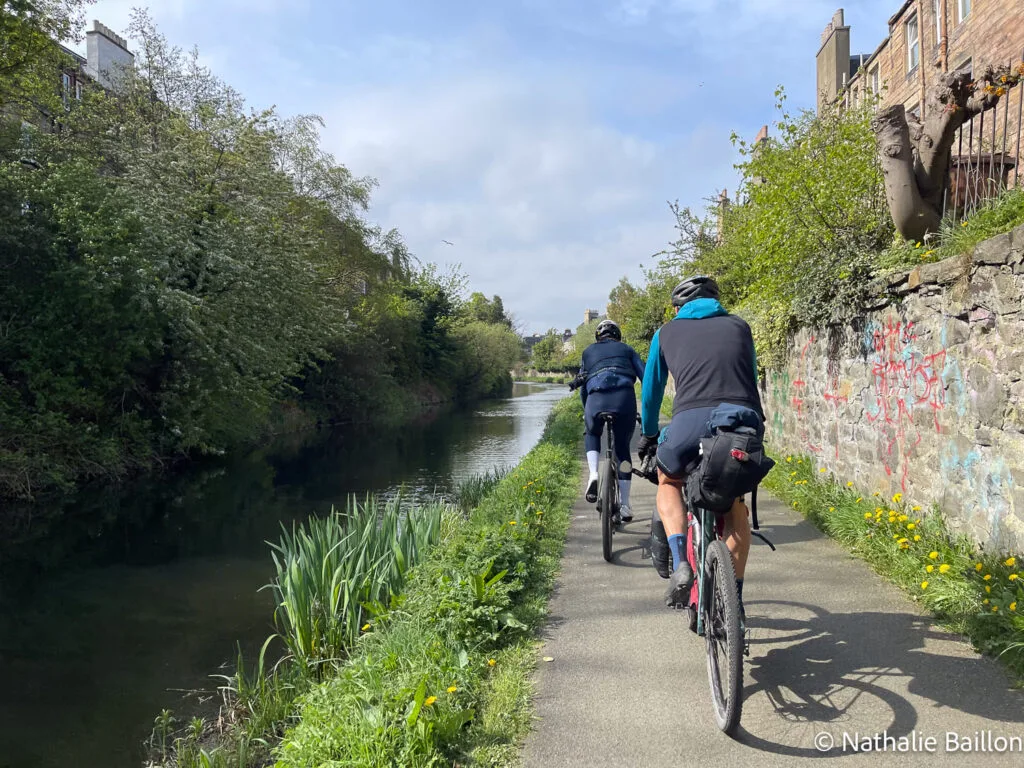
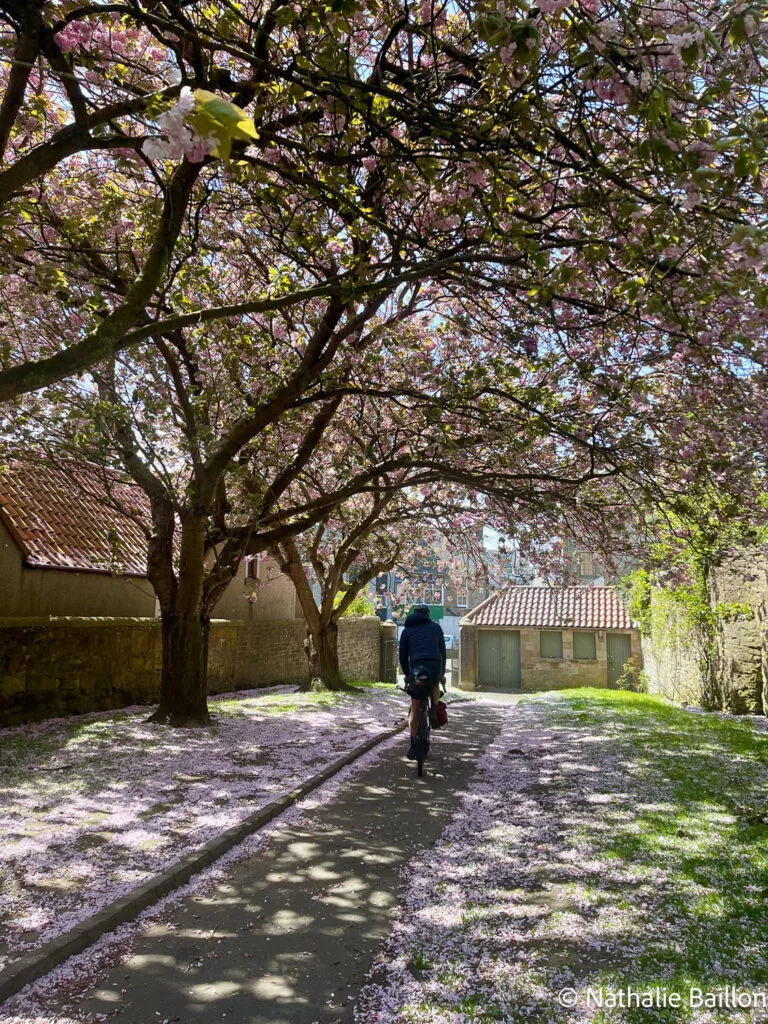
After this quick tour of the metropolis, we drove along the Union Canal for some sixty kilometers. It’s quiet and bucolic, but you still have to watch out for the many walkers and their dogs who share the path. We stopped for lunch at the Park Bistro on the canal bank. It offers a menu with local specialties (burgers and fish & chips) and vegetarian options. We then took a short detour to Linlithgow to visit the palace gardens. There were some magnificent cherry blossom trees.
Stop the Kelpies
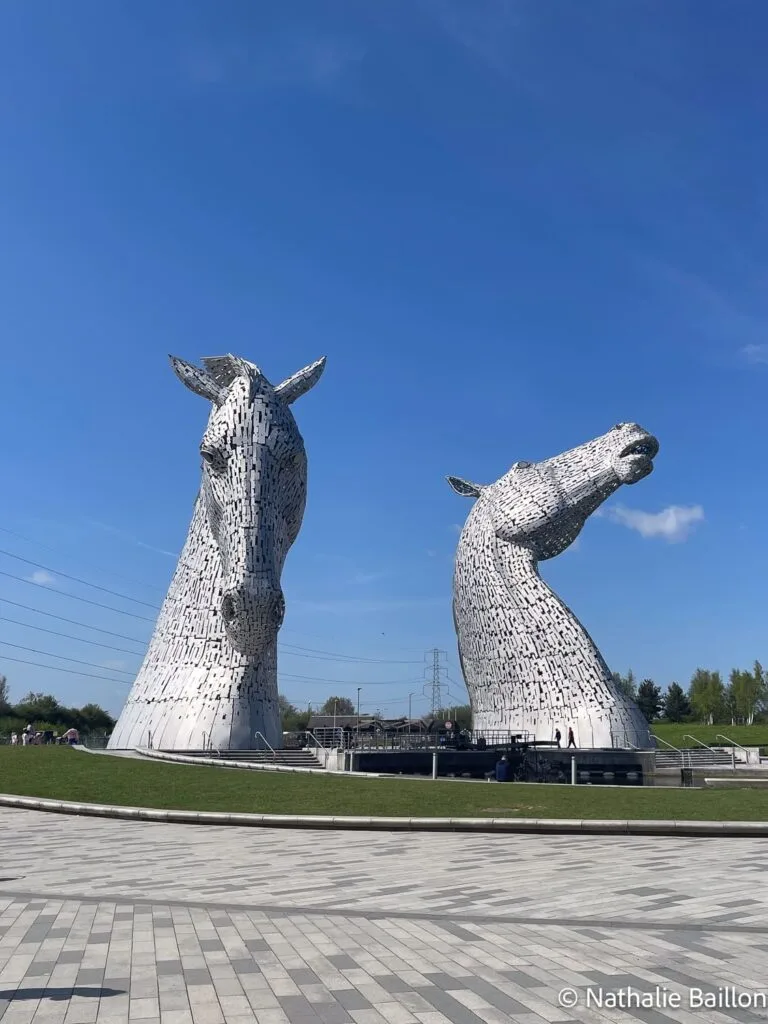
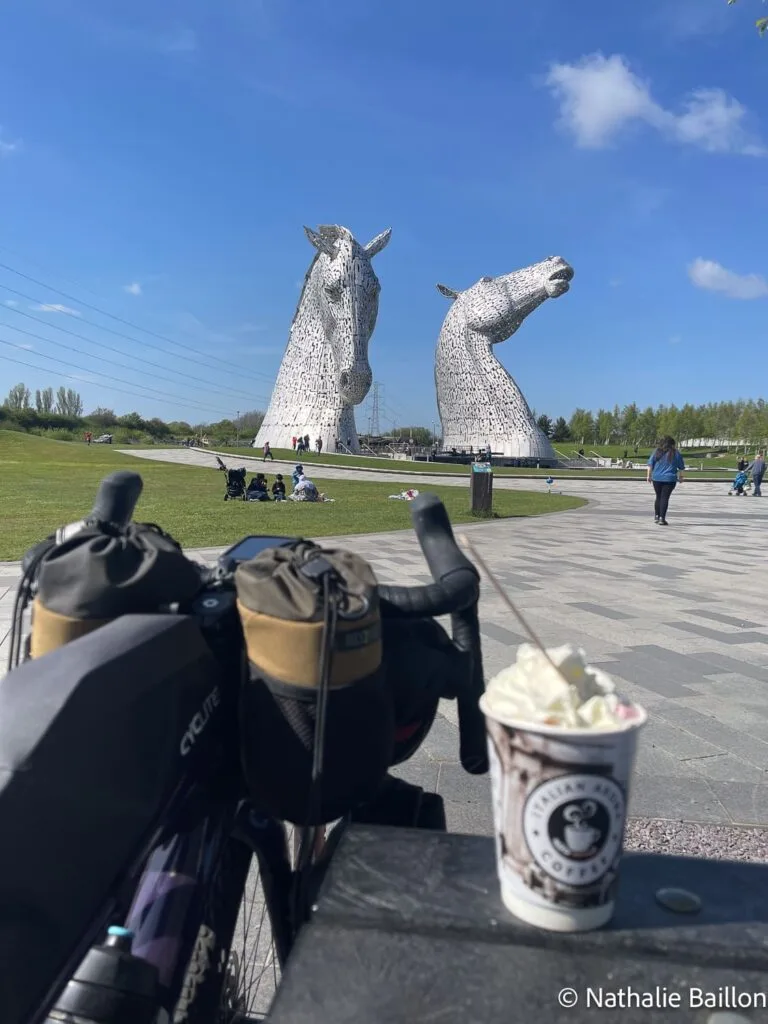
We took the canal route back to Falkirk and its impressive lock. This model of “wheel” is unique in the world and a remarkable work of civil engineering. We then stopped in front of the majestic Kelpies, a giant metal sculpture representing the heads of 2 horses. While the name derives from mythical creatures of Scottish folklore, the monument is actually dedicated to the country’s equine heritage. On the spot, I took the first of my many hot chocolates topped with whipped cream and garnished with marshmallows, a delight!
Aberfoyle and bivouac
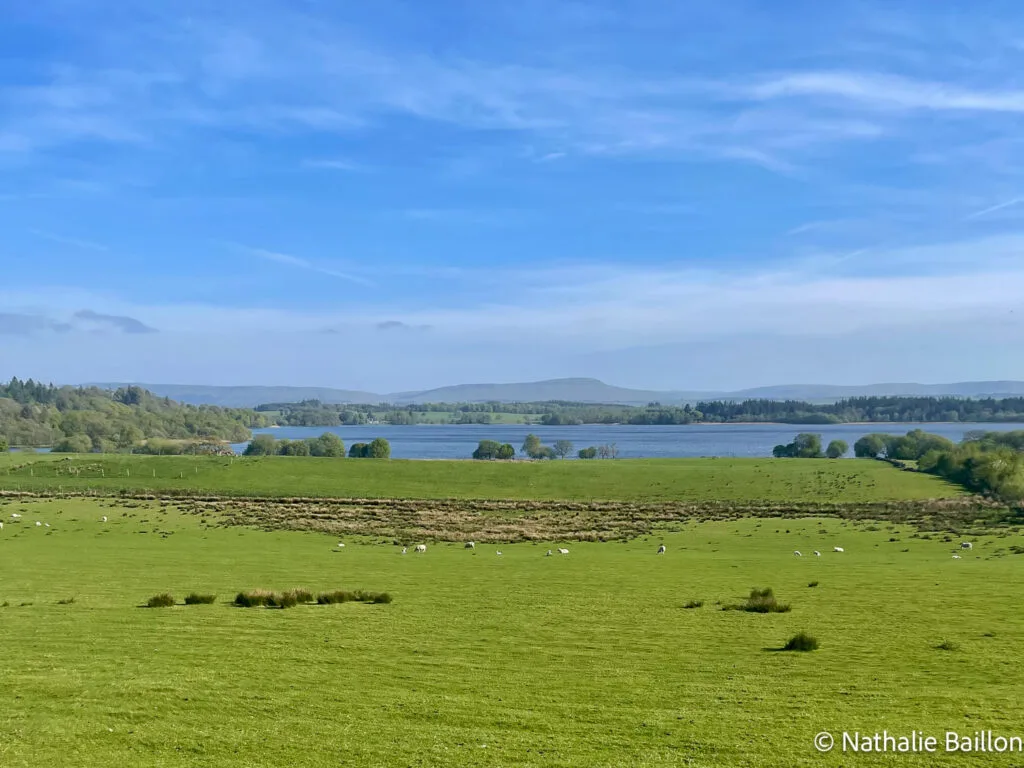
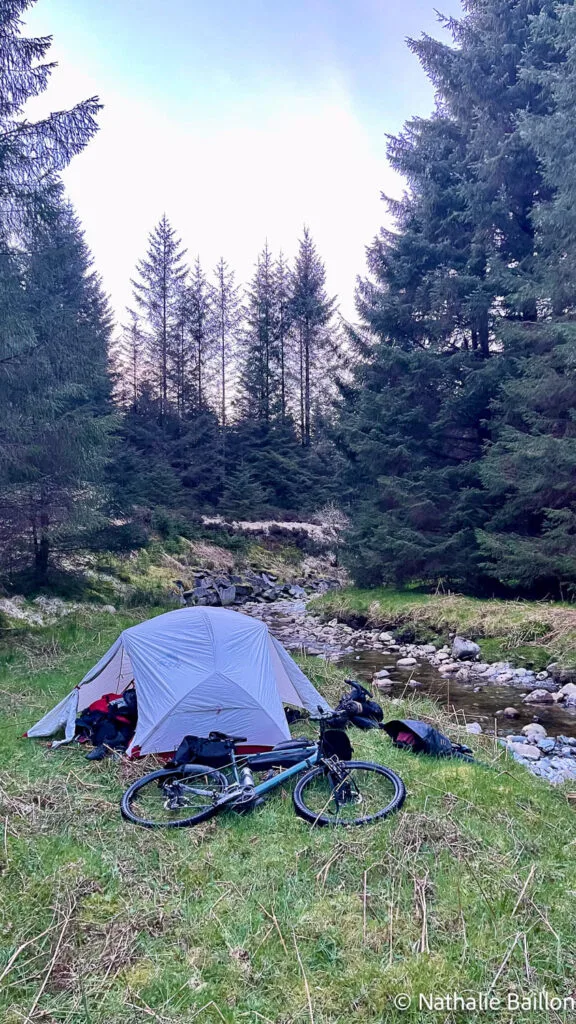
After this sightseeing break, we continue on to Aberfoyle, the last village before Loch Lomonds and the Trossachs National Park. There’s plenty to eat, drink and sleep in. For our part, after dinner in a traditional bistro, we headed back to the park, where we camped by the river. There was also a good bivouac option with a table and a view of the lake upstream on the trail, but we’d wanted to push a little further when it presented itself.
Comment soutenir La Sportive Outdoor?
L'une des façons de nous soutenir est de faire vos achats via nos sites partenaires.
L'idée n'est évidemment pas de vous pousser à la consommation: n'achetez que ce dont vous avez besoin mais, lorsque vous le faites, passer par nos liens nous aide car nous touchons ainsi une petite commission sans aucun coût supplémentaire pour vous.
Vous pouvez par exemple en ajouter certains en favoris pour vos prochains achats. Pensez à accepter les cookies de nos partenaires dès l’arrivée sur leur site.
- i-Run: jusqu'à -50% pour les Running Weeks
- Ekosport: -20% extra sur les nouveautés rando et bivouac
- Intersport: des offres sur la randonnée (notamment)
- Muule: 15% de promo avec le code VIP15
- Decathlon: pas mal de bons plans
- Lyophilisé&Co: lyophilisés, nutrition sportive et matos de bivouac
Pour plus de façons de nous soutenir, c'est ici.
What equipment do I need for this trip?
Here’s the gear I used on this bikepacking trip to Scotland in May:
- Tent: MSR Hubba Hubba
- Sleeping bag: Big Agnès Star Fire UL 20
- Mattress: Thermarest NeoAir XLite
- Stove: MSR PocketRocket
- Bike: Liv Devote Advanced 1
- Bags:
Stage 2 – Aberfoyle to Innerwick
Loch Lomonds and the Trossachs Park
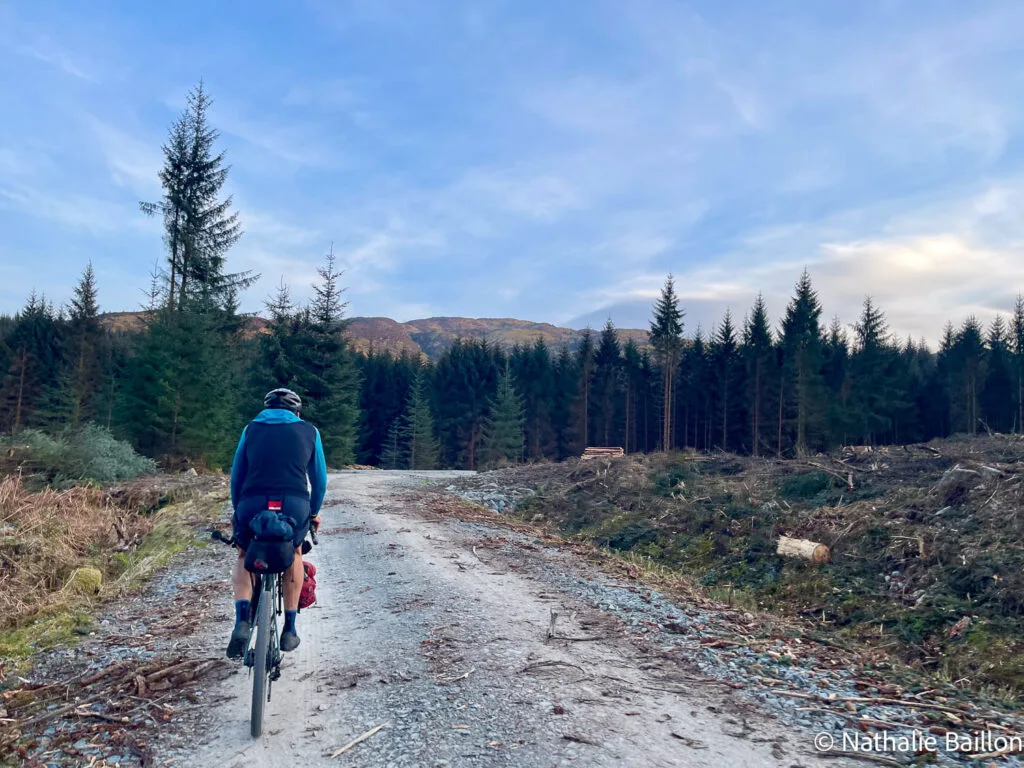
We crossed the Loch Lomonds and the Trossachs park on some beautiful gravel tracks, skirting several lakes on an undulating route. Arriving at Lake Katrine, we took a fork in the road to a riverside café. Here you’ll find everything you need for bikepacking: a water fountain, tools and a pump. Lake Katrine seems to be a popular spot for local cyclists, and we passed many on the road around it.
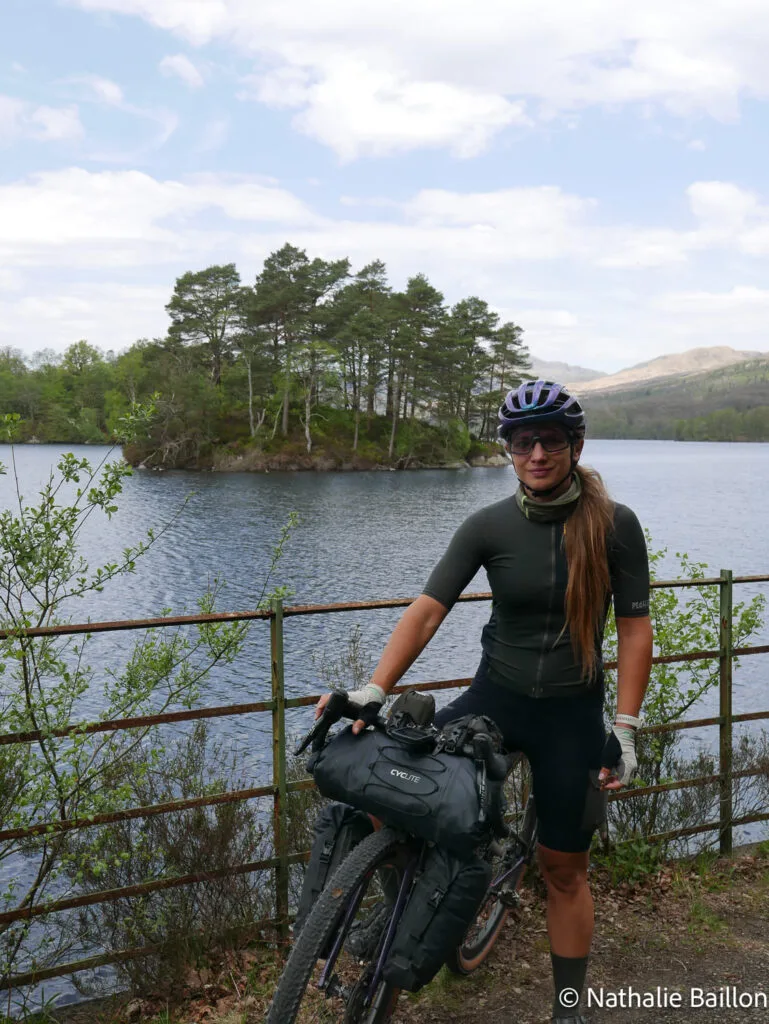
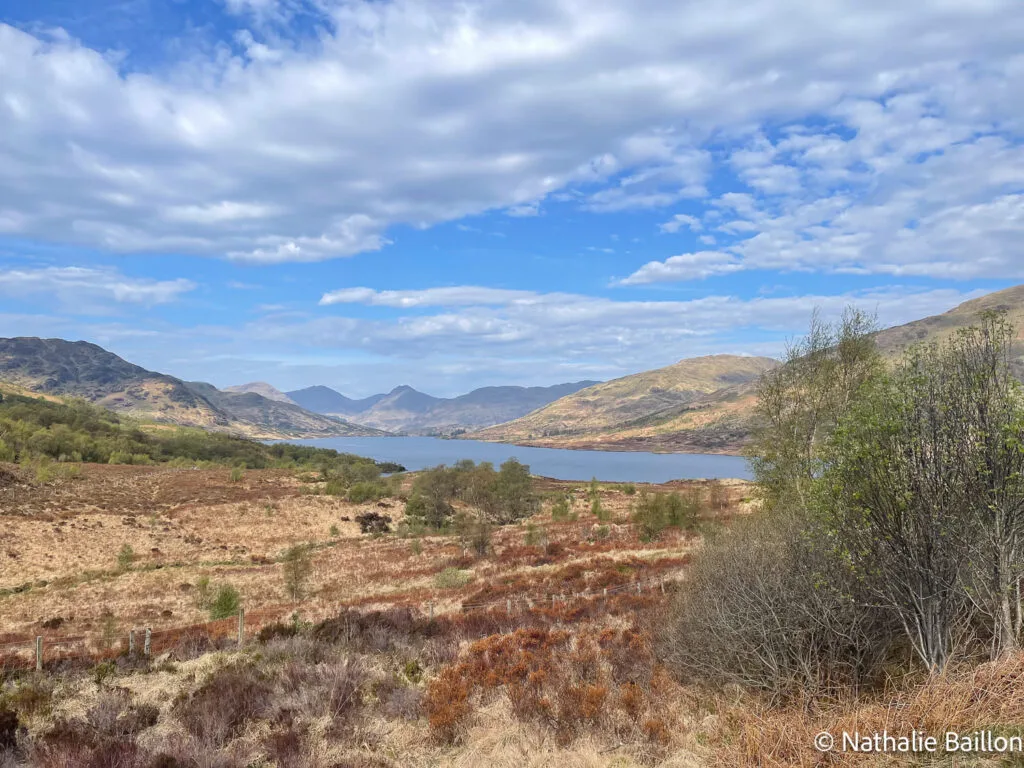
Glen Ogle viaduct and Docharts waterfalls
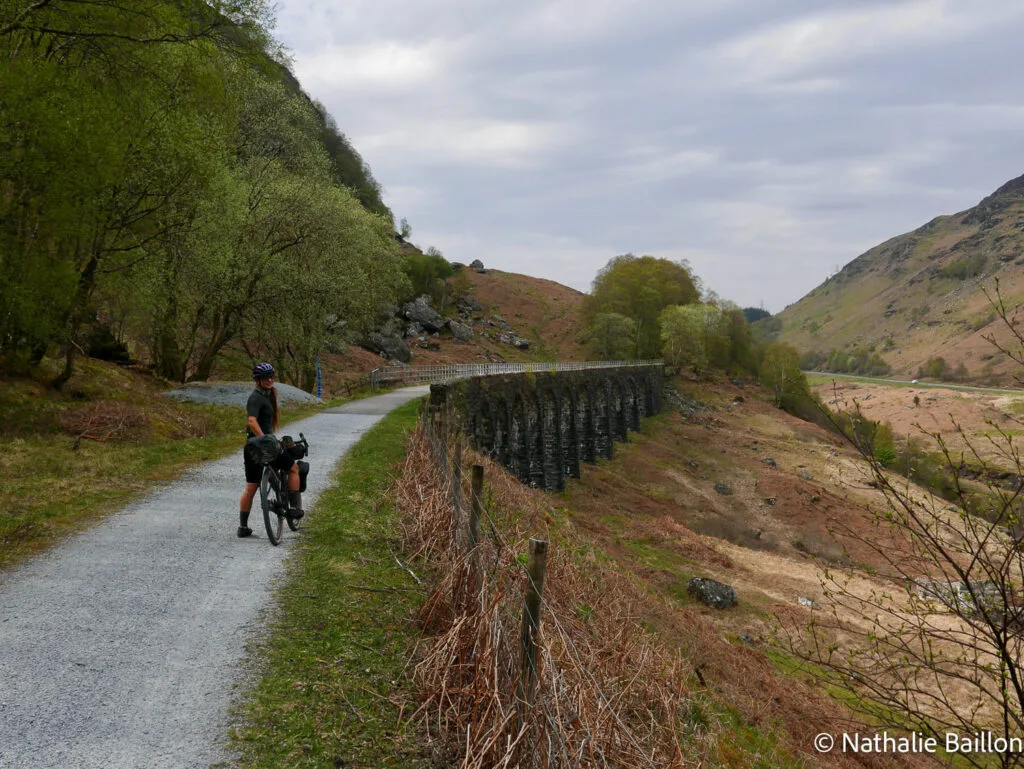
We grab a bite to eat in Callander and buy a canister of gas for our stove. Then we follow a pretty gravel cycle path over the Glen Ogle viaduct to Killin. We stop for cakes on the terrace of a café next to the magnificent Docharts waterfalls, before setting off again on a wilder route. We skirt a river, climb a raidar, follow another stream, before finding ourselves in a valley dotted with sheep.

Camping in Innerwick
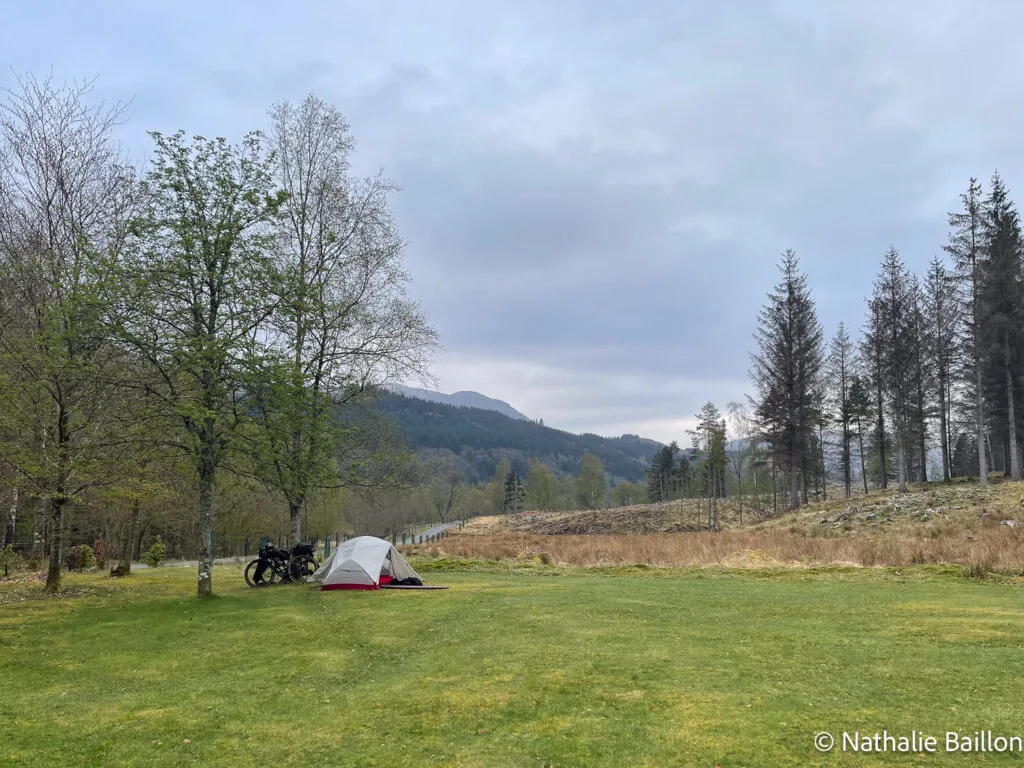
In Innerwick, there’s a camping area with picnic tables, toilets and water. There’s also a pheasant, who will give us a good laugh as he ruffles his feathers and squawks regularly.

Stage 3 – Innerwick to Glen Nevis
Around Ossian Lake
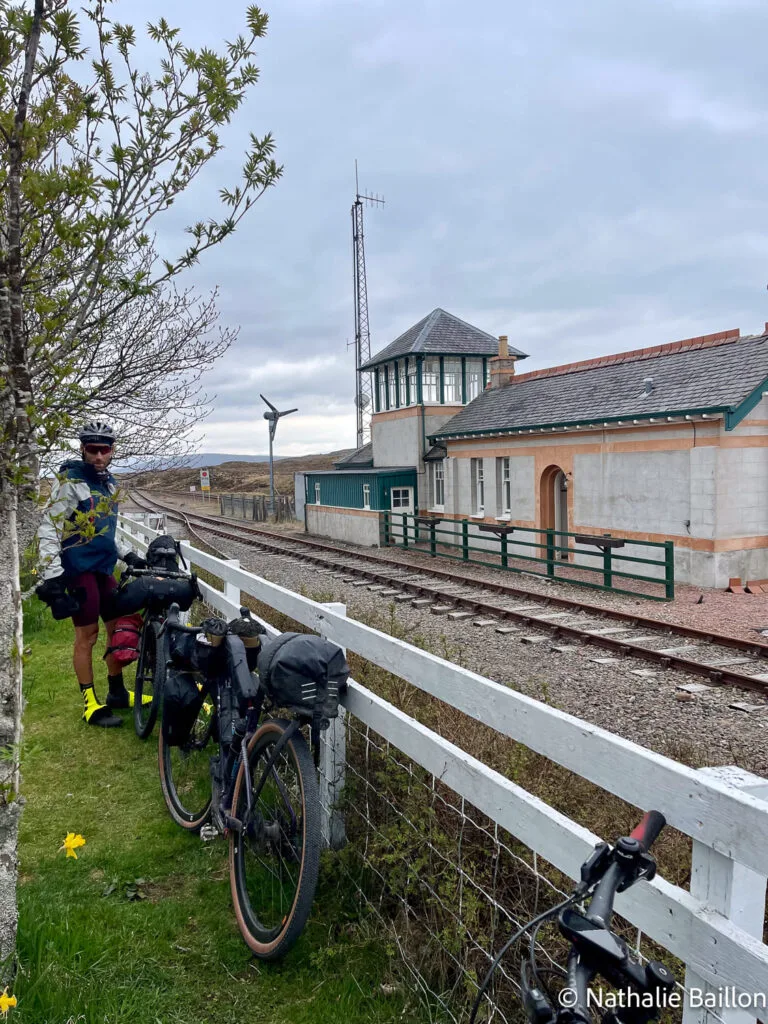
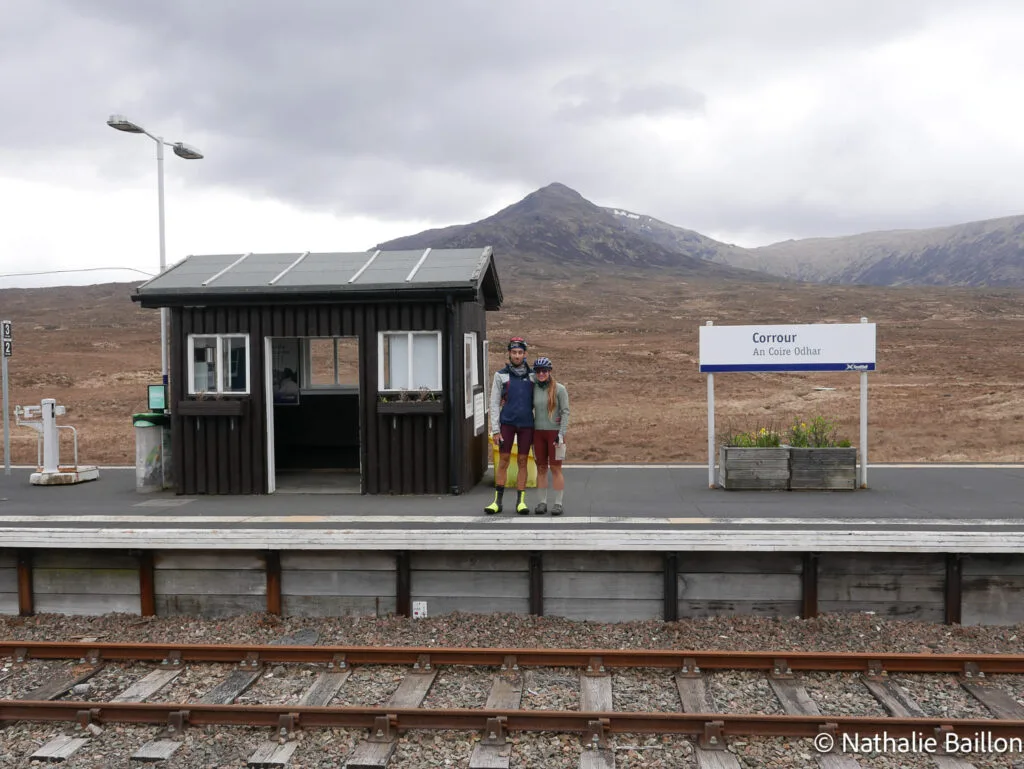
We start the day with a beautiful 2.5 km firecracker to Loch Rannoch, which warms us up quickly despite the early hour. Then it’s on to Corrour train station, Britain’s most isolated railway station, through breathtaking wilderness. I particularly liked the shores of Lake Ossian, dotted with small islands just before the station made famous by a scene from the film Trainspotting. A classic of my teenage years!

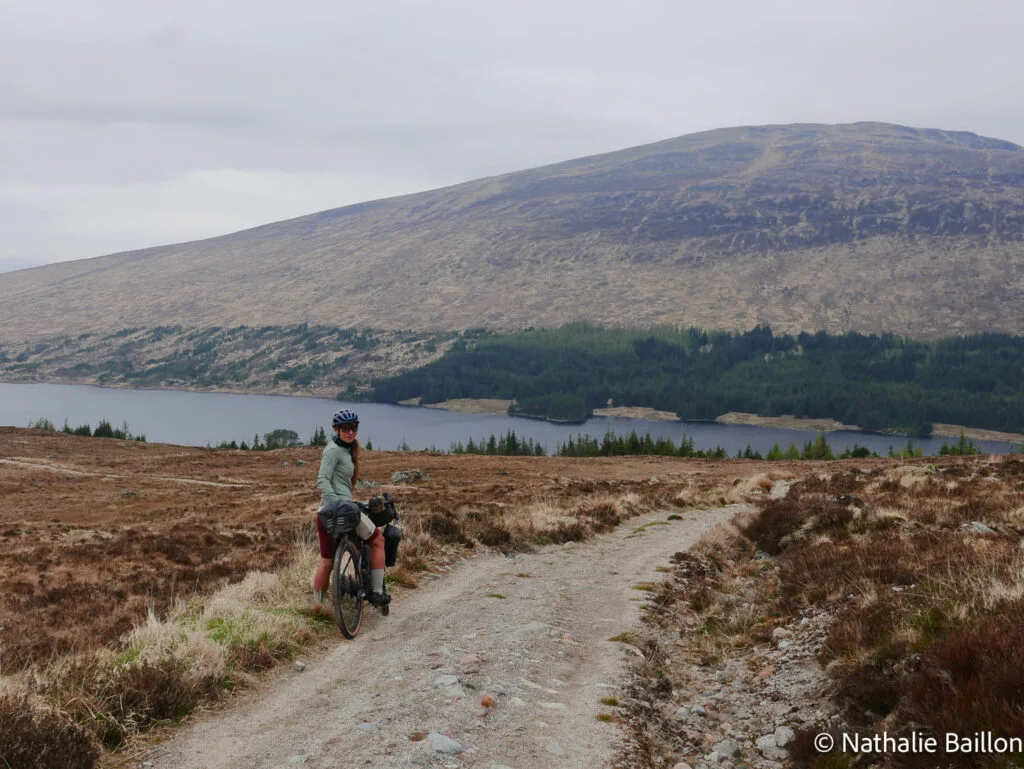
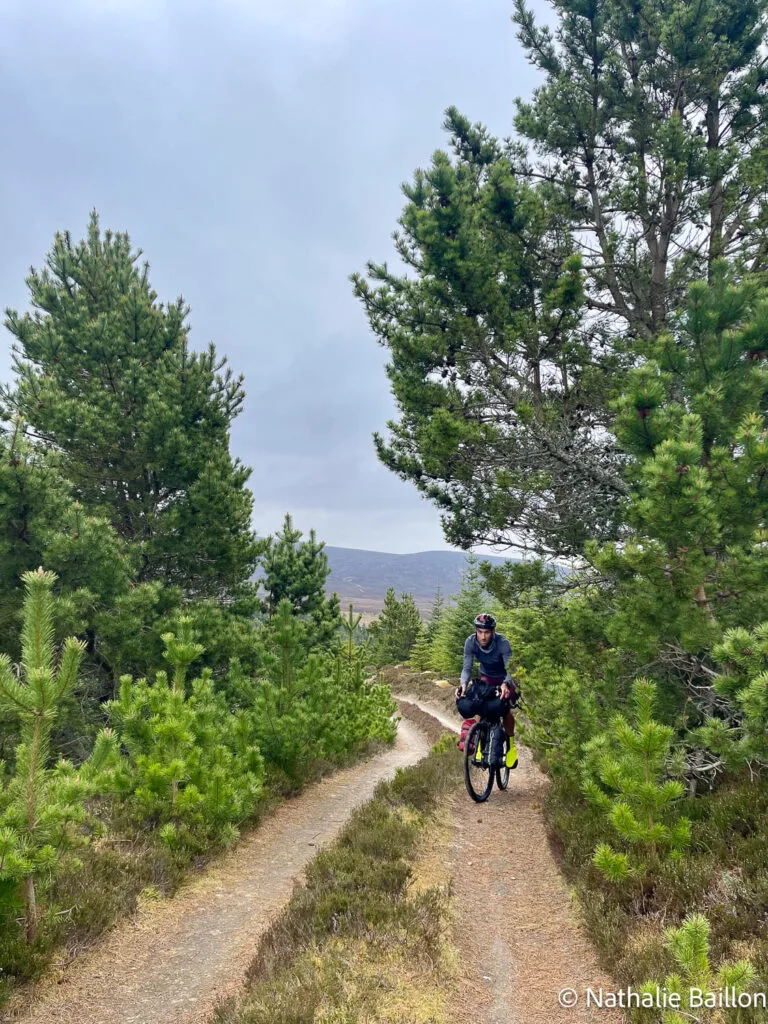
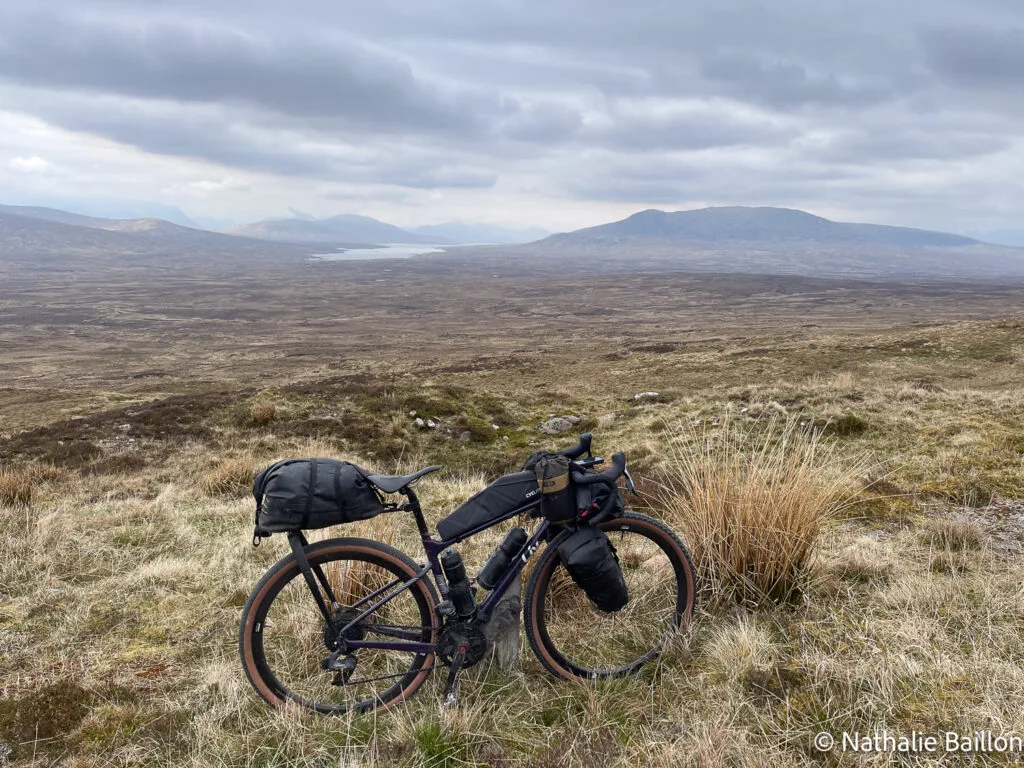
Stopover at Corrour and Glen Nevis campsite
We pass quite a few other bike travelers on the trail, all stopping off at the Corrour bistro. We also stop for lunch, where the food is delicious. A souvenir photo at the station and we’re off again for Fort Williams! All the amenities are there, but we’re arriving during the DH World Championships and all the hotels are full.
So we try our luck a little further on, at the Glen Nevis campsite. Bingo! They allow us to set up camp wherever we find a piece of land large enough to pitch a tent. There’s a small supermarket on site, so we can stock up and have dinner while admiring the surrounding mountains.
Stage 4 – Glen Nevis to Oban
On the West Highland Way
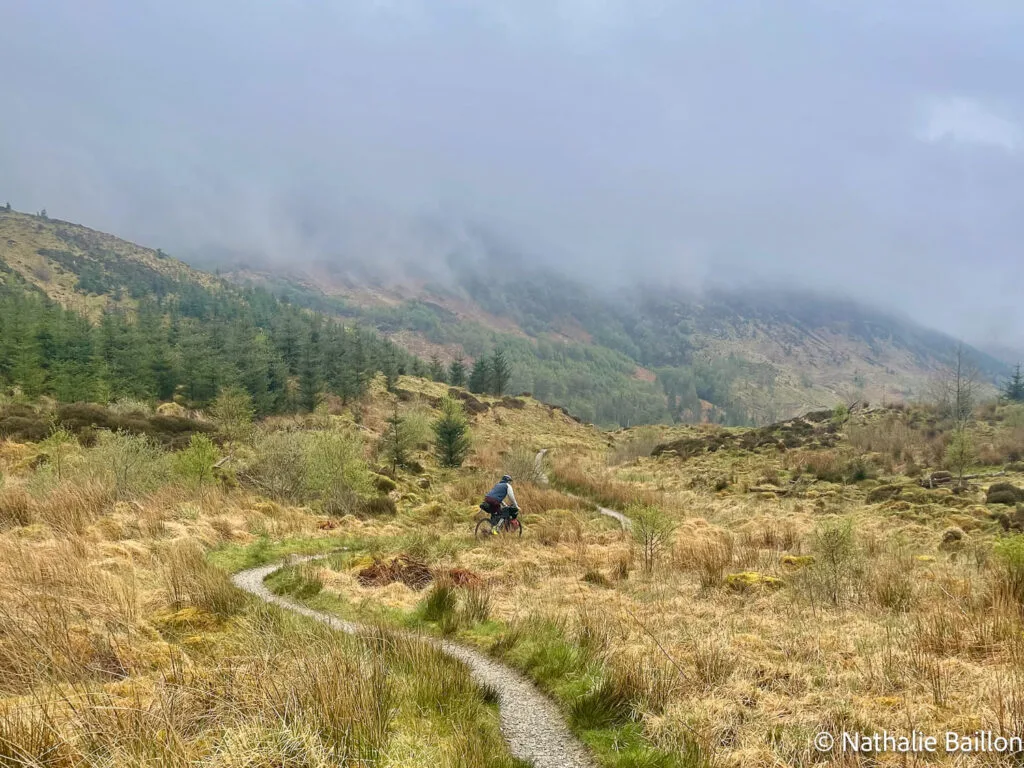
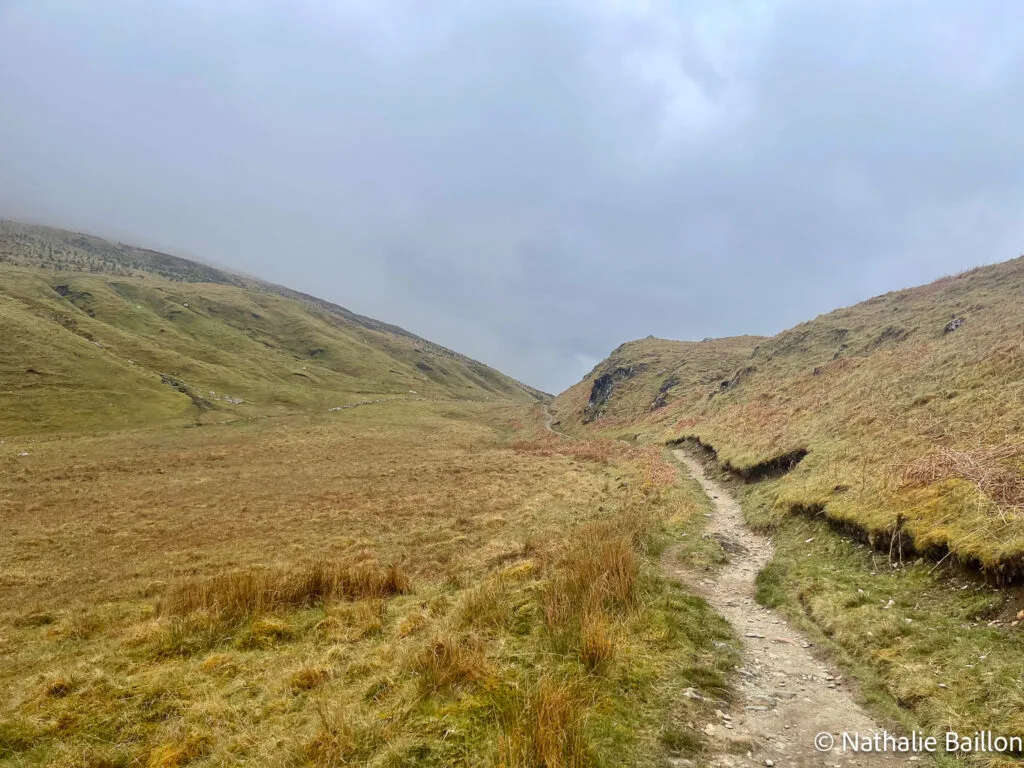
We ride part of the West Highland Way between Fort William and Kinlochleven, a well-known Scottish hiking trail. Although the bikes have to be carried for a few metres, the vast majority of the route is rideable, albeit rocky and uneven at times. This national park is much more crowded than the last ones we’ve hiked, and a thick mist obscures the view, but it’s still pretty.
On the shores of Lake Linnhe
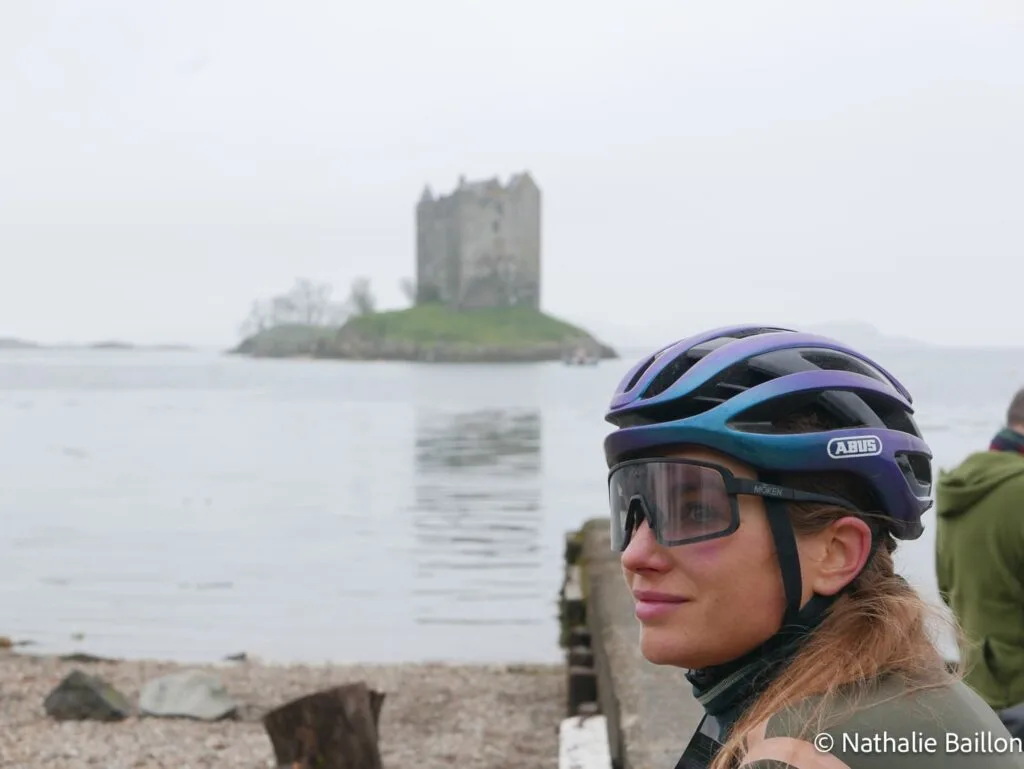
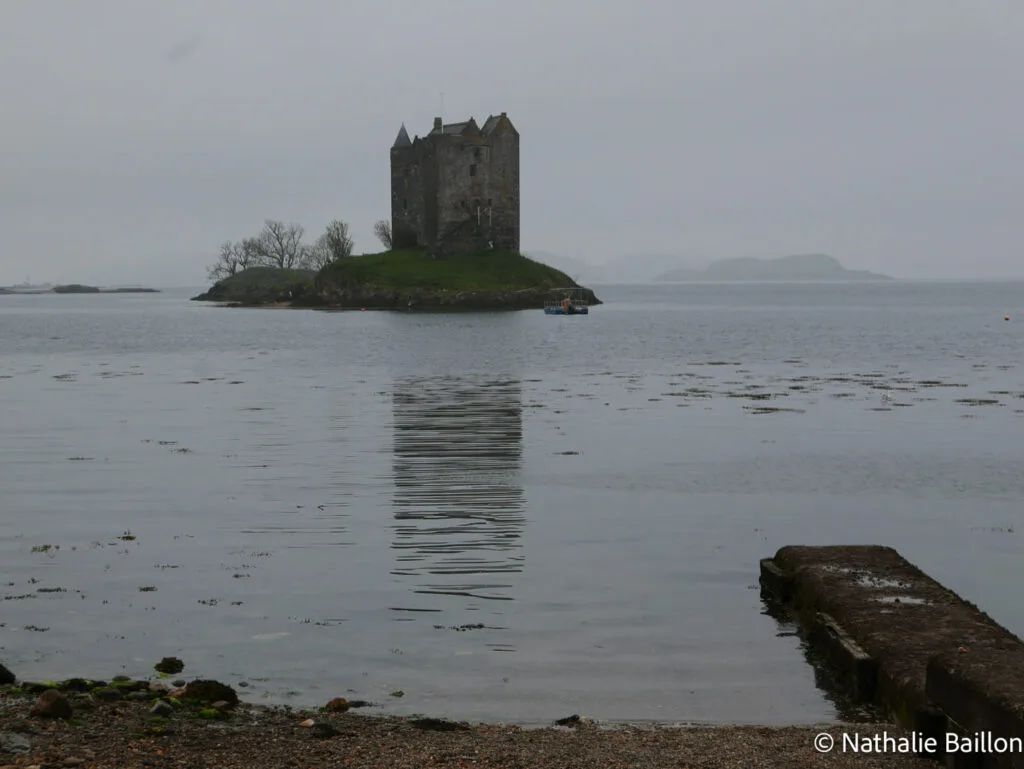
Matt joins us in Kinlochleven for lunch. The second part of the day is more leisurely, with most of the route following a lovely cycle path along Lake Linnhe. One of the highlights on the way is Stalker Castle, isolated on an island in the middle of the lake.
End of the day in Oban
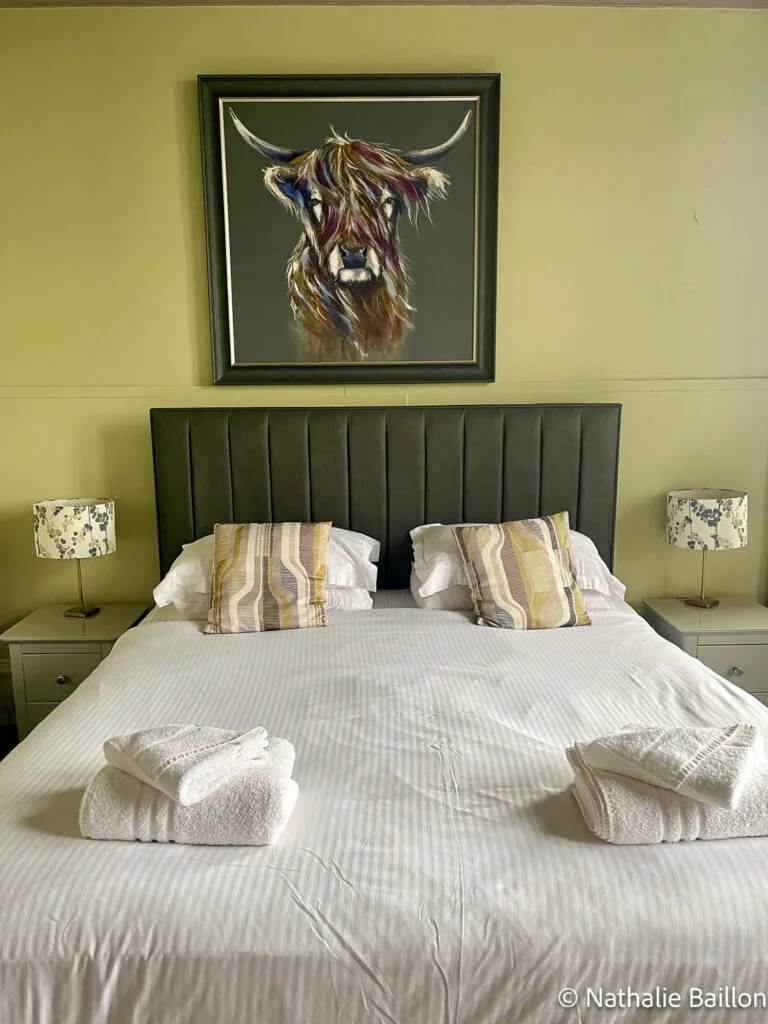
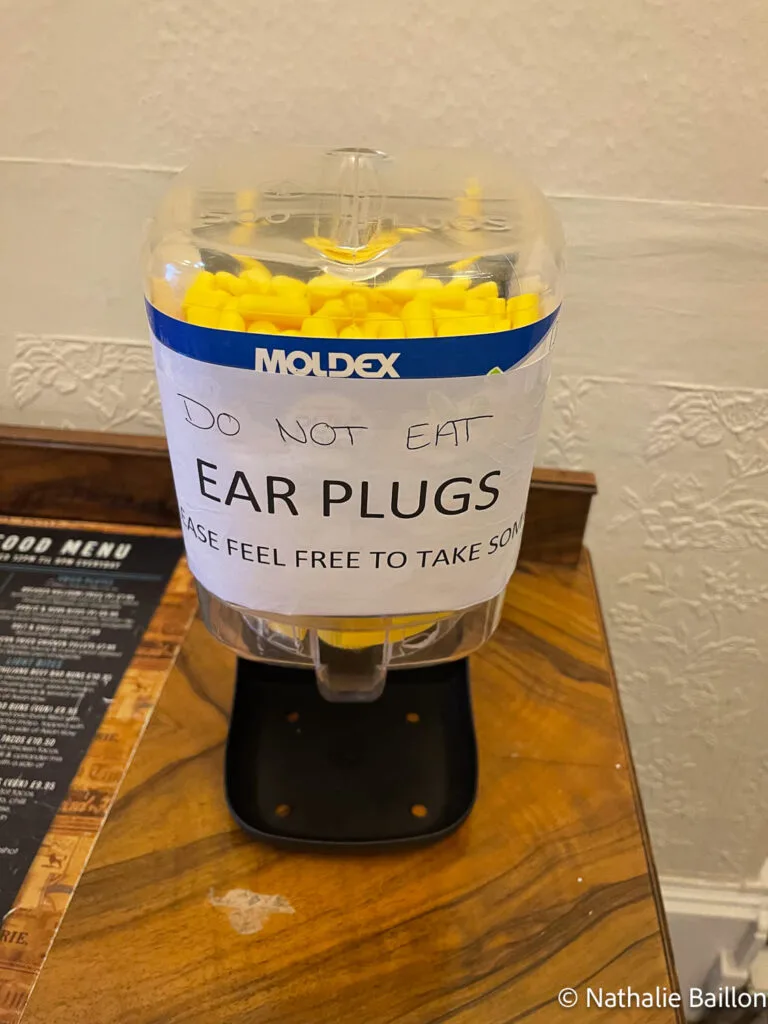
We stop for the night in the charming town of Oban , where we take the ferry to the Isle of Mull the next day. We stay at Hotel Coranin a comfortable room with a splendid view of the harbour. As Scotland is not renowned for its gastronomy, we chose an Indian restaurant for dinner, the Taj Mahal, and we were not disappointed.
Stage 5 – Isle of Mull
Ferry to the Isle of Mull
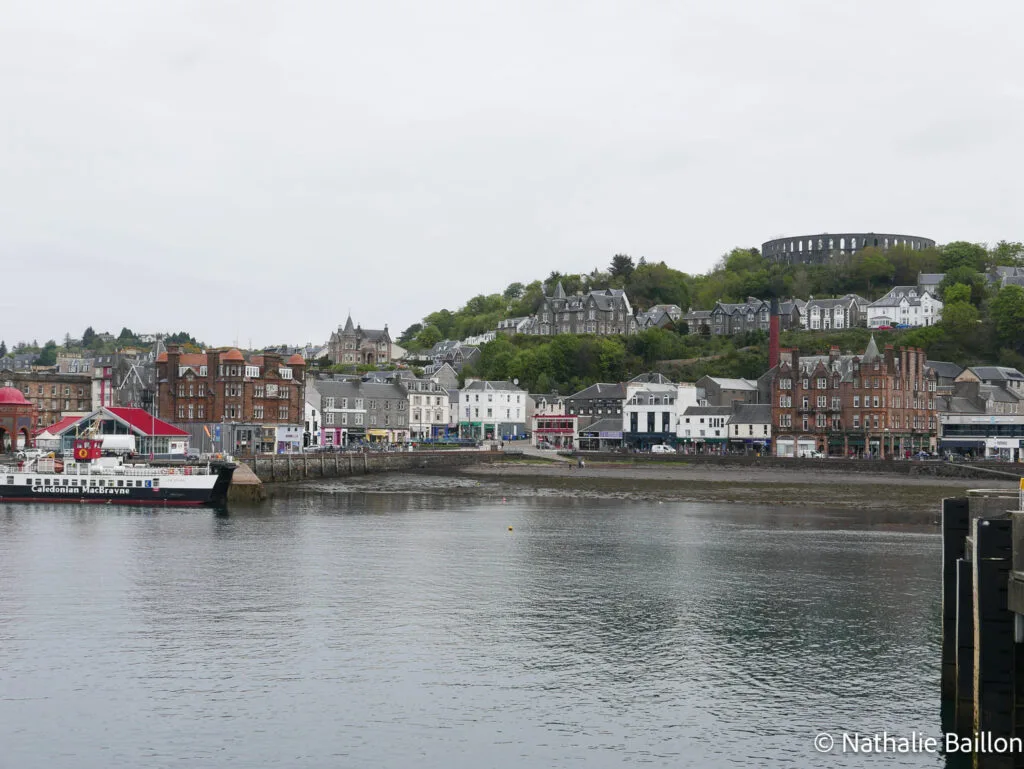
Around midday, we board our bikes on the ferry to the Isle of Mull. This island in the Inner Hebrides is made up of deserted moors, steep cliffs and white sandy beaches, and is only accessible by ferry. The view over Oban harbor and the surrounding islands is breathtaking.
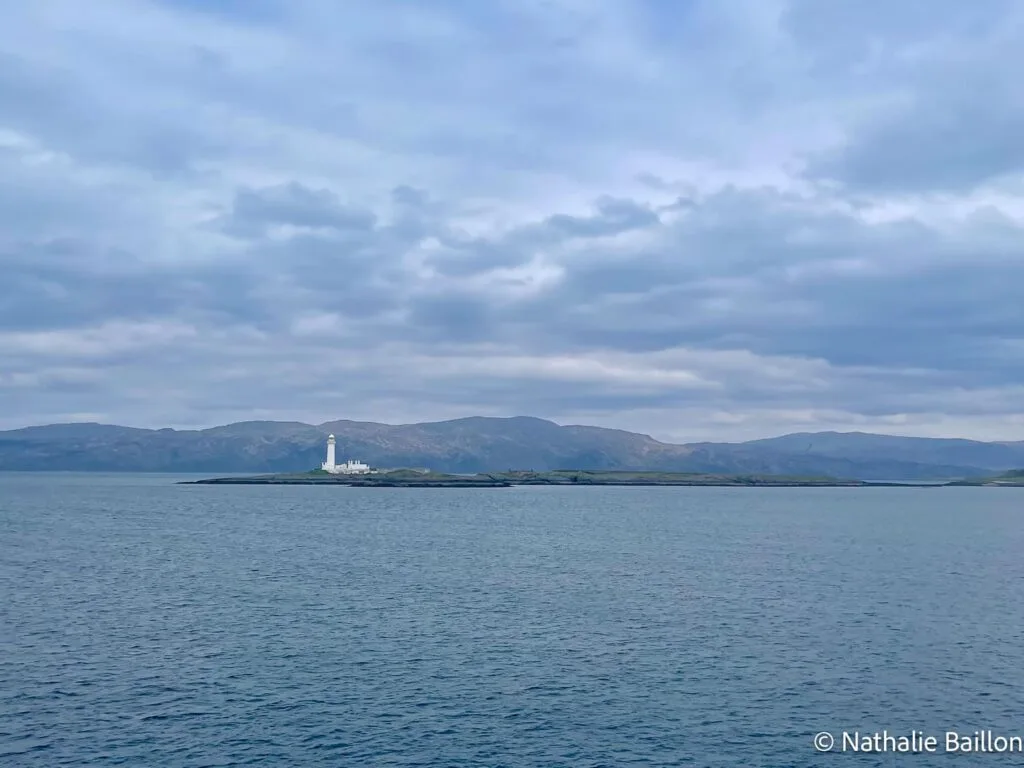
Passage to Craignure
An hour later, we disembark at Craignure. The village is tiny, but it has a supermarket, a few stores and a chocolate factory! We stock up on chocolates before setting off to explore the island. Duart Castle is the first visible monument, towering majestically over the coast. It’s under renovation, so we don’t make the detour.
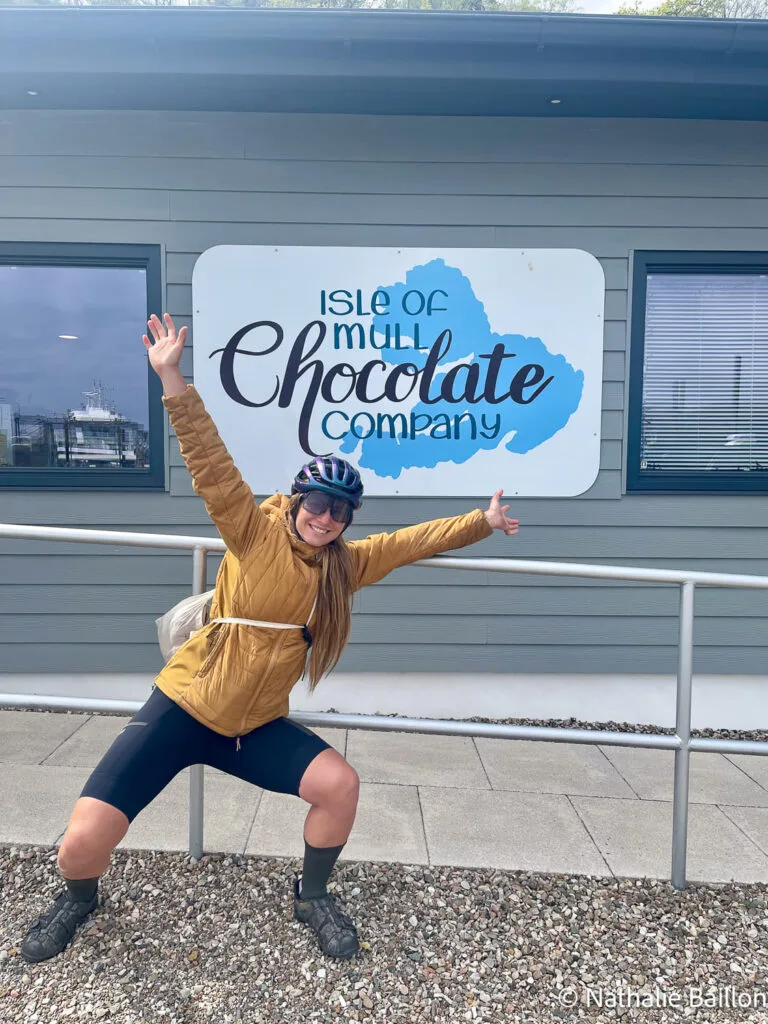
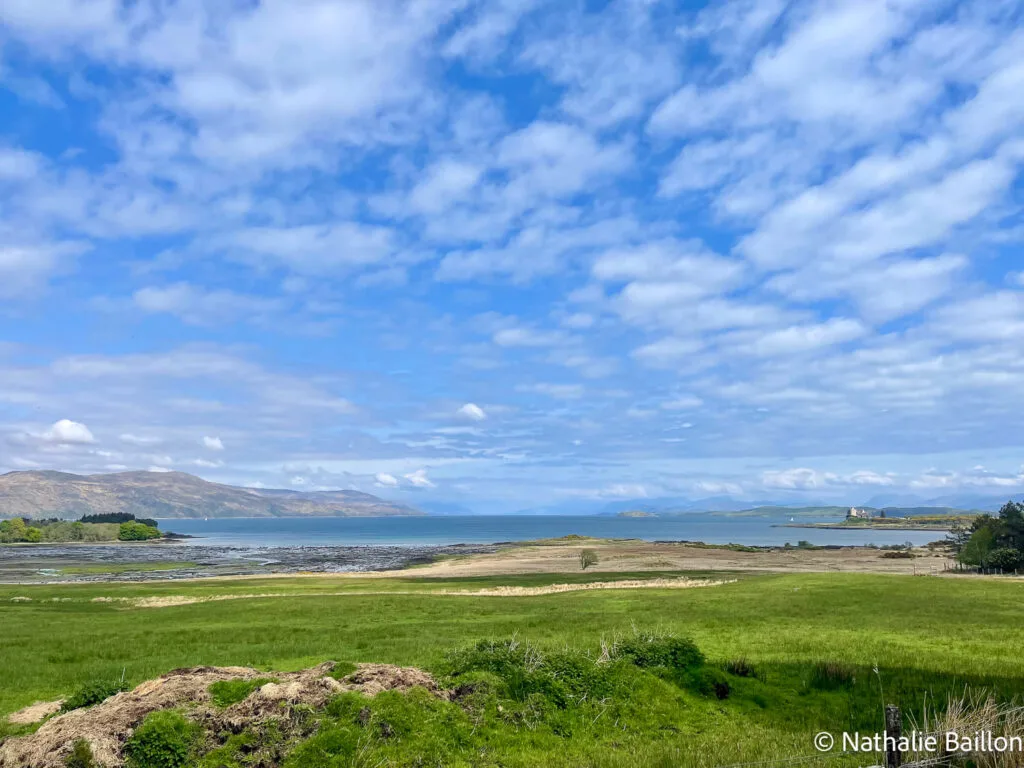
Cycling across the Isle of Mull
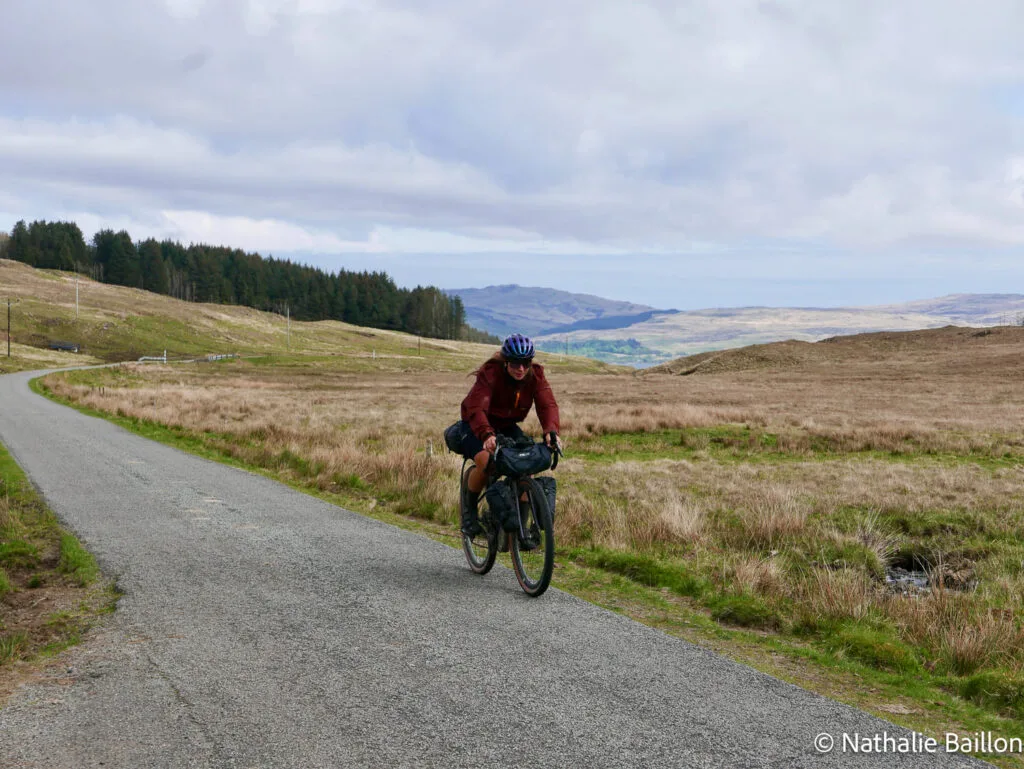
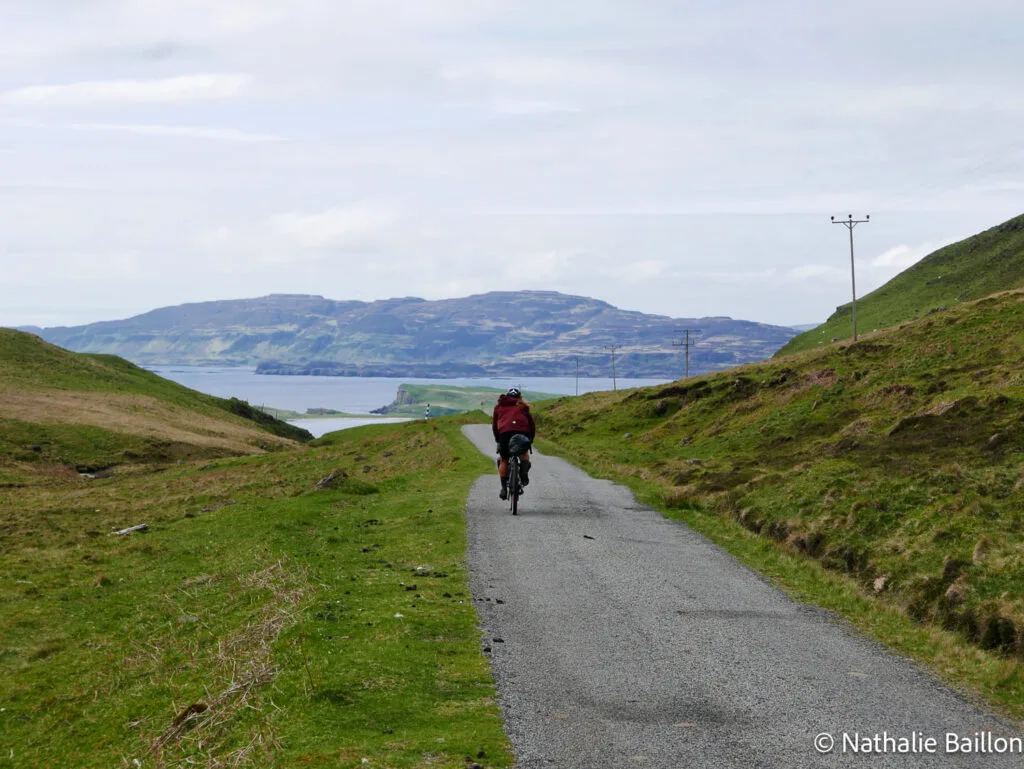
The road is narrow and winding. There’s room for only one vehicle at a time. Regularly, there are shoulders where vehicles can overtake or pass each other. Fortunately, there’s very little traffic on the island, and most tourists are in no hurry to stop and let us pass. The only bad experience we had was when a truck carrying tree trunks honked at us, in a hurry to overtake us.
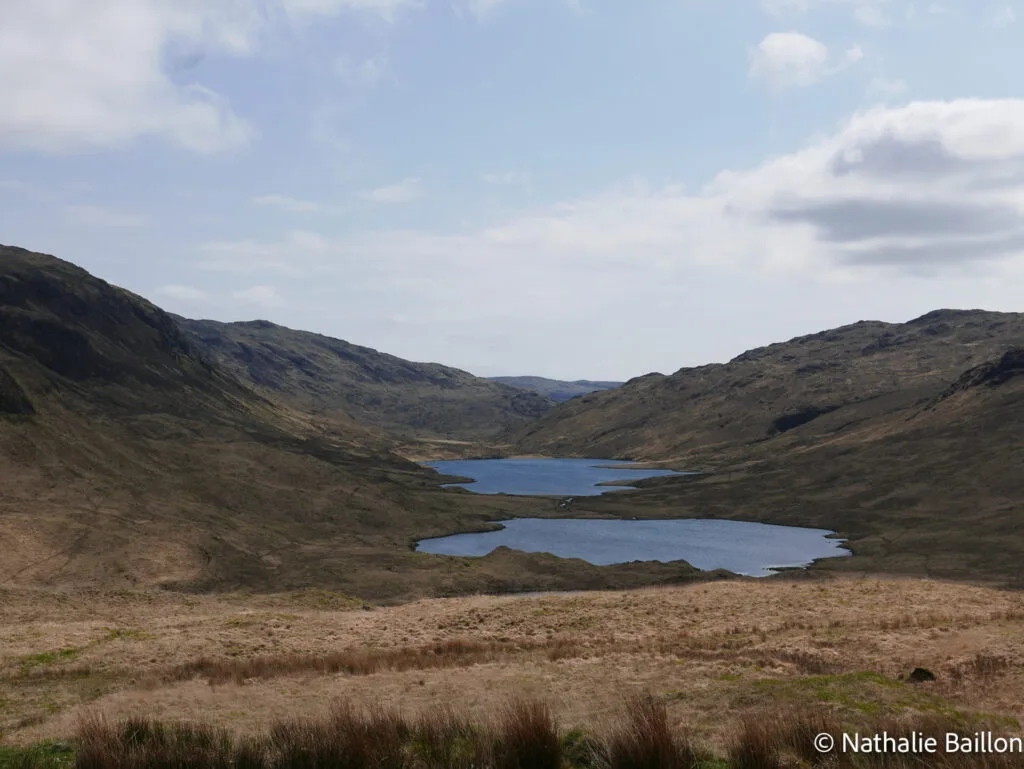
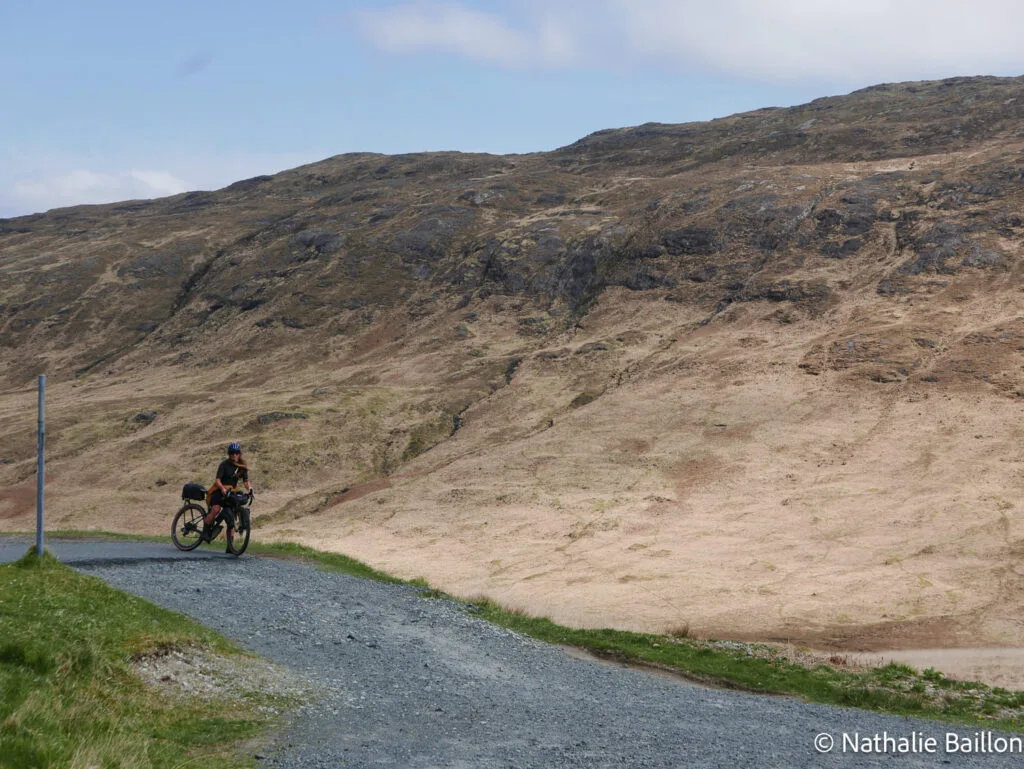
The island is calm and beautiful, and we really like its hills, lakes and numerous sheep. It’s exactly our idea of Scotland! The road along Loch na Kael is particularly beautiful. On the other hand, there’s not much in the way of refreshments before Salen, so you’ll need to bring your own food.
When we arrive in the village, the 2 bakeries are closed. Luckily, a local retired couple warns us that there’s a self-service cake box in the backyard of one of them. It’s great that this trust-based system still works here! It was commonplace in New Zealand when I travelled there, but many have had to stop because of theft due to mass tourism.
End of the day in Tobermory
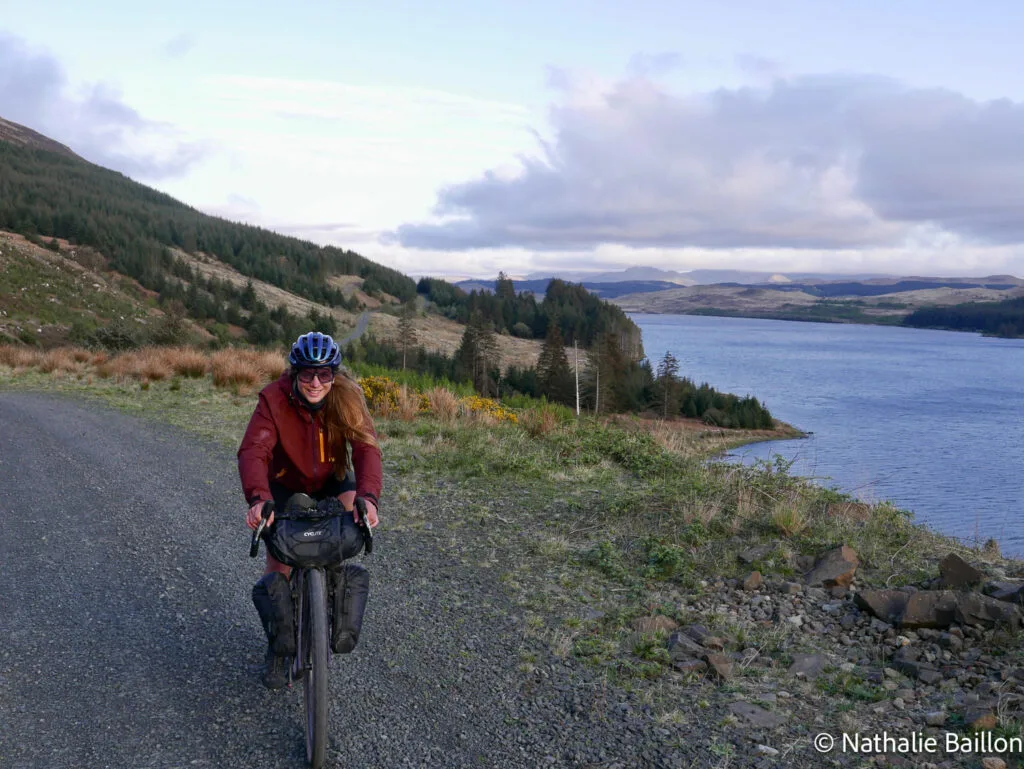
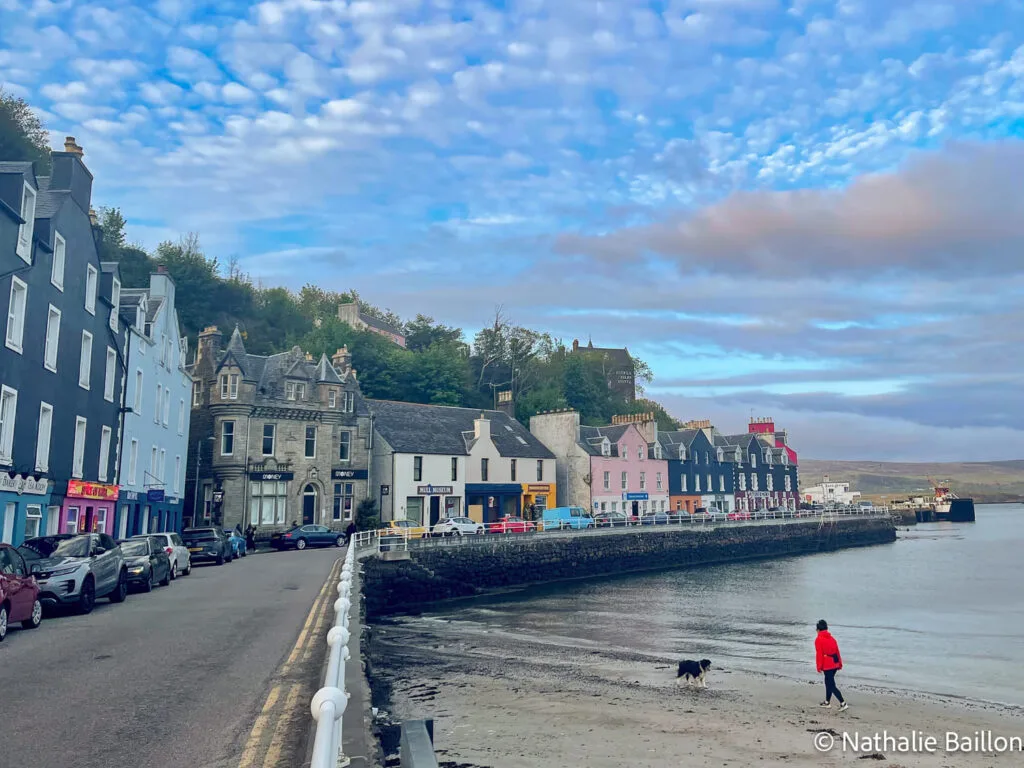
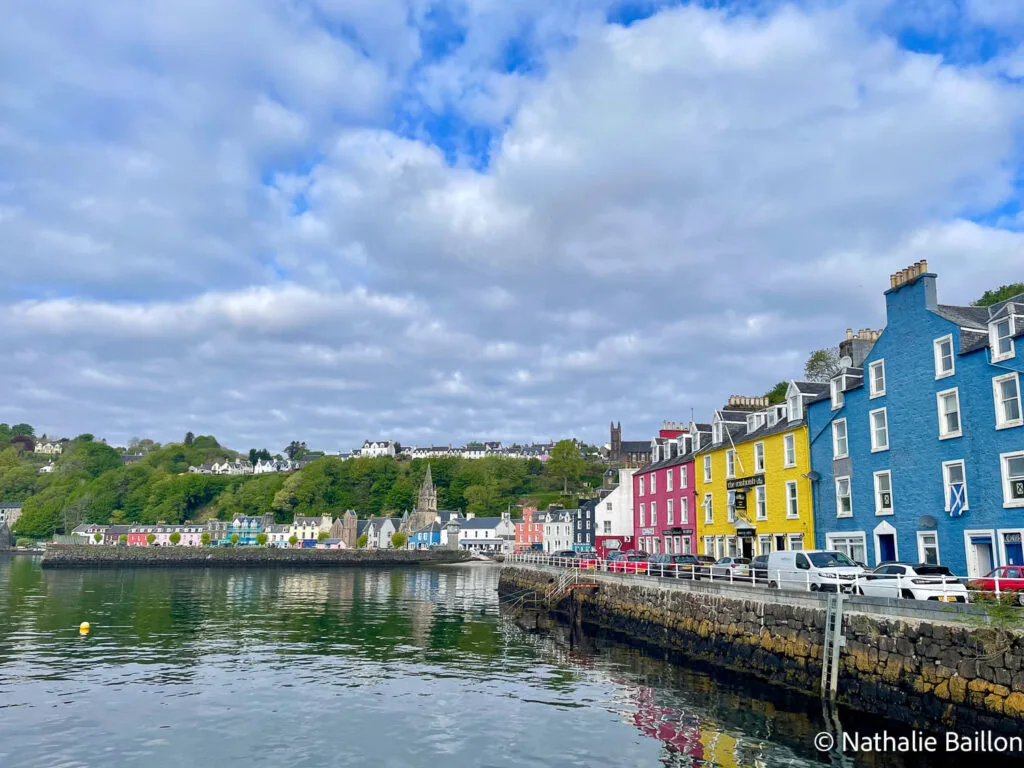
We then take a track along Lake Frisa to Tobermory. It’s a pretty port town with colorful houses. All amenities are present: restaurants, hotels, campsite, mini-market… We choose to camp in a nearby forest .
Stage 6 – Kilchoan to Traigh
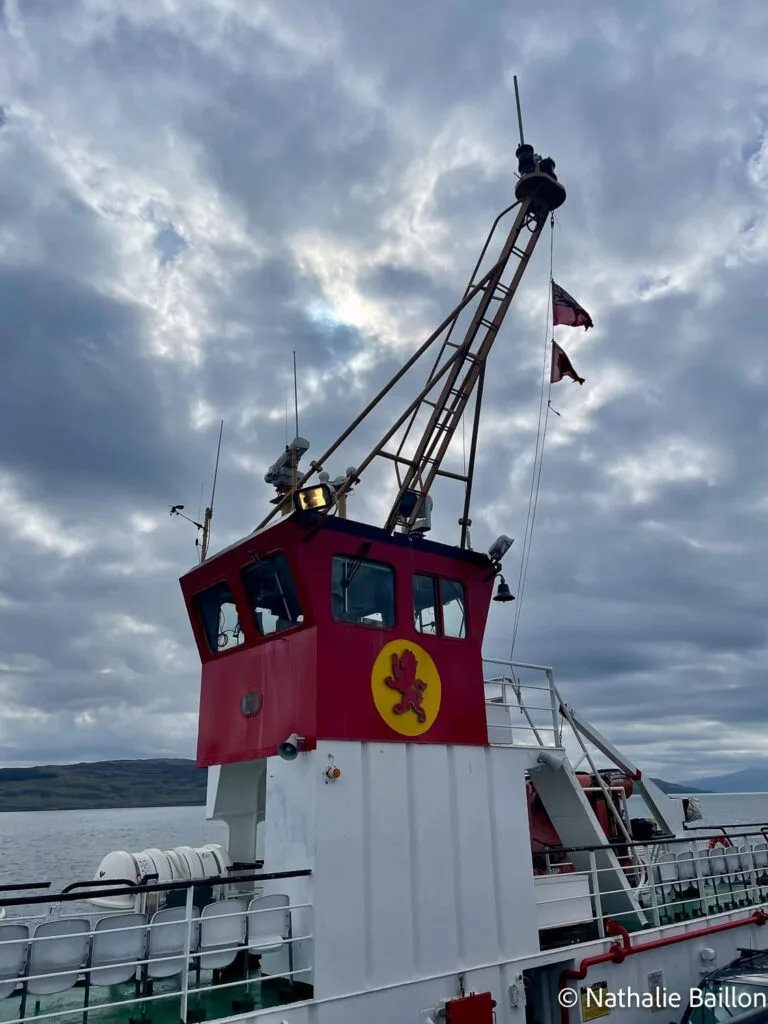
Ferry from Tobermory to Kilchoan
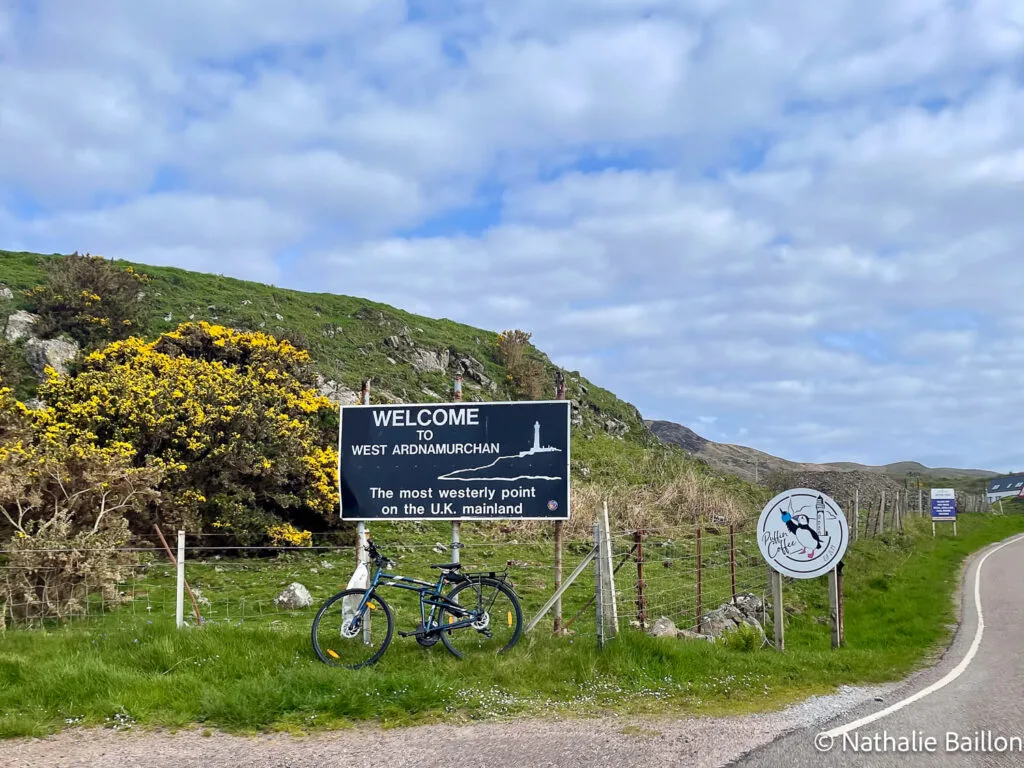
We take the ferry again to Kilchoan, the most westerly village on the British mainland. There’s a café and a hotel.
Gravel track to Glenborrodale
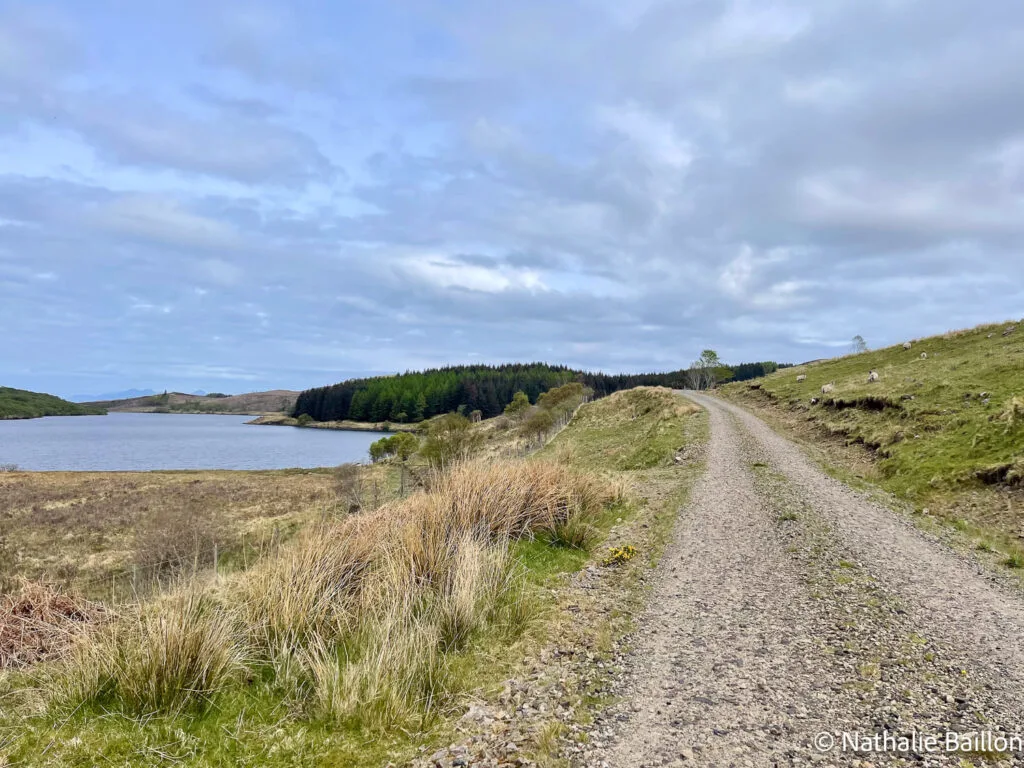
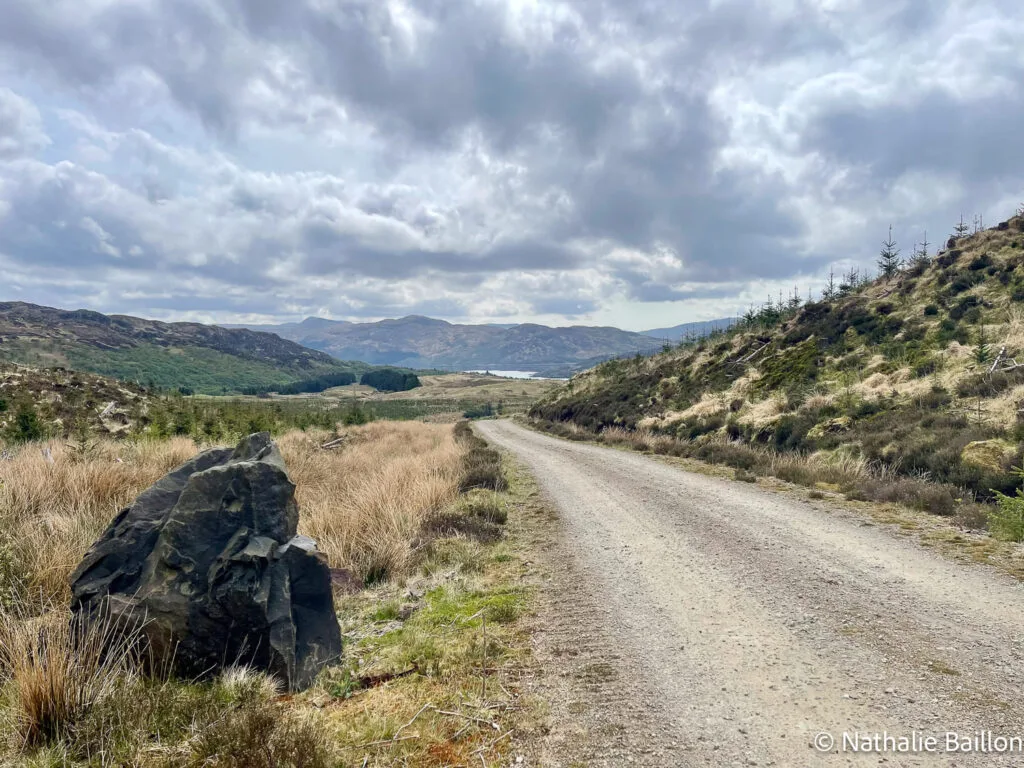
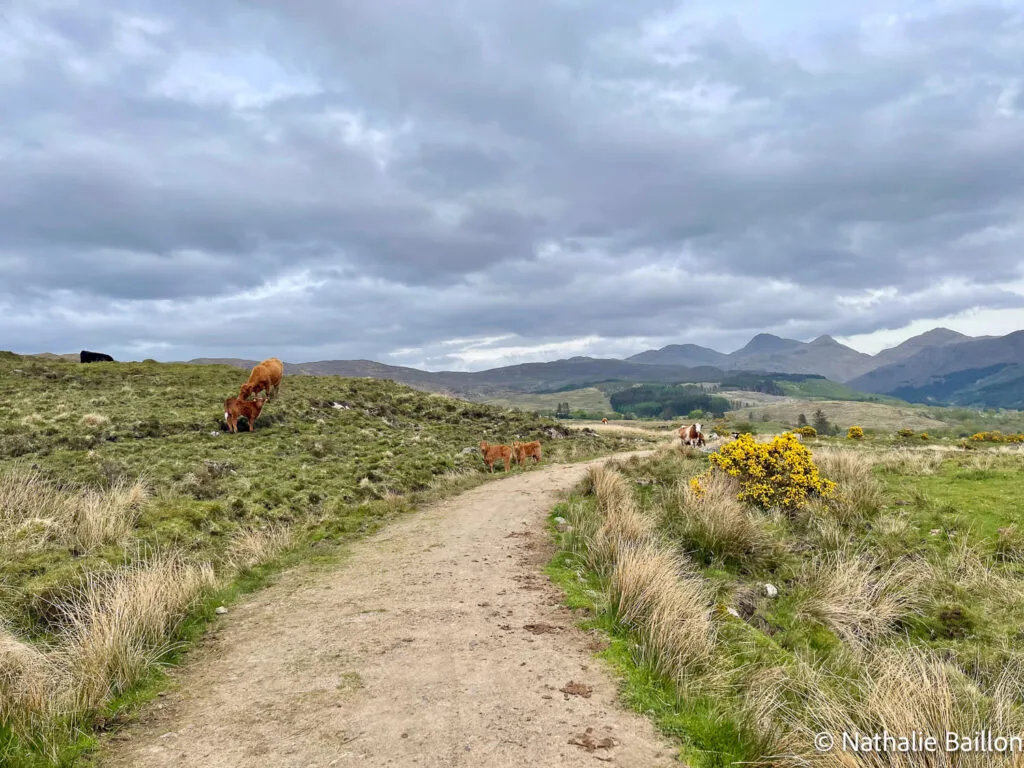
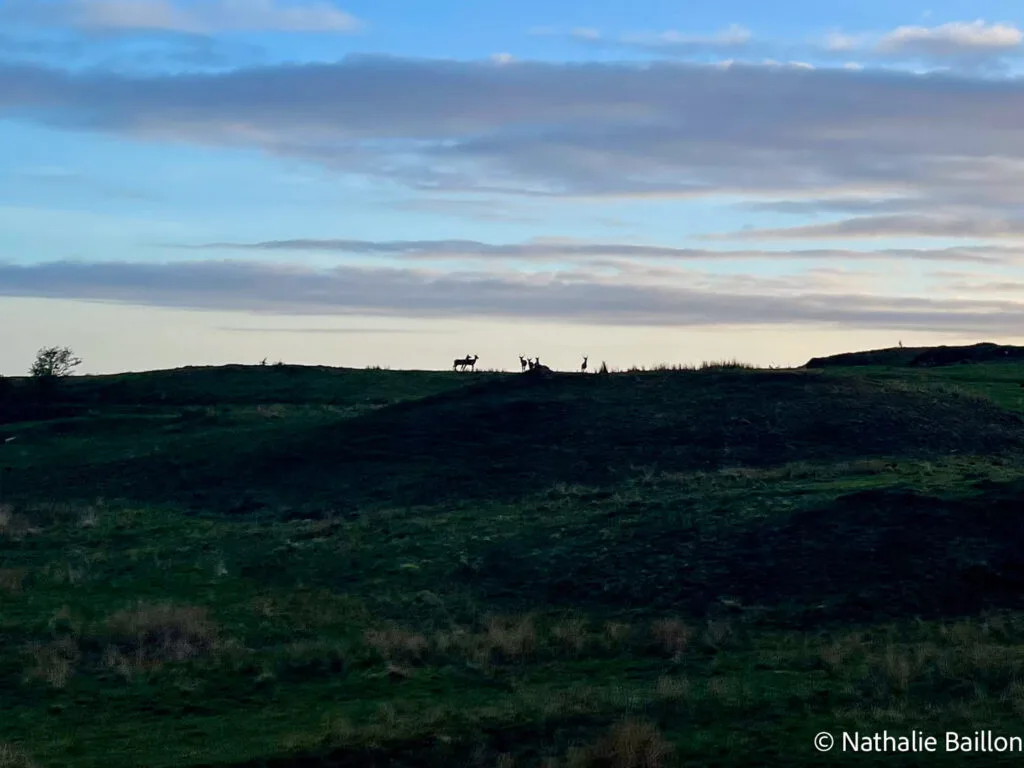
We soon hit the gravel road leading to Glenborrodale. We pass a herd of deer in the morning light, which lends a magical atmosphere to the place. But we’re blocked further on by a barrier, despite the “freedom of roam” which has applied in Scotland since 2005, allowing everyone access to most of Scotland’s land and inland waters for recreational purposes. We pass the bikes over the fence and continue on until we reach the road that runs alongside Lake Sunart.
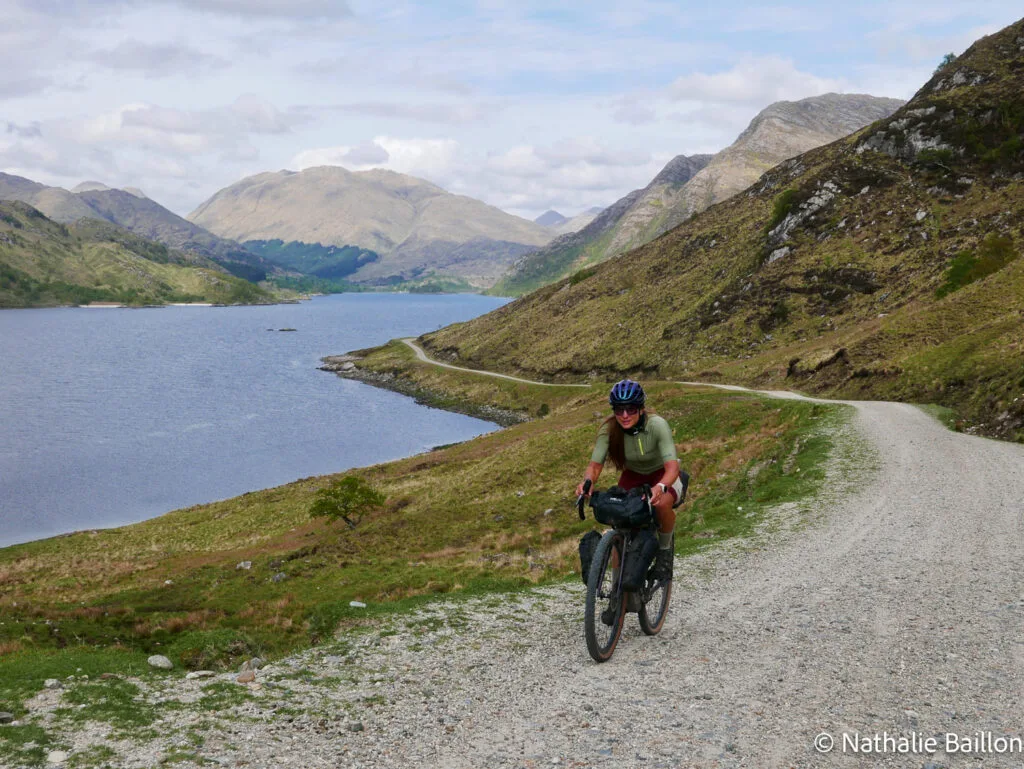
Ascent to Bealach Feith Nan Laogh and Loch Shiel
We eat in Salen (another village of the same name!) where we find a café and a mini-market, then stay mainly on the main road until we reach the foot of Bealach Feith Nan Laogh. It’s a 5km climb, the last of which is at an average of 13%, with some passages at 18% according to my odometer. But it’s worth the detour!
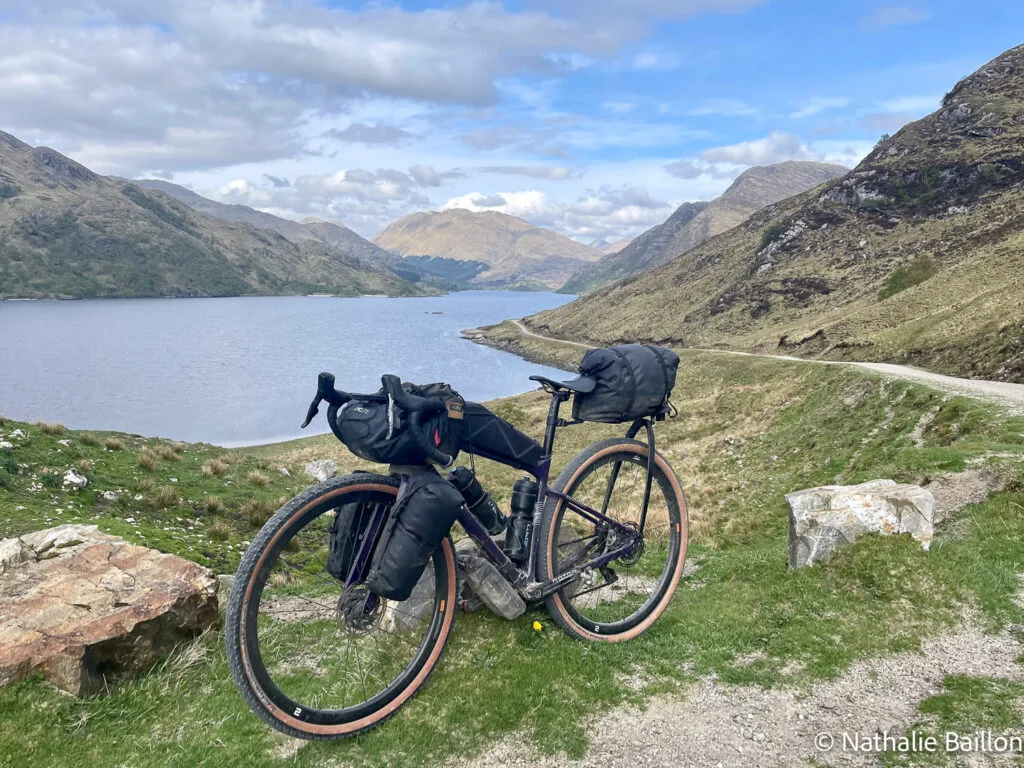
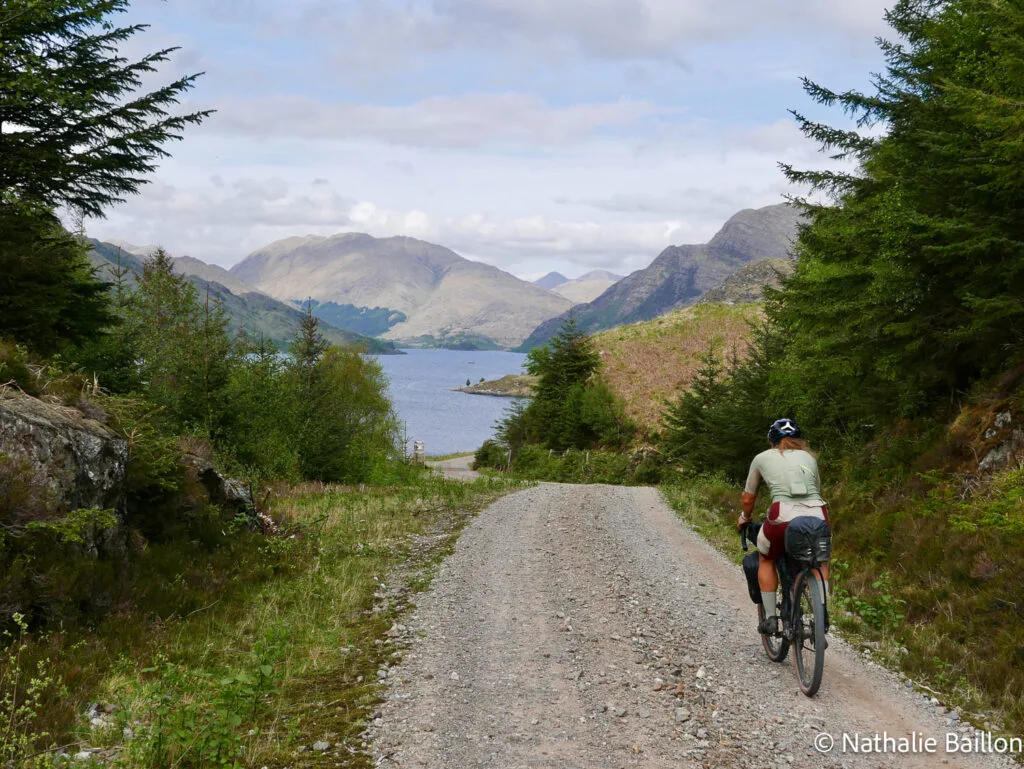
We then take another forest track alongside the spectacular Loch Shiel. Unfortunately, we won’t be enjoying its usual tranquility, as a motorcycle trials race is taking place as we pass.
Glenfinnan
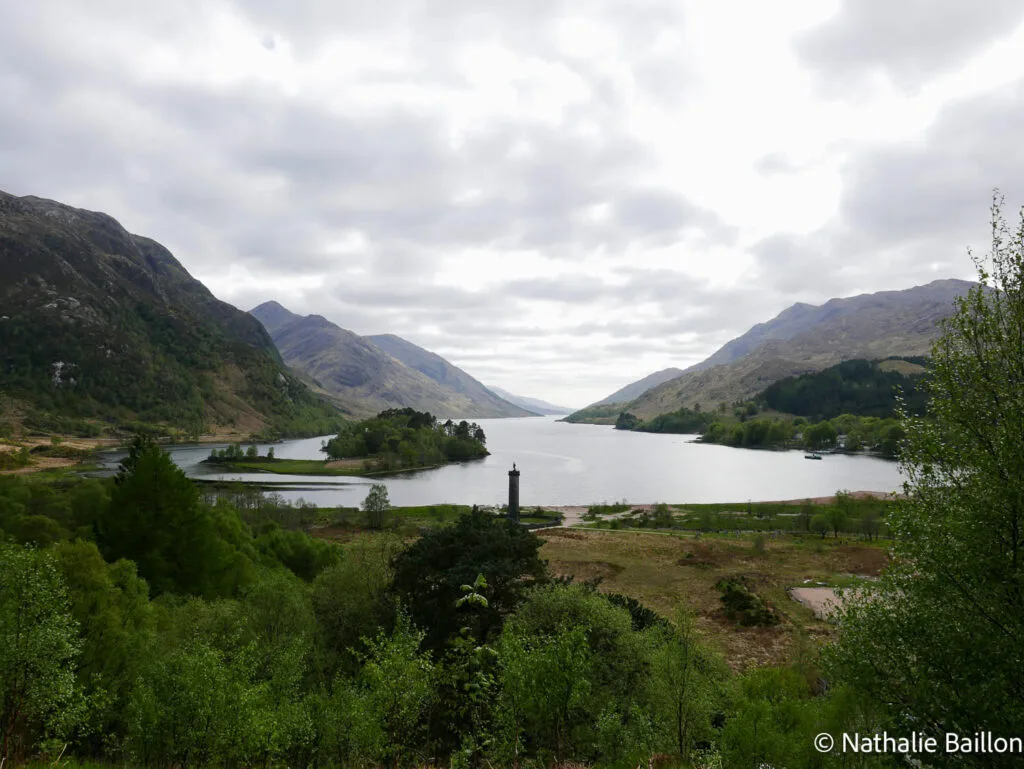
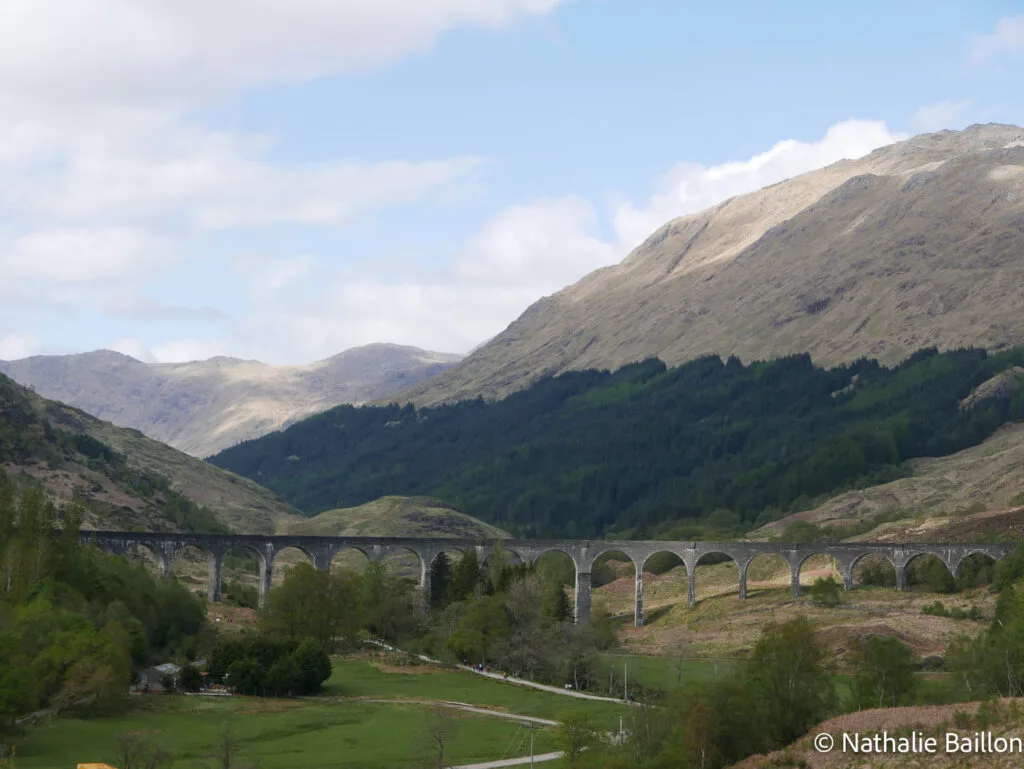
We finally reach Glenfinnan and its 18-metre-high monument to fallen Jacobite clansmen. At its summit sits a statue of a Highlander in kilt. We take a short break from our bikes to climb up to the viewpoint overlooking the viaduct made famous by the Harry Potter film, but we won’t have the pleasure of catching a glimpse of the Hogwarts Express, or Jacobite Steam Train as it’s known.
Sunset and bivouac on the beach
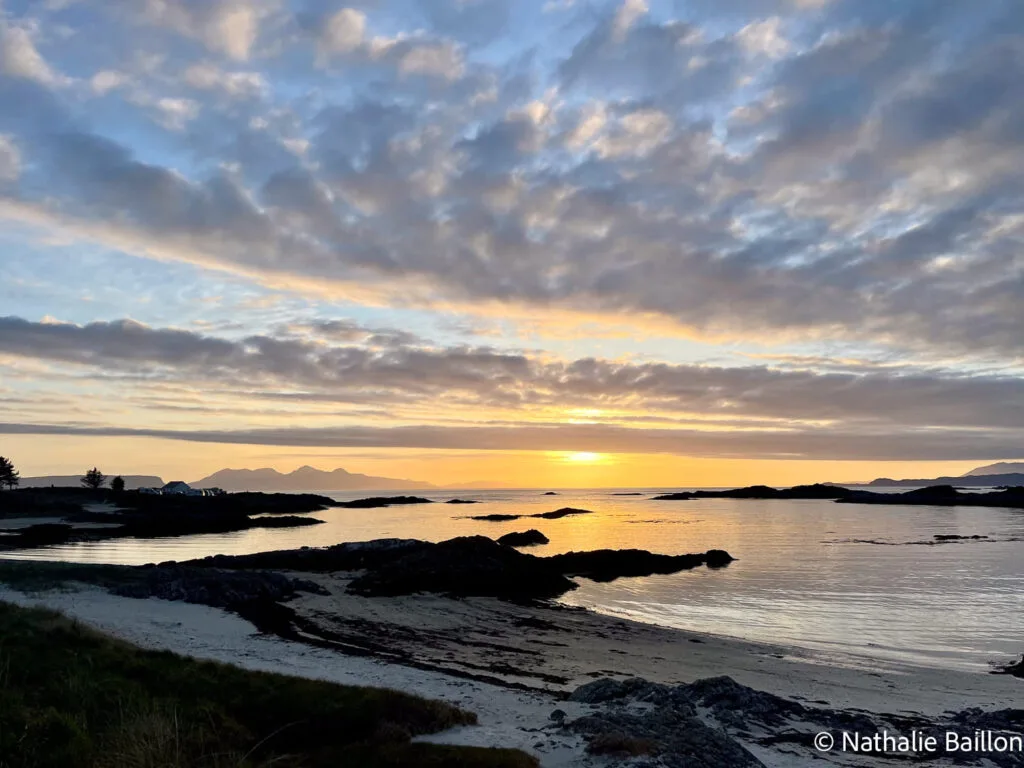
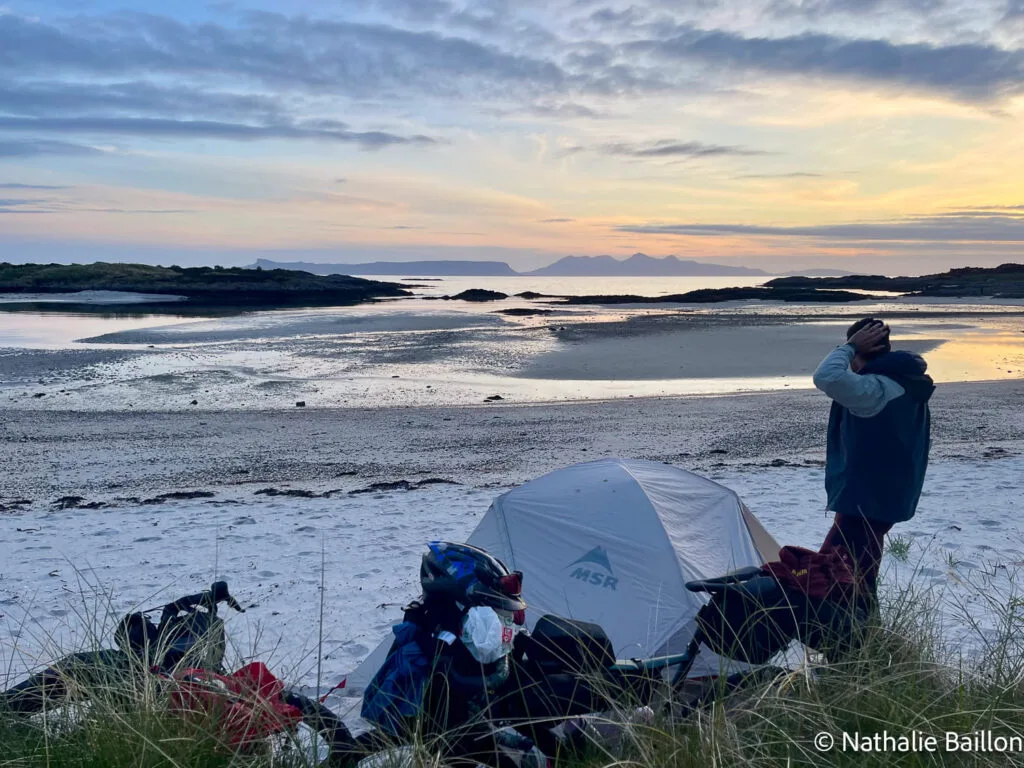
We continue west until we reach the coast and come across deer again. The day ends as it began. We pitch our tents on a heavenly white-sand beach, while the sky offers us a magnificent golden sunset.
Stage 7 – Traigh to Carbost
From Traigh to Mallaig
We drive to the port of Mallaig , where we find public showers for $2. After freshening up, we catch the ferry to Armadale on the Isle of Skye.
Isle of Skye
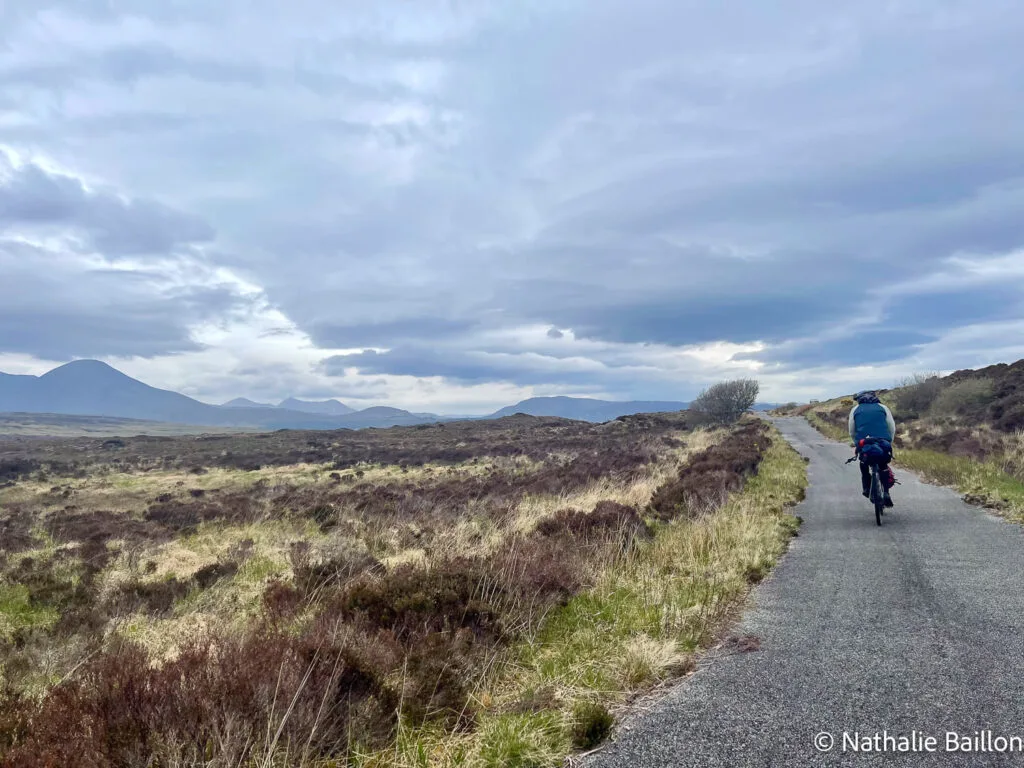
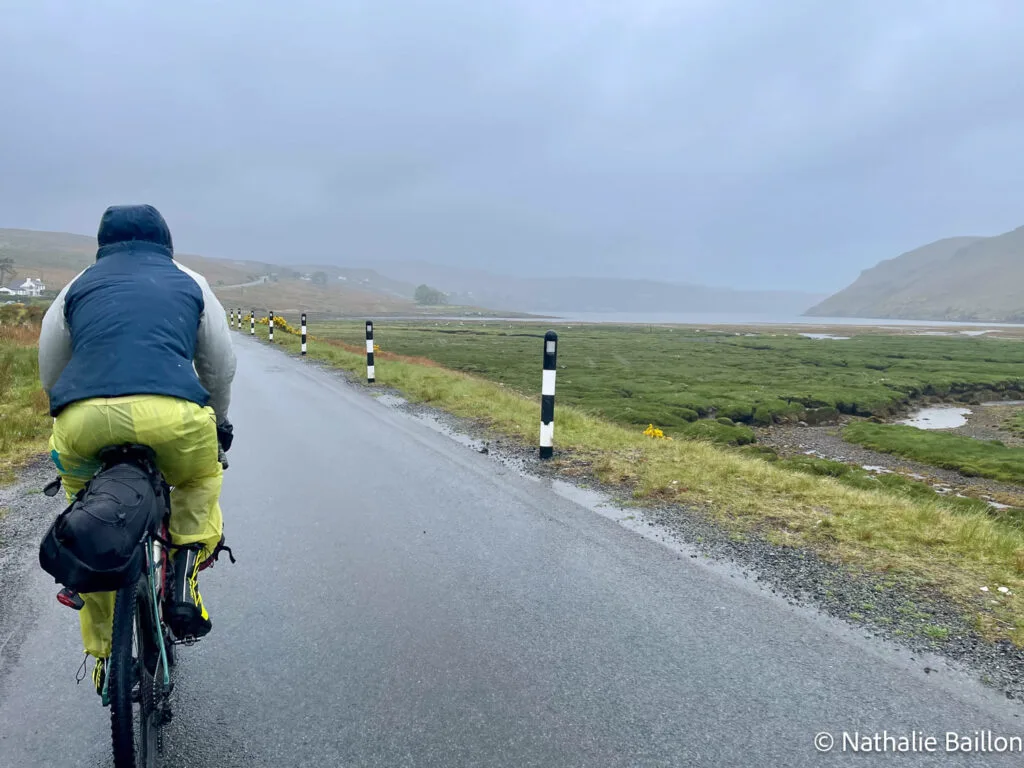
The scenery is dramatic, the road to Broadford where we stop for lunch is beautiful. Then all hell breaks loose. There’s a lot of traffic, no side roads and few if any alternatives to the main road. We feel vulnerable as cars speed past us. What’s more, it’s now pouring with rain and the clouds are low, so we can’t even enjoy the view.
In search of a dry night’s sleep!
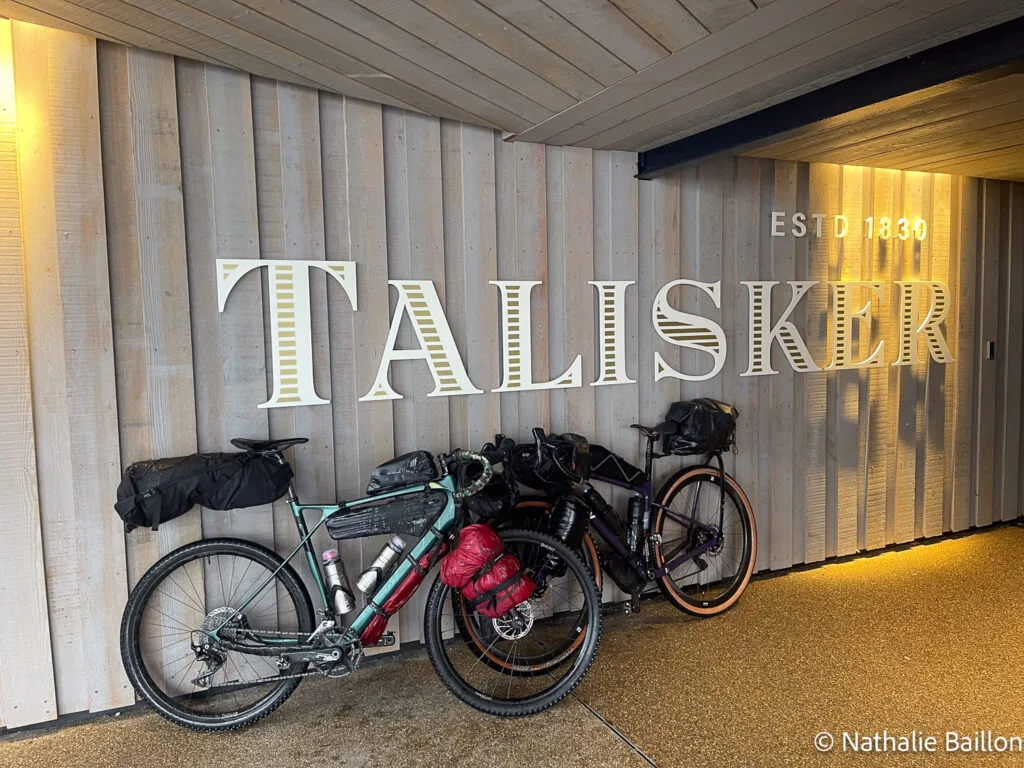
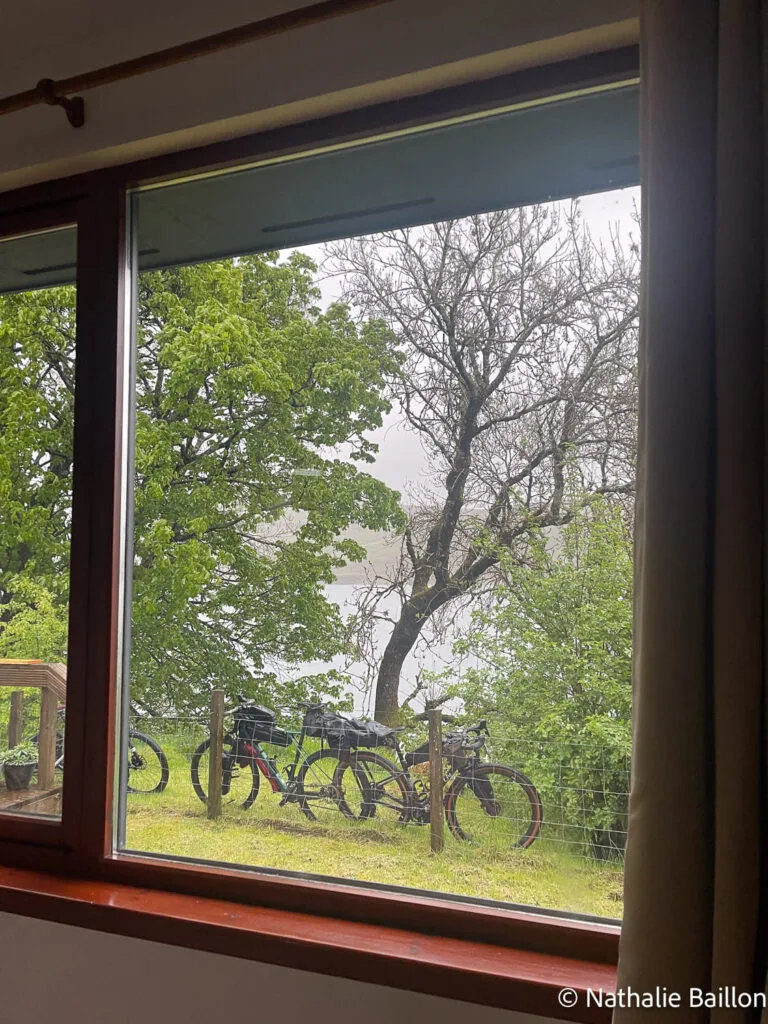
We arrive at the Talisker distillery, which we had hoped to visit, but everything is already booked for the next 2 days. A little disappointed and unmotivated to continue our journey in the rain, we set out to find a hotel, but everything is full. The Isle of Skye is a victim of its own success. We sit down in a hotel-restaurant and the owner offers to rent us her cottage. We take the opportunity to wash and dry our things. We’re glad we won’t be sleeping in a tent tonight, with all the rain that’s fallen overnight!
Stage 8 – Carbost to Dornie
Another trip to the Isle of Skye
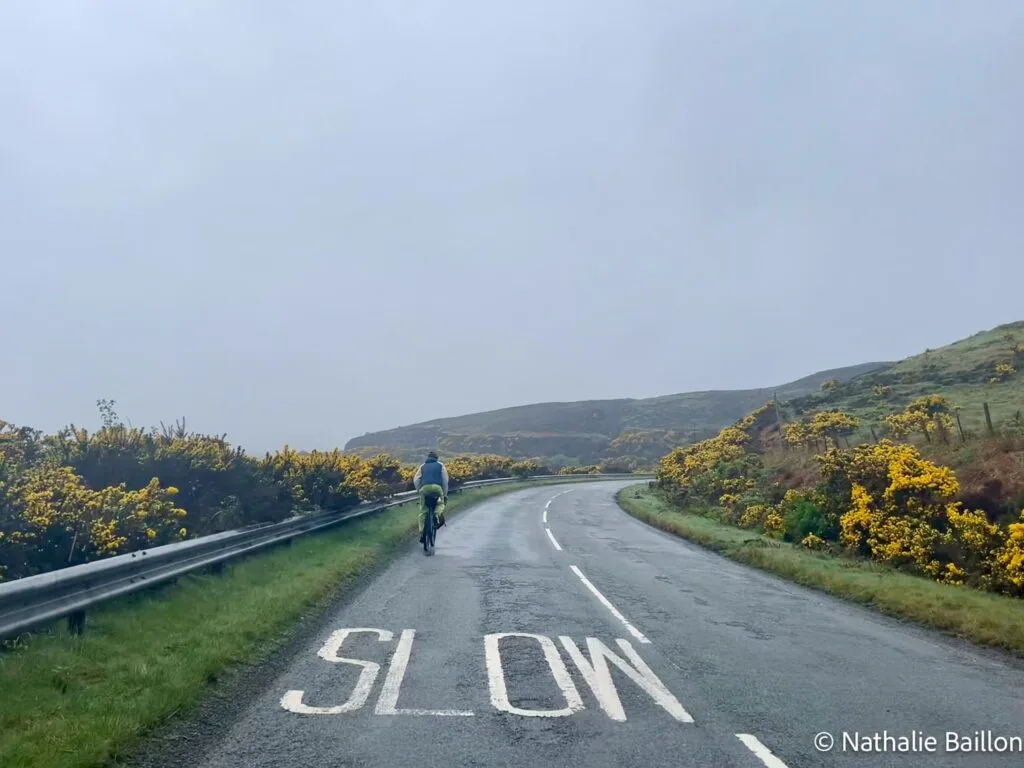
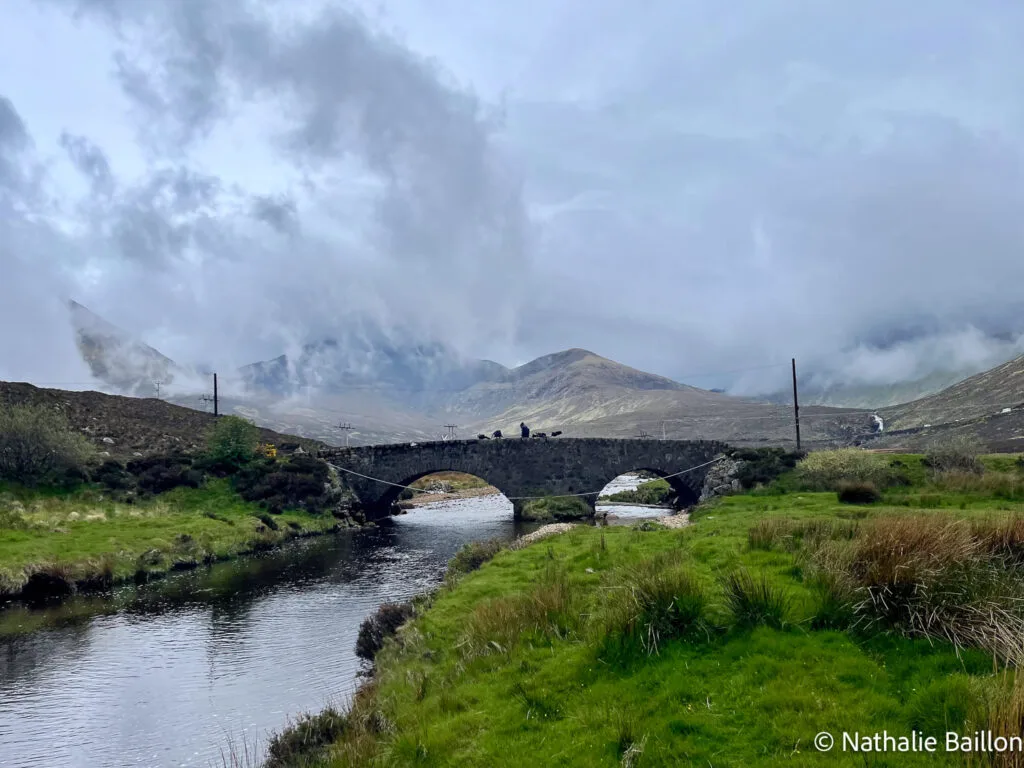
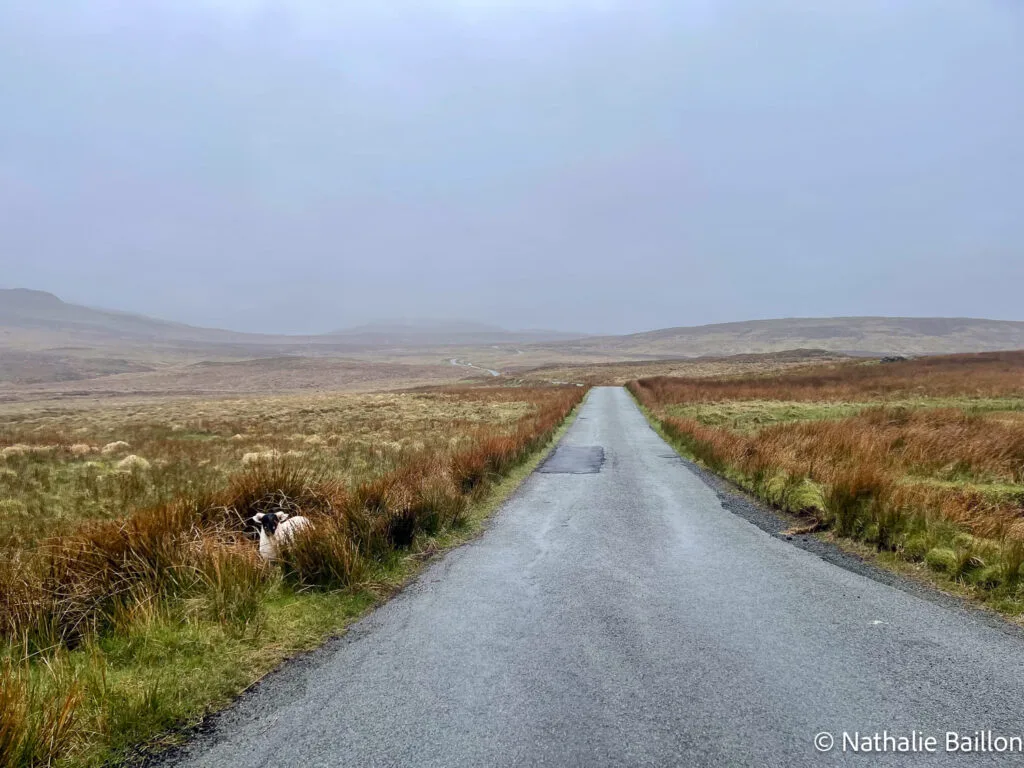
It’s still raining when we wake up, so we hesitate. We try a northerly foray and find a bucolic little road. We come across a few fluffy sheep. Even in the rain, the landscape remains charming and the mist lends it a mystical atmosphere.
Meet the famous Highland cows
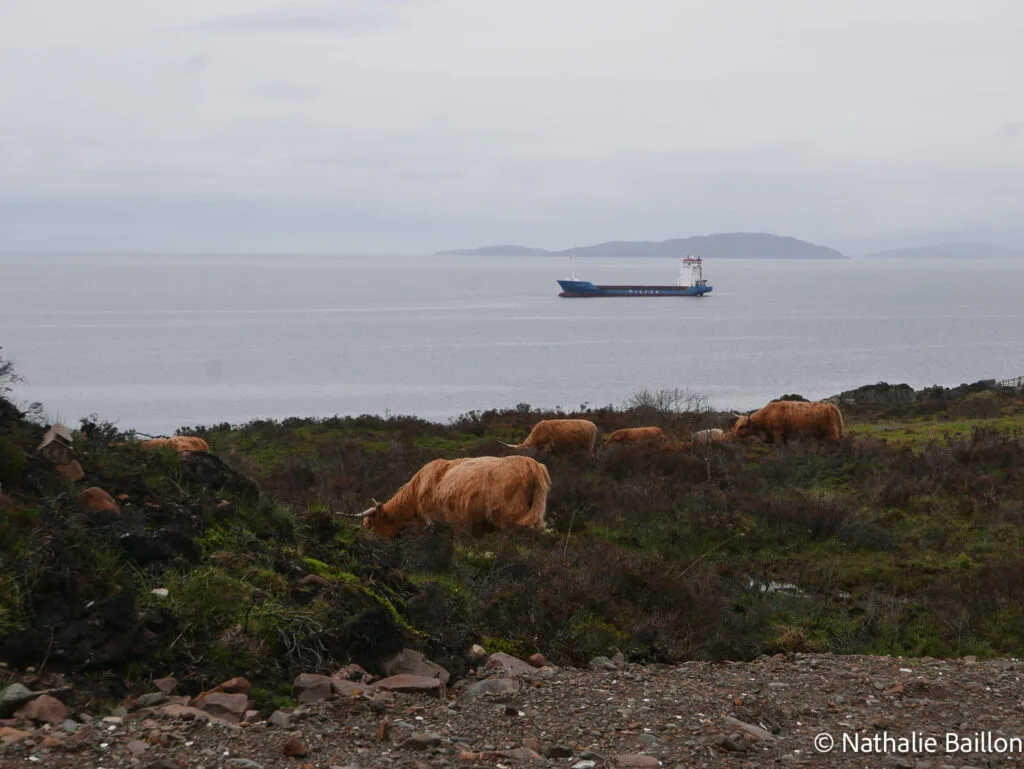
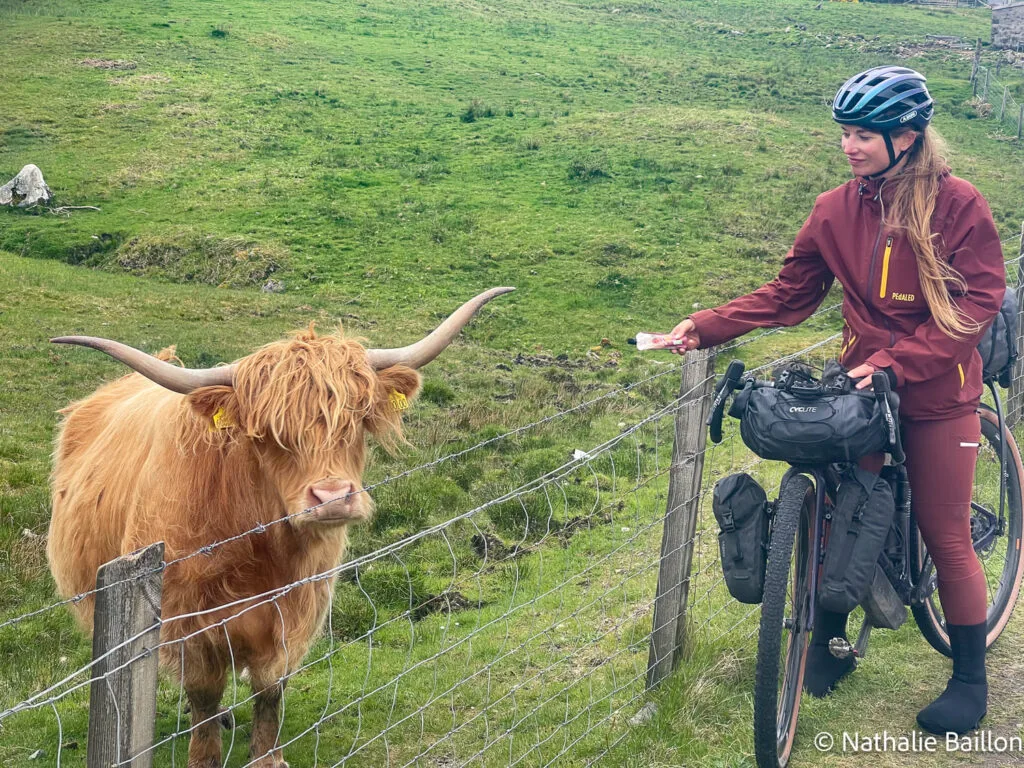
But after a quick glance at the weather app, we decide to leave the island anyway , to get back into the sunshine. Back on the main road, we follow a closed coastal road to avoid some of the traffic on the road to Broadford. We come across some Highland cows, real national stars! Many tourists have parked up to photograph these long-haired cattle, and their portraits can be found decorating many bars and hotels.
Goodbye Skye!
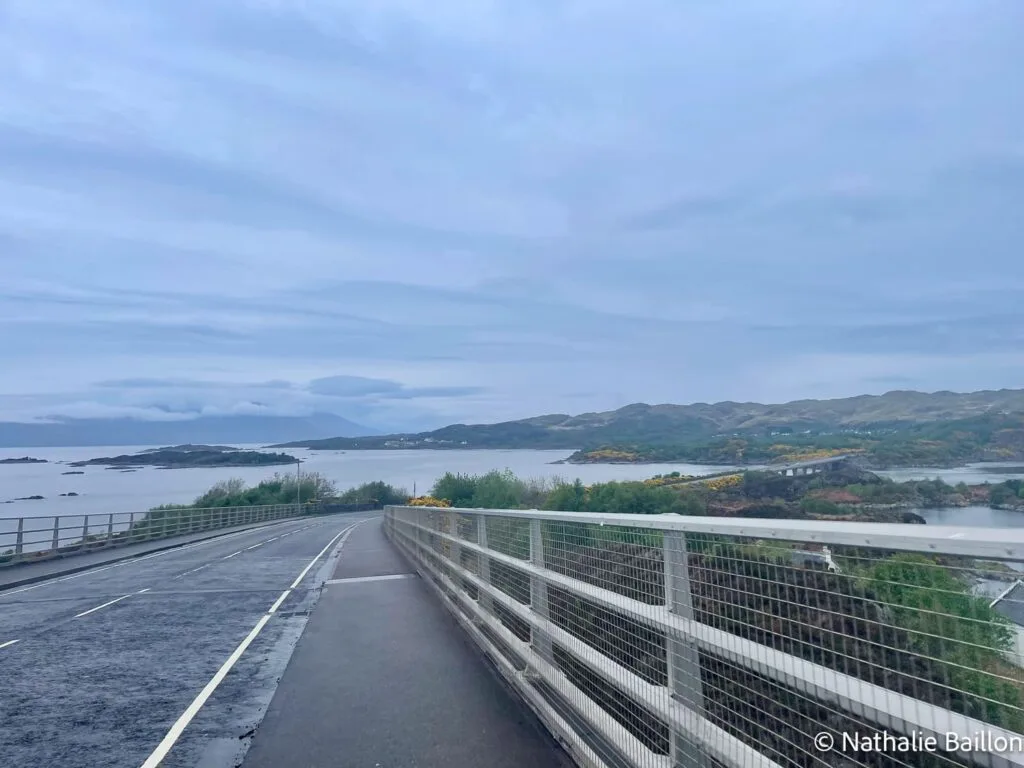
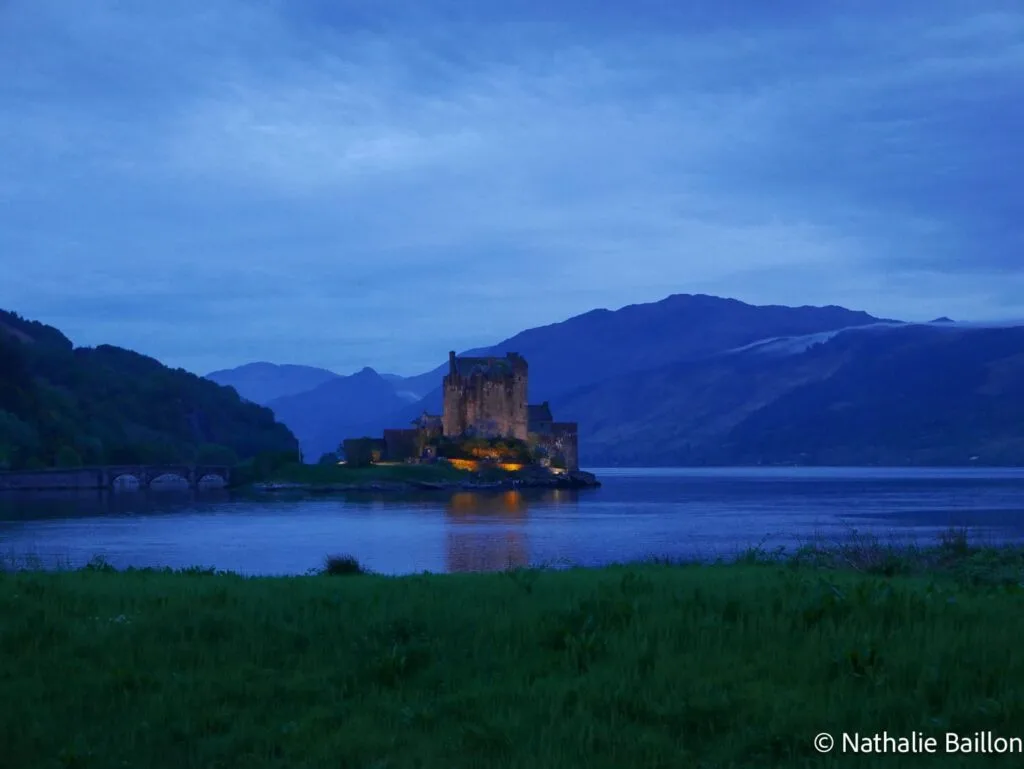
This time, we reach the mainland overland via the Skye Bridge. We push on to Dornie , where we pitch our tent on a piece of land close to a public toilet, giving us the chance to have a quick wash. This will be our first experience of midges,which will bite us in the evening while we’re cooking on the stove. But this is offset by the enchanting sunset over Eilean Donan Castle.
Stage 9 – Eilean Donan castle and Bealach na Bà
Eilean Donan Castle
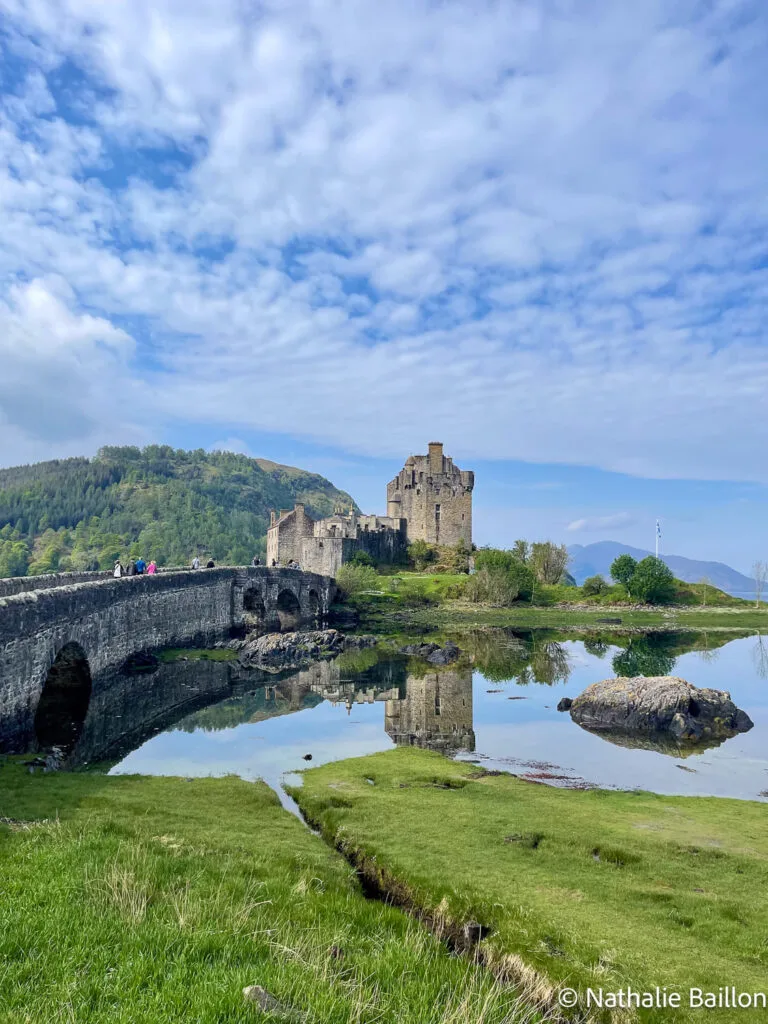
Perched on an islet in Loch Duich and linked to land by a stone bridge, Eilean Donan Castle is considered Scotland’s most romantic and photographed castle. A stroll through the gardens costs £3.5, while a tour of the castle costs £12. Its history looks fascinating, but we’ve got a long day ahead of us, so we’re content to tour it from the outside, scanning the QR codes scattered along the way that tell the main Scottish legends.

The most difficult part of the trip
We mount up again and ride north to the Applecross Peninsula. This is part of the route of the famous North Coast 500, a 500-mile coastal tourist route in the Northern Highlands.
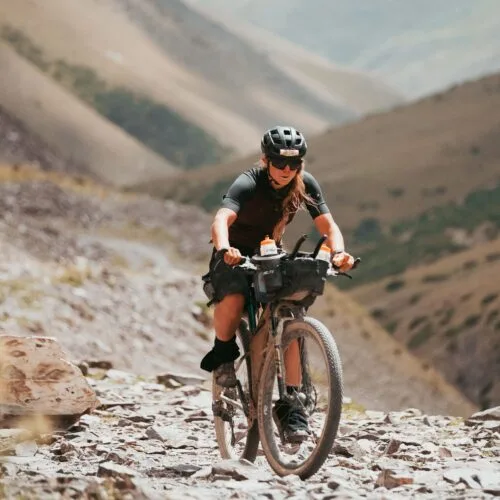
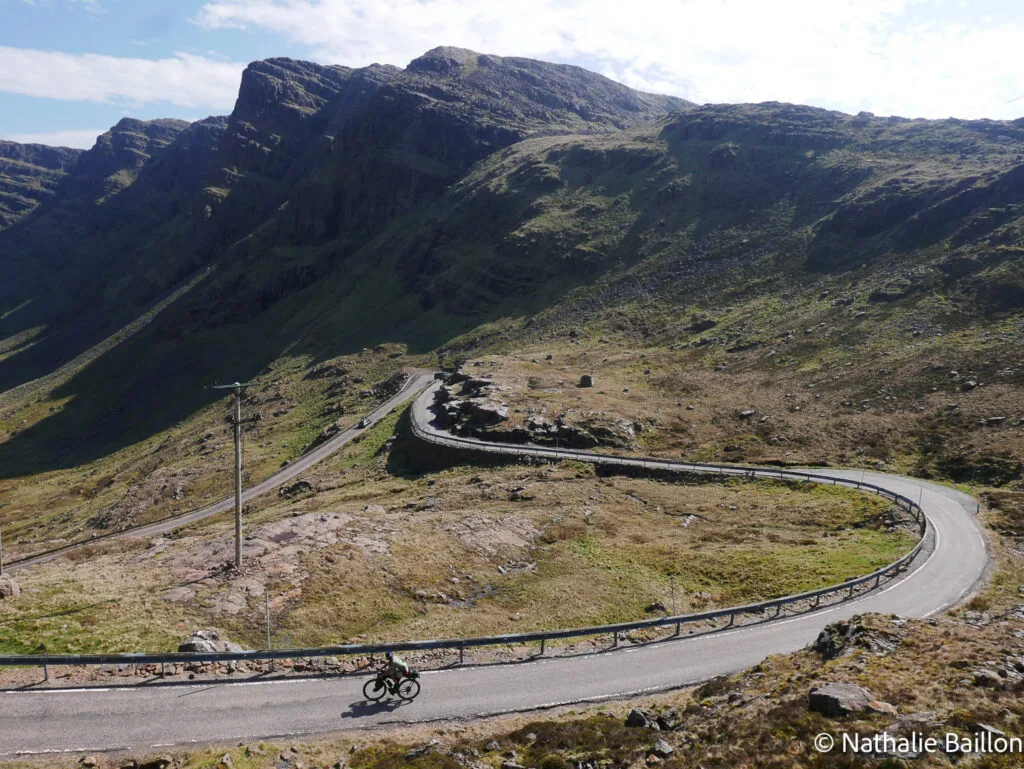
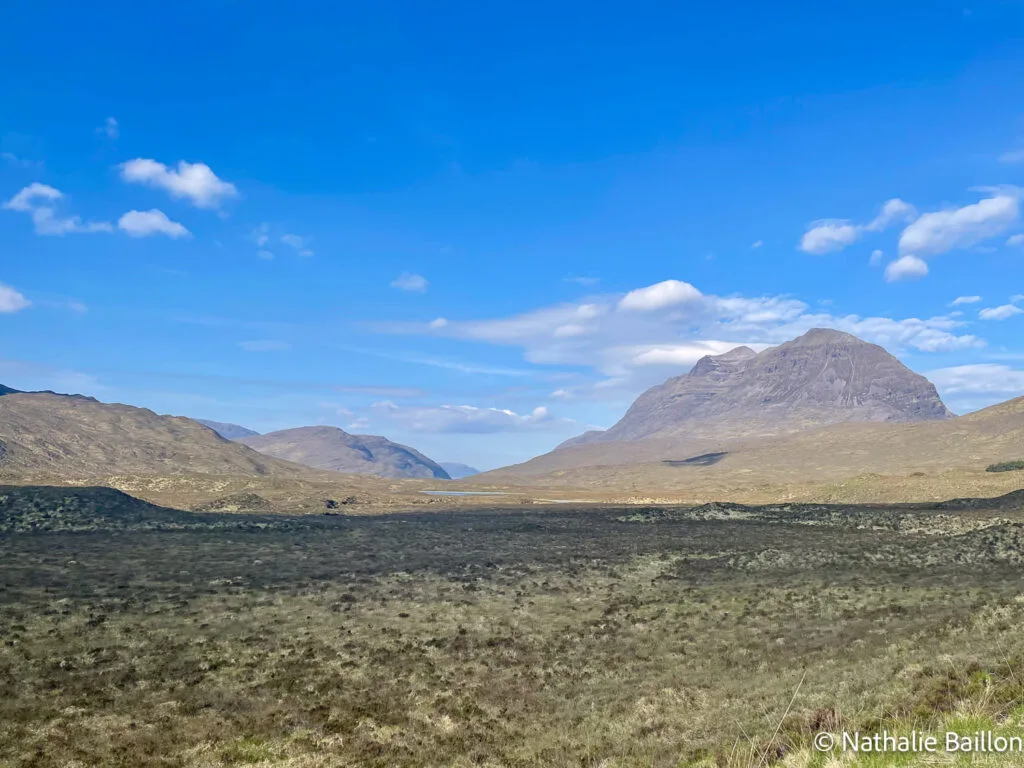
Then begins the most arduous part of our journey, the climb to Bealach na Bà, Scotland’s longest pass. Once again, it’s a single-lane road, but once again, most drivers are courteous and wait on the side as we pass. The scenery is splendid, except for the huge oil rig below. The climb is about 9km at an average of 7% , but the last few kilometers are much steeper, and a strong wind at the top adds to the difficulty.
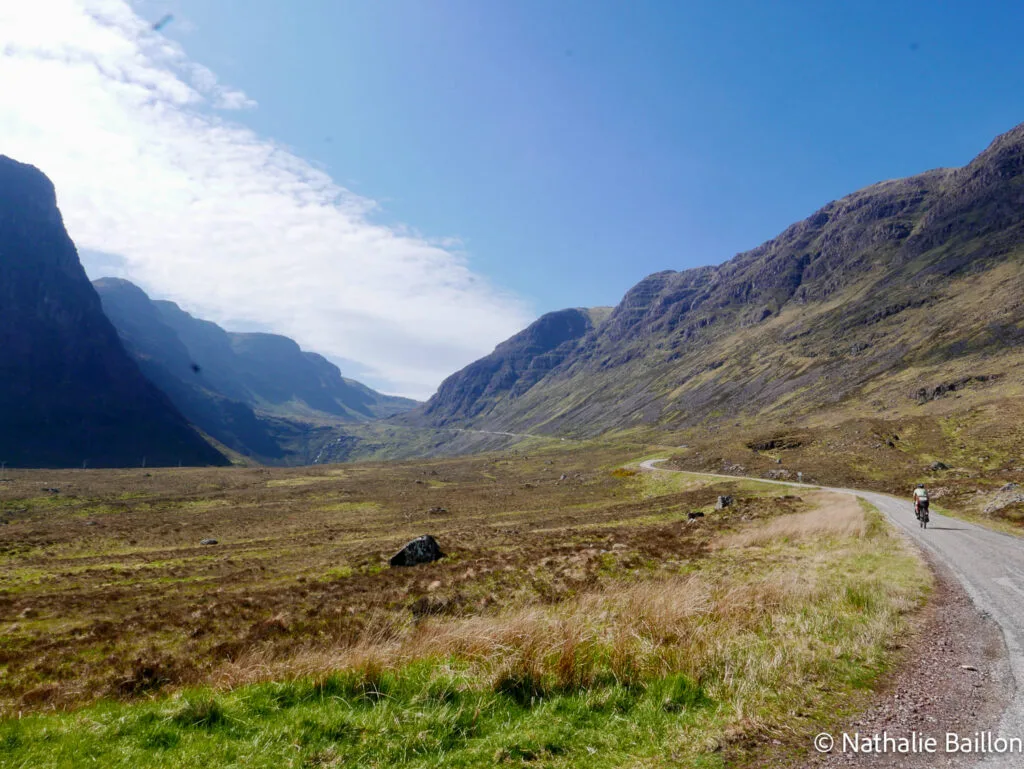
This is followed by a beautiful descent, still single-track, so you have to be careful as it’s a fairly busy road. We reach the coast, which offers breathtaking panoramas! But this one doesn’t give us any respite, as there’s a succession of short climbs that add up to twice the difference in altitude of this last ascent.
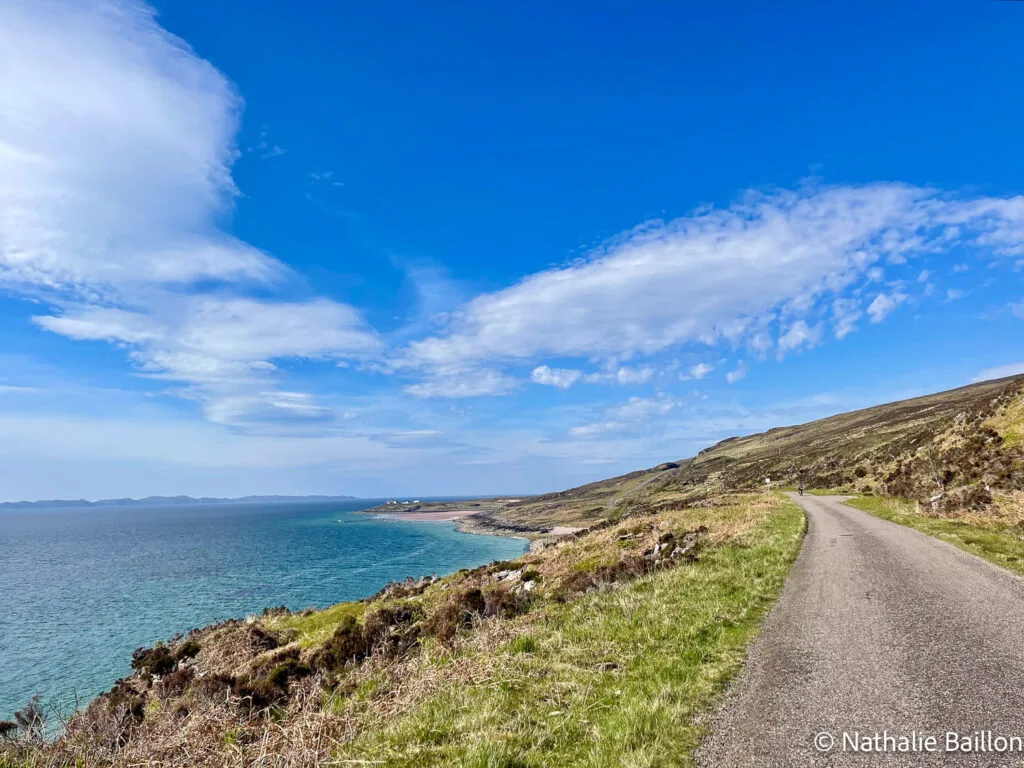
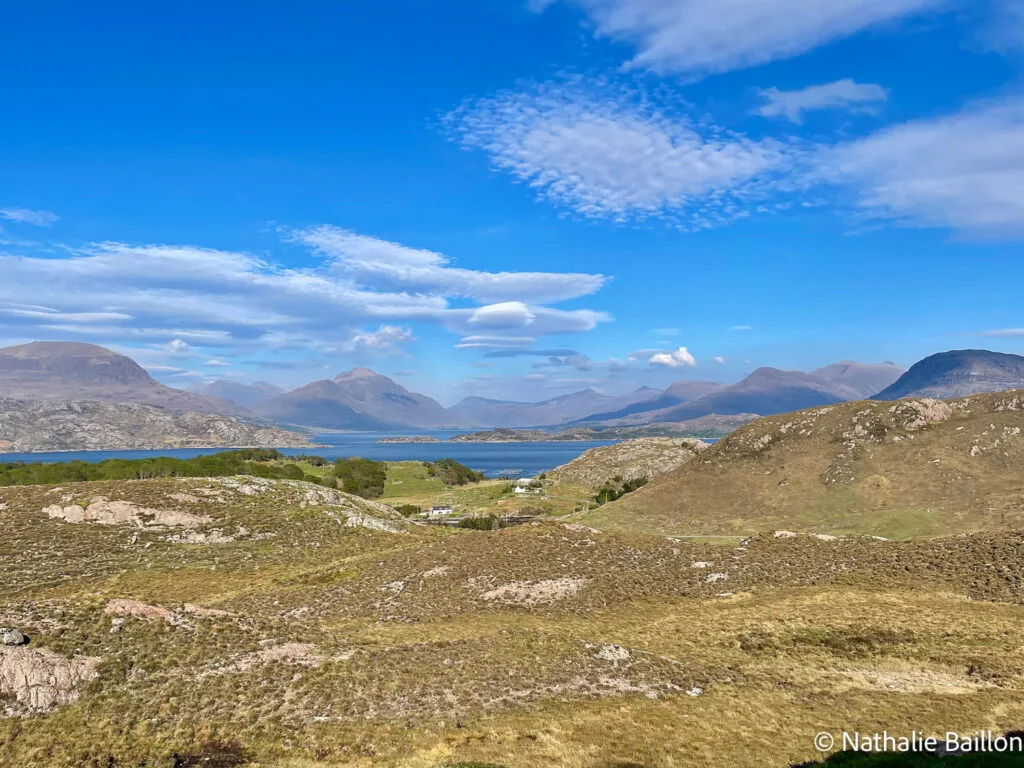
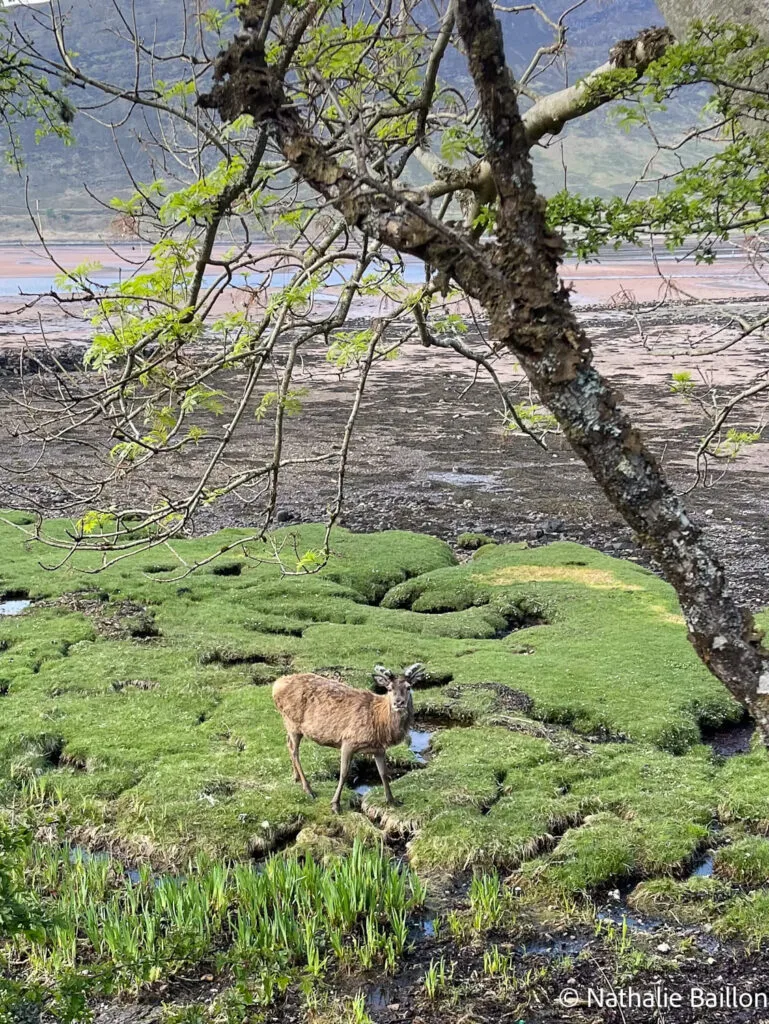
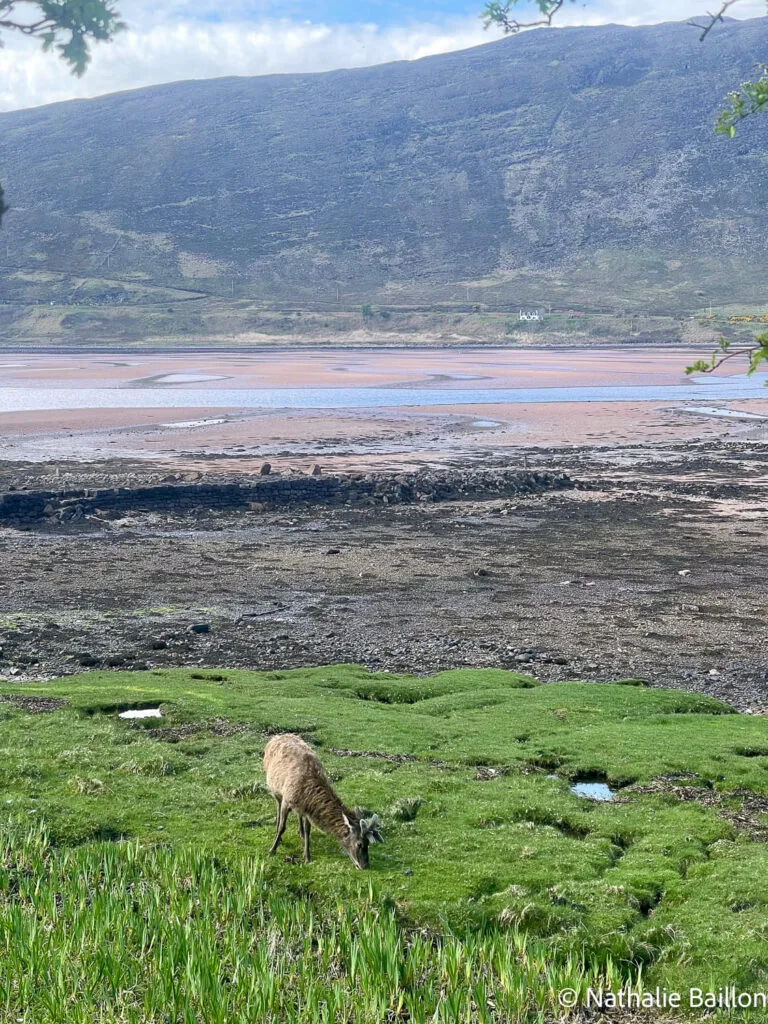
There are no refuelling facilities between Applecross and Shieldaig, so we’ll need to bring some with us to tackle the roller-coaster ride that follows. In Shieldaig there’s a supermarket and a pub, but the former is closed when we arrive, so we settle in at the tables in the latter. The tables are by the water and the setting is pleasant, but the food is expensive and rather disappointing. Once our bellies are full, we drive a few kilometers until we find a forest road between Balgy and Annat where we pitch our tent for the night.
Stage 10 – Shieldaig to Inverness
Don’t forget to book your train tickets!
As places on Scottish trains are limited, and we hadn’t booked ours in advance, we’re forced to catch our train a day earlier than we’d planned. But this will allow us to visit Edinburgh in greater depth. The train from Inverness to Edinburgh takes about 4 hours and costs around 30 euros per person. Bike parking is free, but must be booked in advance.
Along the Beinn Eighe national nature reserve
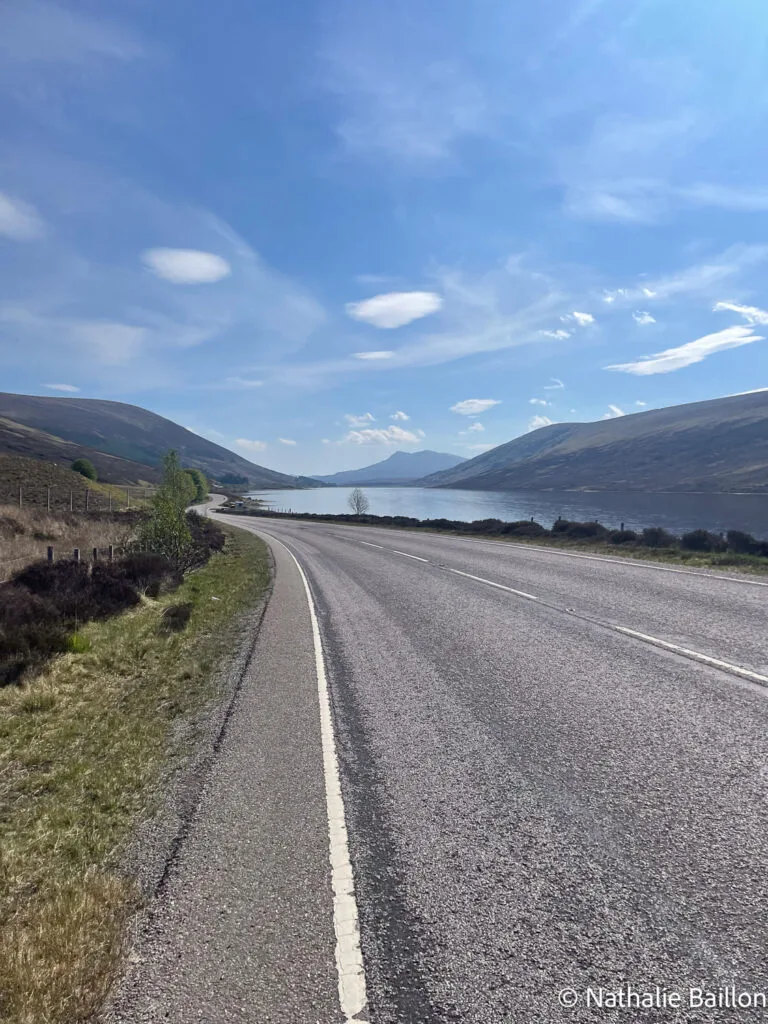
We then take the most direct route to Inverness, with a short detour to Muir of Ord to visit the Singleton distillery. The single-track road skirts the Beinn Eighe National Nature Reserve, Britain’s oldest. The eponymous massif is impressive.
From Kinlochewe, we follow the main road to save time, but if you have time to wander around, I wouldn’t recommend it. There’s a lot of traffic and it’s not very interesting.
Visit to the Singleton of Glen Ord distillery
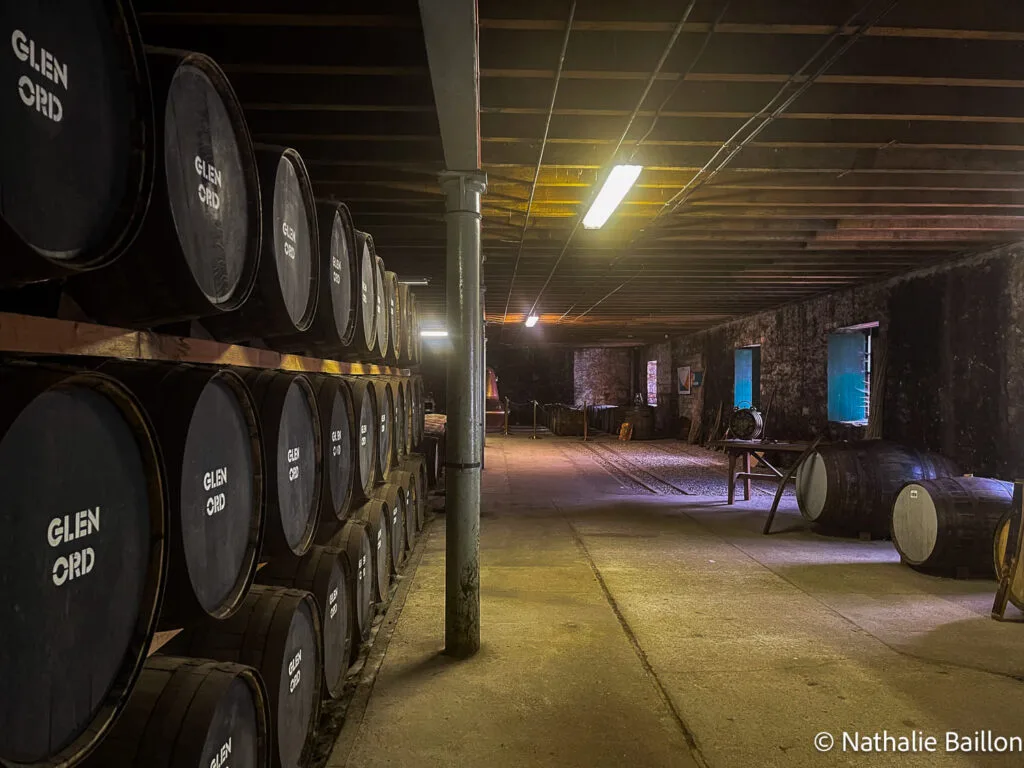
The tour of the Glen Ord whisky distillery is very interesting, and we didn’t have to book in advance. It ends with a tasting of 3 whiskies. Fortunately, we didn’t have many kilometers left to reach our final destination!
We take a side road along the Beauly Firth to Inverness. It avoids the traffic and is more direct. Inverness is a bizarre mix of modern buildings and charming ancient monuments. It’s the largest city in the Highlands, so you’ll find everything you need.

This article contains affiliate links.