


Physiology of women versus men – What are the differences?

What are the physiological differences between men and women? Far be it from us to write an exhaustive article, but here are a few keys to understanding your female body!

Body composition
Women and men differ in their body composition. Our bust size is smaller, but our legs are bigger.
Women have around 10% more body fat, around 10% less muscle mass (lean mass) and lower bone volume. Cartilage thickness, joint surface and tendon cross-section are also lower in women. In women, under the influence of hormones, fat is mainly stored in the hips.
Breasts can lead to minor problems, such as chafing. It’s important to have a sports bra that’s well adapted to your body shape.
Men’s and women’s feet differ in size, shape, weight distribution and bone and joint structure. Generally speaking, men have larger feet than women. Our feet are generally narrower and more curved, with a more pronounced plantar arch. This difference in width and shape can influence the distribution of pressure exerted on the foot during walking and running. The distribution of forces is also different. Our lower center of gravity has an impact on our foot placement, which forms a steeper angle to the body axis, influencing stability.
Necessary fat mass!
Our body fat is greater than that of men, but it is necessary for the proper functioning of the menstrual cycle.
Biomechanics
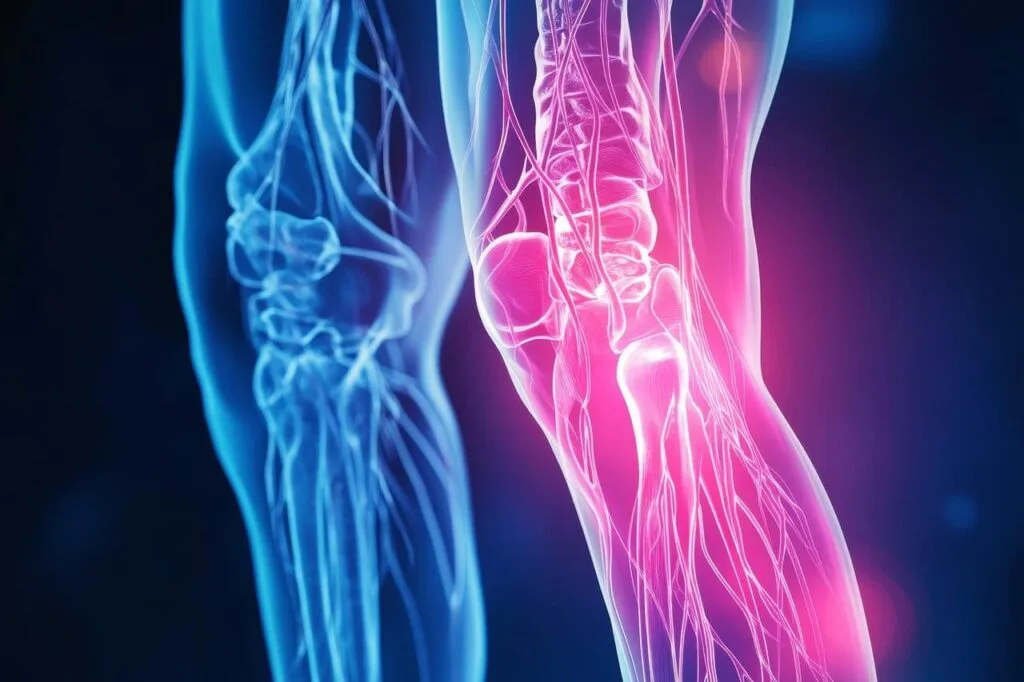
Our stride and lower limb biomechanics (thighs, knees, calves, ankles and feet) are different from those of men. It’s impacted by our hips, which are wider to accommodate childbirth with the arrival of a newborn. This hip width makes us more likely to have “X” shaped knees. That is, having a posture where the knees are turned inwards, forming the shape of an “X” when looking at the person from the front. This can lead to premature wear of the cartilage and increase the risk of muscular, tendon or ligament injuries .
We’re also more likely to develop certain injuries, such as knee sprains, anterior cruciate ligament (ACL) problems and ankle and foot pathologies.
However, strengthening the muscles around the knees, hips and thighs (such as the quadriceps and abductors) can help improve alignment and reduce the risk of injury and pain.
Heart and oxygenation
Women have smaller heart chambers, and therefore less cardiac volume, resulting in lower cardiac output. In women, blood volume is lower, leading to a VO2 max (maximum volume of oxygen the body can use per unit of time) that’s around 10-15% lower. However, in relation to weight (Kg), women’s VO2max is only slightly lower than that of men.
Our blood pressure is lower and our maximum heart rate is lower.
The oxygenation capacity of our muscles is lower, because oxygen transport in the blood is less efficient. Our hemoglobin level, which plays a fundamental role in the transport of oxygen and carbon dioxide in the human body, is around 12 g/dL, whereas in men the level is around 15-16 g/dL. This difference implies a greater risk of anemia and iron deficiency in women. Added to this is the fact that menstruation occurs every month. Pay attention to your iron levels!
Men’s/Women’s performance
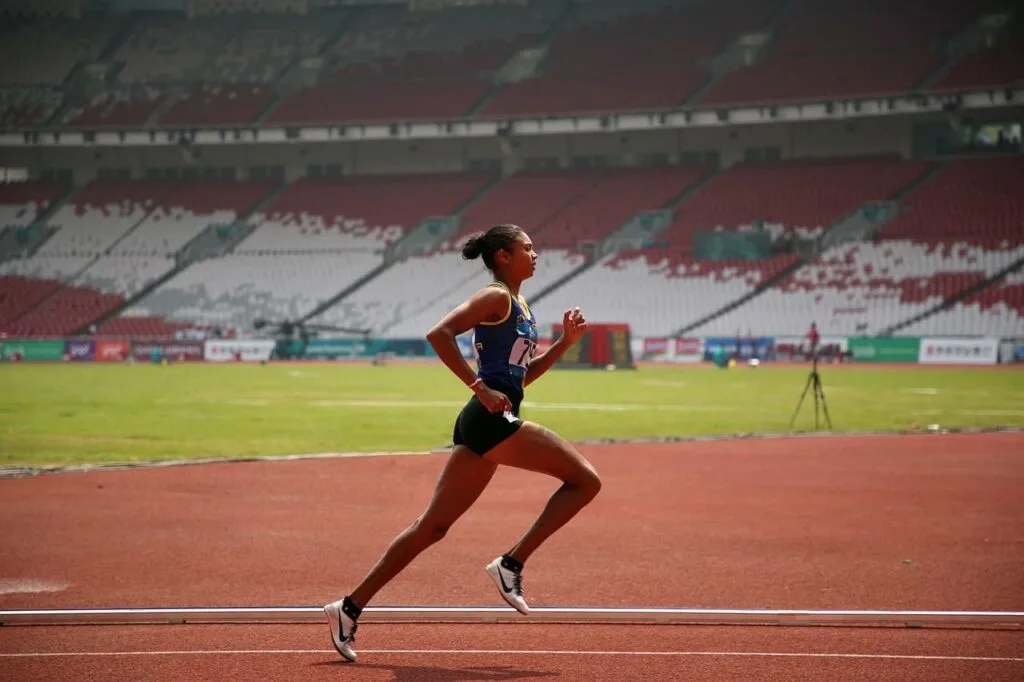
Constitutionally, men seem to be better suited to sports requiring strength, power and speed. Women, by virtue of their morphotype, are better suited to sports requiring suppleness and very long periods of practice. This is due to the fact that we have more slow fibers (type I) (51% vs. 46% for men) than fast fibers (type II).
Our capacity to oxidize (burn) lipids (fats) is twice that of men. This enables us to preserve the energy stored in our muscles (our muscle glycogen). As a result, women use more fat, less carbohydrate and less protein during endurance effort.
Our power (strength/speed) is therefore lower than that of men, but on endurance efforts, the longer the distance, the closer women can come to men’s performance.
Women’s physiology is therefore more favourable to long efforts and men’s to power.
Our hormones
Testosterone secretion is 15 to 20 times higher in men, and is continuous. It does not fluctuate like our hormones during our menstrual cycle.
A woman’s hormonal cycle influences tendon hydration and strength. Our ligaments are lax, but have the same resistance.
Bibliography
- Adrian J Talia et al. 2024 Gender differences in foot and ankle sporting injuries: A systematic literature review
- Besson, T., et al. 2022 Sex differences in endurance running. Sports Medicine
- Franck le Mat et al. 2023 Running endurance in women compared to men: retrospective analysis of matched real : World big data
- Gabrielle G. et al 2024 The Impact of Breasts and Bras on Physical Activity Amongst Women and Girls: A Systematic Review and Meta-Analysis
- Le Cornec-Boutineau
- Stacy Sims “Sportive” book
- Marc A et al. 2008 Sex difference in exercise metabolism and the role of 17 beta-oestradiol
- Natalie J Hardaker et al. 2024 Difference in injury profiles between female and male athlete across the participant classification framework: A systematic review and meta-analysis
- Tille N.B et al (2021)