

It’s possible to enjoy the festive season, work out and keep your balance!

With the festive season just around the corner, hearty meals follow one another, chocolates make their way into every nook and cranny, and training rhythms are turned upside down. For many of us, this time of year is synonymous with pleasure, but also with apprehension: fear of putting on weight, breaking our sporting routine or losing performance. And yet, it's perfectly possible to enjoy these moments with your family while preserving your equilibrium. In this article, I'd like to share with you my simple and effective advice for getting through the festive season with peace of mind, guilt-free and without compromising your well-being.
Balance over time
Festive meals are no problem if your diet remains balanced the rest of the time. Keep in mind that balance is built up over several weeks , not over a single meal. To optimize this balance, I advise you to give priority to meals rich in proteins and vegetables before and after more substantial occasions.
For example, if your dinner on December 24 was particularly generous, you can choose a breakfast for the following day that’s lighter in carbohydrates but rich in protein : 1 or 2 eggs, fromage blanc and a small handful of oilseeds.
Don’t go to a meal on an empty stomach
Who hasn’t thought: “ I’m not eating lunch because I know that tonight’s meal is going to be hearty”?
But depriving yourself before a rich meal would be a real mistake. You risk arriving at your meal totally starved and eating more as a result.
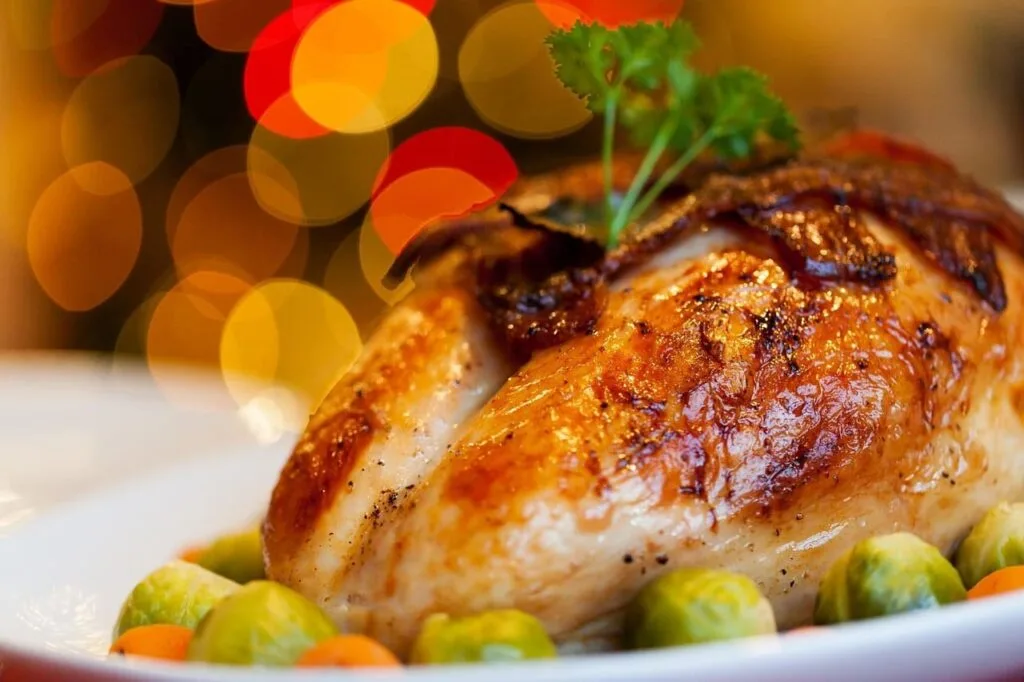
So, I advise you to have a satiety-enhancing breakfast: for this, opt for protein-rich foods such as chicken or turkey, accompanied by a good source of vegetables. You can also start your meal with a raw vegetable to increase the amount of vegetables consumed.
When you’re hungry and/or physically active, I also recommend that you include a source of wholegrain products such as quinoa, brown rice or buckwheat.
Comment soutenir La Sportive Outdoor?
L'une des façons de nous soutenir est de faire vos achats via nos sites partenaires.
L'idée n'est évidemment pas de vous pousser à la consommation: n'achetez que ce dont vous avez besoin mais, lorsque vous le faites, passer par nos liens nous aide car nous touchons ainsi une petite commission sans aucun coût supplémentaire pour vous.
Vous pouvez par exemple en ajouter certains en favoris pour vos prochains achats. Pensez à accepter les cookies de nos partenaires dès l’arrivée sur leur site.
- i-Run: jusqu'à -50% pour les Running Weeks
- Ekosport: -20% extra sur les nouveautés rando et bivouac
- Intersport: des offres sur la randonnée (notamment)
- Muule: 15% de promo avec le code VIP15
- Decathlon: pas mal de bons plans
- Lyophilisé&Co: lyophilisés, nutrition sportive et matos de bivouac
Pour plus de façons de nous soutenir, c'est ici.
Eat slowly
Did you know that it takes about 20 minutes for your brain to realize that you’re eating?
This delay is no myth: it’s explained by very real mechanisms. After the first few mouthfuls, changes occur in certain brain cells (astrocytes) located near the neurons responsible for satiety, which explains why the sensation of “I’m not hungry anymore” doesn’t arrive immediately.
Satiety also depends on hormonal messages. As soon as you start eating, the gut releases regulatory substances, such as peptide YY and GLP-1, which send a signal to the brain to curb appetite. But these signals take time to reach their full effect.
Result: the sensation of satiety generally appears 15 to 30 minutes after the start of the meal, and this time varies according to each individual.

Enjoy your meal with full awareness
End-of-year meals are often an opportunity to taste products that we don’t find on our plates every day. So make the most of it! As with your sporting activities, the key is to listen to your body. Eating mindfully allows you to better perceive hunger and satiety signals.
When we swallow too quickly, we tend to eat more than we need. Conversely, numerous studies show that mindful eating promotes better weight regulation. As food is linked to emotions, mindfulness also helps to manage cravings linked to stress or fatigue: it teaches us to observe our sensations without reacting automatically.
To achieve this, take small bites, chew slowly and enjoy what you’re eating.
Stay hydrated…with water!
When you’re a sportswoman, you know how essential hydration is for performance and recovery. During the festive season, this reflex is just as important, if not more so: rich meals, alcoholic beverages, shorter nights – all factors that encourage dehydration.
Alcohol, on the other hand, provides a lot of empty calories and stimulates the appetite by blurring satiety signals. So the idea is not to deprive yourself of a few drinks if you feel like it, but to better manage the way you consume them.
Start your meal with a large glass of water, then alternate with a glass of water between each glass of alcohol. This limits overall consumption, reduces cravings and protects your hydration levels.
When you’re not eating, make sure you stay well hydrated: this helps regulate hunger and satiety hormones, helps you distinguish between real hunger and a simple sensation of thirst, and limits unnecessary snacking.
Take a walk after a big meal
After a hearty meal, going for a 10-20 minute walk is one of the best reflexes you can adopt. Not only does this little stroll boost digestion and prevent the notorious “post-meal fatigue”, it also optimizes your metabolism. Walking stimulates blood circulation, improves gastric emptying and reduces bloating and heaviness.
But beyond these physiological benefits, it’s also a real moment of pleasure: walking with the family, chatting, breathing in the fresh air… and if the snow comes, it’s even better. These simple moments become precious memories.
Keep training to a minimum
Exercise is a great regulator! Medium- to high-intensity exercise can temporarily reduce hunger by influencing appetite hormones (ghrelin, leptin), helping to control calorie consumption. It also helps your muscles to better capture sugar in the blood, preventing it from being converted into fat and preventing the insulin surges that cause cravings and weight gain.
So even if you’ve got a busy schedule, stick to 2 or 3 short sessions a week. HIIT, renfo express, 20-30 min jogging: the aim is to keep your metabolism active.

Put aside your scale
It’s of no use during the holiday season. Quite frankly, what’s the point of weighing yourself when your diet, your schedule, your hydration and your pace of life are all changing?
During these more festive days, it’s normal and expected for your weight to fluctuate: variations in water, glycogen reserves, food volume… nothing that reflects real fat gain. Weighing yourself in this context only adds to your stress and guilt, whereas these variations are temporary and will naturally rebalance themselves as soon as you return to a normal routine.
So trust your body and let the scale rest. It won’t teach you anything useful during this period.
Treat yourself!
The festive season is above all a time for sharing, warmth and reunion. The moments you’re about to experience are far more precious than what’s on your plate. Remember that when you were children, what drove you was not the fear of gaining weight, but the wonder, the emotions, the stars in your eyes. That magic has an infinitely greater impact on your well-being than a few hearty meals.
Allowing yourself to enjoy food to the full, without guilt, also means preserving a healthy relationship with food and your body.
The holidays fly by: enjoy them, do yourself good, and keep in mind that two or three meals don’t define your weight, health or performance.
Bibliography
- A. Kokkinos, C. W. le Roux, K. Alexiadou, N. Tentolouris, R. P. Vincent, D. Kyriaki, D. Perrea, M. A. Ghatei, S. R. Bloom, N. Katsilambros. Eating Slowly Increases the Postprandial Response of the Anorexigenic Gut Hormones, Peptide YY and Glucagon-Like Peptide-1. Journal of Clinical Endocrinology and Metabolism. 2009 Oct 29.
- Cai, Haijiang, et al. “Neural Circuits Regulation of Satiation.” Appetite, vol. 200, Sept. 2024, pp. 107512, https://doi.org/10.1016/j.appet.2024.107512.
- Dunn, Carolyn, et al. “Mindfulness Approaches and Weight Loss, Weight Maintenance, and Weight Regain.” Current Obesity Reports, vol. 7, no. 1, Mar. 2018, pp. 37-49, https://doi.org/10.1007/s13679-018-0299-6.
- Harris, William. “Influence of Hydration on Appetite and Caloric Intake.” Journal of Nutrition & Weight Loss, vol. 9, no. 3, Sept. 2024, pp. 1-1, https://www.walshmedicalmedia.com/open-access/influence-of-hydration-on-appetite-and-caloric-intake.pdf.
- Davy, Brenda M., et al. “Water Intake, Hydration, and Weight Management: The Glass Is Half-Full!” Physiology & Behavior, vol. 297, Aug. 2025, pp. 114953, https://doi.org/10.1016/j.physbeh.2025.114953.
- Greenway, F. L. “Physiological Adaptations to Weight Loss and Factors Favouring Weight Regain.” International Journal of Obesity, vol. 39, no. 8, Aug. 2015, pp. 1188-96, https://doi.org/10.1038/ijo.2015.59.
- Reiner, Miriam, et al. “Long-Term Health Benefits of Physical Activity–a Systematic Review of Longitudinal Studies.” BMC Public Health, vol. 13, Sept. 2013, p. 813, https://doi.org/10.1186/1471-2458-13-813.
- Sigal, Ronald J., et al. “Effects of Aerobic Training, Resistance Training, or Both on Glycemic Control in Type 2 Diabetes: A Randomized Trial.” Annals of Internal Medicine, vol. 147, no. 6, Sept. 2007, pp. 357-69, https://doi.org/10.7326/0003-4819-147-6-200709180-00005.
- Flack, Kyle D., et al. “Exercise for Weight Loss: Further Evaluating Energy Compensation with Exercise.” Medicine and Science in Sports and Exercise, vol. 52, no. 11, Nov. 2020, pp. 2466-75, https://doi.org/10.1249/MSS.0000000000002376.
- McPherron, Alexandra C., et al. “Increasing Muscle Mass to Improve Metabolism.”
Adipocyte , vol. 2, no. 2, Apr. 2013, pp. 92-98, https://doi.org/10.4161/adip.22500.