


Strength training for trail running with Manon Chabourlin
In this latest episode of La Sportive Outdoor, we delve into the heart of a subject often overlooked by runners, but which is nonetheless fundamental: muscle strengthening.

Watch the video interview
Listen to the podcast
Episode summary
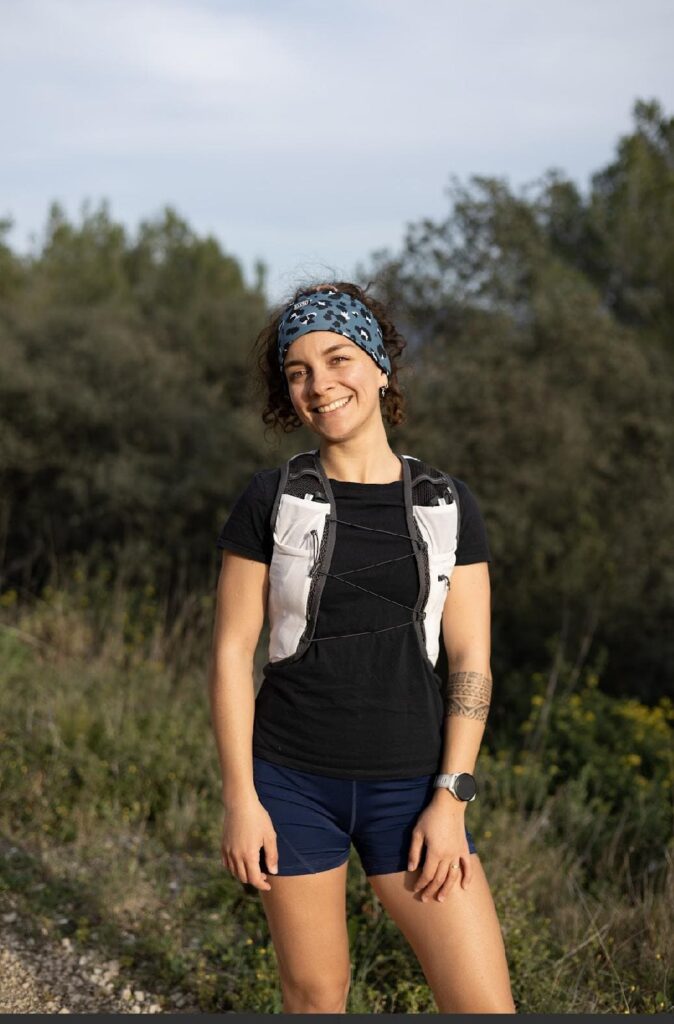
To talk about it, I welcome Manon Chabourlin, aka Manamove on Instagram, sports physiotherapist and passionate trail runner. At 30, this healthcare professional, a physiotherapist since 2019, took up trail running two and a half years ago after exploring dance, climbing and fitness.
Her approach changed radically following a burn-out in 2024, which prompted her to leave a saturated healthcare system to specialize in running coaching for women, with a particular focus on women’s health.
Why running alone is not enough
There’s a persistent misconception that to progress in running, you only need to run. Manon Chabourlin deconstructs this myth by explaining that the body, especially if you’re starting out after 20 or 25 years with no impact sports history, is not naturally prepared to take on the bone and tendon stresses of running.
Strengthening prepares the tissues to withstand volumes of 30 to 60 kilometers per week. As well as preventing injury, it improves recovery, particularly after hard descents thanks to the resistance of the quadriceps, and boosts pure performance by developing the strength needed for propulsion.
For women, the benefits are even more marked. Strengthening helps maintain muscle mass during the menopause and regulates hormonal imbalances linked to the menstrual cycle, alleviating premenstrual fatigue and bloating.
Stop making classic mistakes: The Bosu and sit-ups
One of the most common mistakes is trying to do too much at first, with hour-and-a-half sessions several times a week, which often leads to giving up as early as April. Manon recommends regularity over the year, with one or two well-run sessions.
Comment soutenir La Sportive Outdoor?
L'une des façons de nous soutenir est de faire vos achats via nos sites partenaires.
L'idée n'est évidemment pas de vous pousser à la consommation: n'achetez que ce dont vous avez besoin mais, lorsque vous le faites, passer par nos liens nous aide car nous touchons ainsi une petite commission sans aucun coût supplémentaire pour vous.
Vous pouvez par exemple en ajouter certains en favoris pour vos prochains achats. Pensez à accepter les cookies de nos partenaires dès l’arrivée sur leur site.
- i-Run: jusqu'à -50% pour les Running Weeks
- Insta360: de (très) grosses promos sur plein de caméras sportives pour les French Deals
- Ekosport: -20% extra sur les nouveautés rando et bivouac
- Intersport: des offres sur la randonnée (notamment)
- Muule: 15% de promo avec le code VIP15
- Compressport: 10% de réduction avec le code WELCOME-COMPRESSPORT-26
- Decathlon: pas mal de bons plans
- Lyophilisé&Co: lyophilisés, nutrition sportive et matos de bivouac
Pour plus de façons de nous soutenir, c'est ici.
Another point of vigilance concerns “proprioception”. Contrary to what we often see on social networks, balancing on an unstable half-ball (Bosu) is not effective in preventing ankle sprains.
It’s much better to work on a single leg on the ground to gain real stability, or to perform jumps on inclined planes to reproduce the real angles of the terrain.
Similarly, traditional “crunches” on the floor are of little use in running, as the abs work in a standing position; Manon therefore recommends polyarticular exercises loaded in an upright position to gain trunk stability.
The pillars of an effective session
For female runners, the aim is to get closer to the sporting gesture with explosiveness.. This includes plyometrics (jumping exercises), which develop power and prevent injuries.. Manon Chabourlin identifies several priority muscle groups:
- Lower limbs: Quadriceps, glutes (all three types for pelvic stability), ischios and calves.
- Feet: Intrinsic muscles, often overlooked, are crucial in defining the management of constraints on the ground (toe dissociation exercises).
- Upper body: The upper back for posture and running economy.
- Mobility: The active ability of joints to move in large amplitudes, such as the ankle flexion required when climbing.
What routine should you adopt at home?
There’s no need to turn your living room into a gym. For an amateur, two sessions of 20 to 30 minutes a week are already excellent. While the first 4 to 6 weeks can be spent using body weight to allow for tissue adaptation, it is then necessary to add weight (elastic, kettlebell), as each running impact represents 2 to 3 times body weight. .
A typical session should start with mobility, followed by a circuit (super set) of 3 or 4 targeted exercises repeated 2 or 3 times, and finish with plyometrics.. As for the pace, Manon suggests keeping the same exercises for three weeks to a month before varying them, to give the body time to adapt to the constraints imposed.
Conclusion
Muscle strengthening is no longer an option for those who want to trail ride pain-free. By starting slowly and setting achievable targets, such as one 20-minute session a week to start with, you’ll build the solid foundations you need to enjoy the mountains.
Don’t be afraid to put on a little weight: you won’t become a “muscleman” overnight, but you’ll definitely perform better and be better protected!