
Perineum and bladder weakness in sportswomen? No taboos with Lise & Laura from WIP Coach
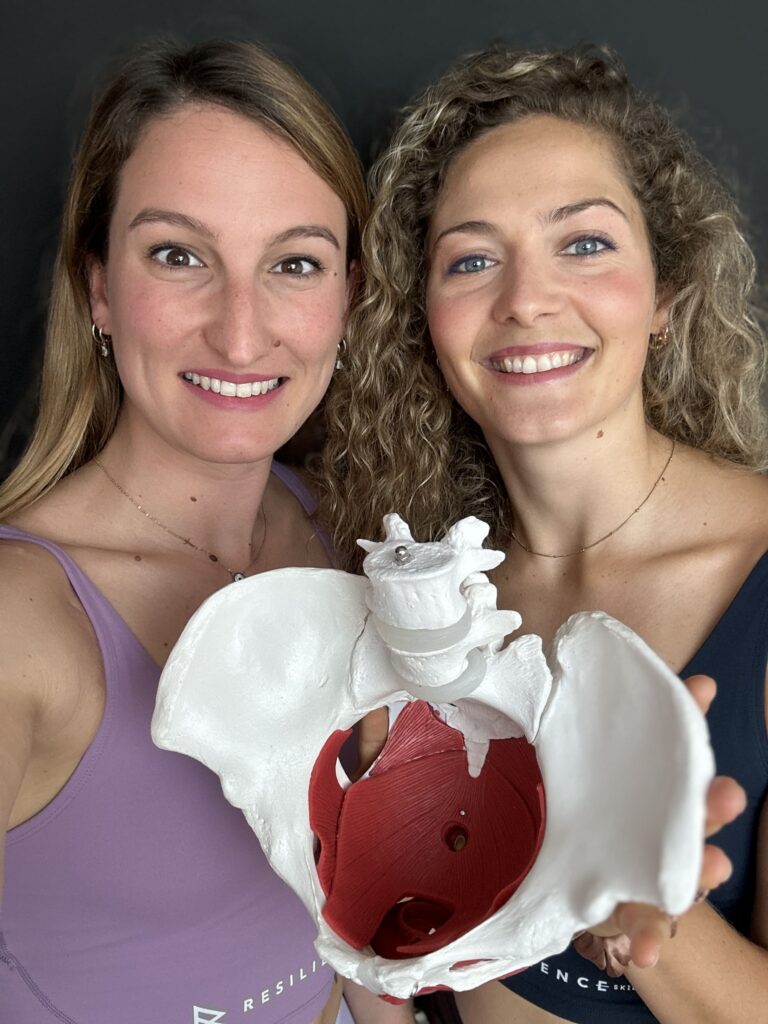
In this episode of the podcast La Sportive Outdoor, I welcomed Lise and Laura from WIP (Women in Progress) Coach, who specialize in pelvic health and spoke without taboo about a subject that is essential for us women: the perineum!

Watch the video interview
Listen to the podcast
Episode summary
Long shrouded in the shadows of the locker room, the subject of pelvic health in sportswomen is finally coming out of the closet. In this episode of the podcast La Sportive Outdoor, Lise and Laura, specialized physiotherapists and founders of Women in Progress (WIP) Coach, shed light on this muscular ensemble too often neglected until pregnancy.
Between persistent myths and concrete solutions, they explain why it’s time to reconcile sporting performance and perineal well-being.
What is the perineum and what does it really do?
Contrary to popular belief, the perineum is not just a muscle, but a complex network of supporting tissues, ligaments and fascias that close off the pelvis at the crotch. Its role goes far beyond urinary and fecal continence.
Ever since we became bipeds, the perineum has acted as a veritable “little trampoline”. It performs several essential functions:
- Visceral support and intra-abdominal pressure management.
- Participation in posture, a key element in any physical activity.
- A major role in the sexual and reproductive sphere.
For sportswomen, a functional perineum is synonymous with better performance and reduced pain. However, it often remains a blind spot, as it functions automatically, like breathing, and only comes to our attention when it begins to malfunction. .
Are outdoor sports bad for your perineum?
There’s a persistent misconception that high-impact sports like running are intrinsically bad for the perineum. Lise and Laura are categorical: this is a myth.
Comment soutenir La Sportive Outdoor?
L'une des façons de nous soutenir est de faire vos achats via nos sites partenaires.
L'idée n'est évidemment pas de vous pousser à la consommation: n'achetez que ce dont vous avez besoin mais, lorsque vous le faites, passer par nos liens nous aide car nous touchons ainsi une petite commission sans aucun coût supplémentaire pour vous.
Vous pouvez par exemple en ajouter certains en favoris pour vos prochains achats. Pensez à accepter les cookies de nos partenaires dès l’arrivée sur leur site.
- i-Run: jusqu'à -50% pour les Running Weeks
- Ekosport: -20% extra sur les nouveautés rando et bivouac
- Intersport: des offres sur la randonnée (notamment)
- Muule: 15% de promo avec le code VIP15
- Decathlon: pas mal de bons plans
- Lyophilisé&Co: lyophilisés, nutrition sportive et matos de bivouac
Pour plus de façons de nous soutenir, c'est ici.
In reality, these activities do not create the problem, but rather highlight a pre-existing fragility. On the contrary, well-dosed exercise can even become a tool for maintaining and exercising the perineum.
Each outdoor discipline presents its own specific challenges:
- Trail and running: Urinary leakage frequently occurs during impact, especially downhill.
- Climbing: Leakage problems are rarer, but can occur during boulder landings or intense efforts with a flexed hip.
- Cycling: here, the problem is not leakage but compression. Sensations of tingling, irradiation or electrical discharges linked to the pudendal nerve should never be considered “normal”, even after long hours in the saddle.
Identifying warning signs: Yellow Flags
The perineum doesn’t express itself through pain in the same way as an Achilles tendon. It sends more subtle messages, “Yellow Flags” (non-urgent warning signals), which we must learn to listen to.
In addition to the obvious bladder or faecal leakage, other signs of dysfunction include a feeling of heaviness (like a badly inserted tampon), pain during intercourse, or the urge to urinate as soon as you hear water running.
Persistent back or hip pain can also be linked to a less toned pelvic sphere that compensates on other structures.
Towards a comprehensive, modern approach to rehabilitation
The WIP Coach approach differs from traditional “in-office” rehabilitation. Where traditional physiotherapy often focuses solely on the muscle via probes or vaginal touch, Lise and Laura advocate an “unzoomed” and multifactorial vision.
For them, tightening the perineum is not enough for a woman preparing for a marathon; you need to work on lifestyle habits, diet, pressure management and abdominal girdle.
They also remind us of the importance of certain daily habits in preserving this zone. For example, the “precautionary pee ” before running is a false good idea that disrupts messages between the bladder and the brain.
Similarly, excessive pushing during constipation weakens the perineum, so the use of a step stool to elevate the knees is recommended.
Finally, they recommend sitting down and relaxing in the toilet rather than standing or “hanging” to empty the bladder completely and avoid urinary tract infections.
Conclusion
In conclusion, Lise and Laura’s message is one of optimism: it’s never “ruined”. The body is a machine capable of adapting if you give it the right constraints and the necessary time, generally around three months for lasting results.
Movement remains the priority, so don’t hesitate to talk to professionals trained in both pelvic health and sport to continue your outdoor adventures with confidence.
Links
- Instagram of Lise & Laura: https://www.instagram.com/wip.coach/