

Feminizing the bike industry with Ophélie Laffuge from Femmes à vélo
In this episode of the Sportive Outdoor podcast, and as part of the Podcasthon, I spoke to Ophélie Laffuge, president of the association Les Femmes à vélo, about the state of play and the challenges of feminizing the cycling industry in France.

Listen to the podcast
Watch the interview
Episode summary
As part of a special Podcasthon episode, I welcomed Ophélie Laffuge, president and co-founder of the association Les Femmes à vélo. The aim of this discussion was to take stock of the feminization of the cycling sector, and to detail the levers being used to transform an industry that is still largely male-dominated.
A passionate advocate of diversity
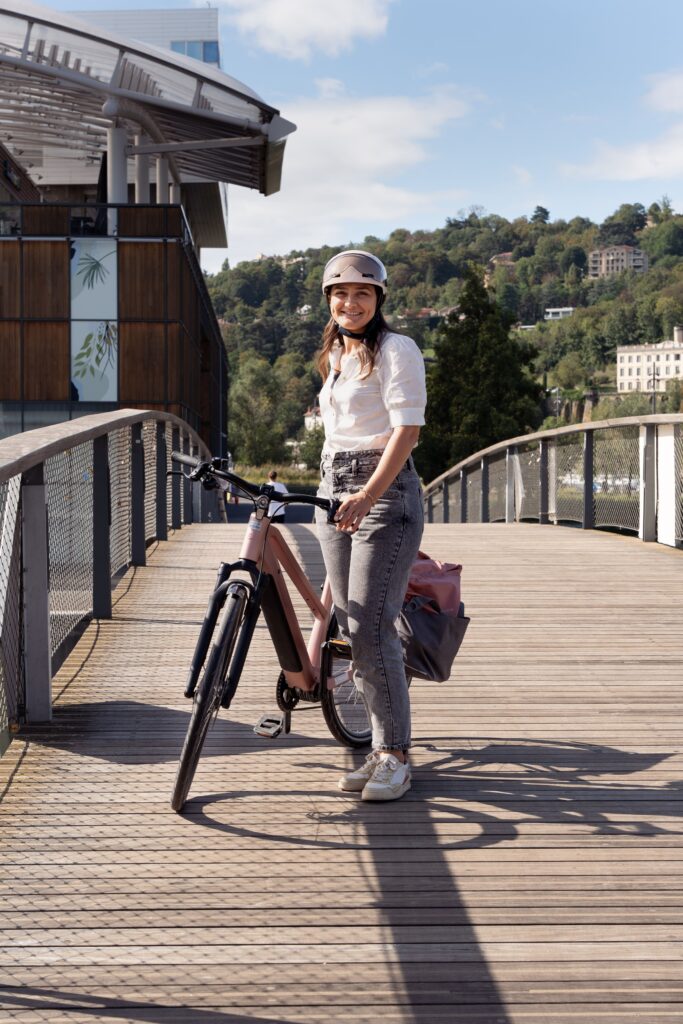
Ophélie Laffuge is no newcomer to the sporting ecosystem. An independent entrepreneur specializing in marketing and events for women’s sports, she works in particular with the French Cycling Federation (FFC). A cyclist since childhood, she now lives in Lyon without a personal vehicle, having used her bike for all her travels for the past 15 years. With five bicycles in her garage, she embodies the diversity of cycling, from vélotaf to VTT.
It was in 2021, with two cycling friends, that she launched her association “Les femmes à vélo” (Women on bikes) after realizing that the professional ecosystem remained closed to women, despite a growing practice.
The shock of the figures: a national study without appeal
To go beyond mere feelings, the association has spurred a national study on the place of women in the cycling industry, supported by France Vélo and presented on December 15, 2025 at the French National Assembly. The results reveal a major under-representation:
- An 18% feminization rate: For every 100 full-time jobs in the sector, only 18 are held by women.
- France’s second-to-last pupil: The sector is just ahead of construction (13%) and far behind industry and the automotive sector (25-30%).
- Disparities by branch: Production fared best, with 26% of women working in manufacturing plants. Conversely, only 5% of employees in the design and engineering professions are women.
- A secure glass ceiling: 50% of women working in the sector claim to have been victims of sexist and sexual violence (SGBV) during their career.
Structural barriers to hiring and retention
The study identifies several major obstacles. The first is cultural : many companies regard cycling as a “male bastion” by nature, thus absolving themselves of any proactive responsibility. Gender stereotypes also persist in the allocation of positions, often reserving attention to detail for women and technical or physical strength for men.
In addition to recruitment, the sector also struggles to retain its female talent. Women leave the industry much more quickly than men, often due to a lack of training in equality and the prevention of sexism.
Finally, companies sometimes believe they are taking action through inclusive communication, but often limit themselves to mentioning “M/F” on job offers, which proves insufficient to attract female candidates.
Comment soutenir La Sportive Outdoor?
L'une des façons de nous soutenir est de faire vos achats via nos sites partenaires.
L'idée n'est évidemment pas de vous pousser à la consommation: n'achetez que ce dont vous avez besoin mais, lorsque vous le faites, passer par nos liens nous aide car nous touchons ainsi une petite commission sans aucun coût supplémentaire pour vous.
Vous pouvez par exemple en ajouter certains en favoris pour vos prochains achats. Pensez à accepter les cookies de nos partenaires dès l’arrivée sur leur site.
- i-Run: jusqu'à -50% pour les Running Weeks
- Insta360: de (très) grosses promos sur plein de caméras sportives pour les French Deals
- Ekosport: -20% extra sur les nouveautés vélo de route et VTT
- Intersport: des offres sur la randonnée (notamment)
- Muule: 15% de promo avec le code VIP15
- Compressport: 10% de réduction avec le code WELCOME-COMPRESSPORT-26
- Decathlon: pas mal de bons plans
- Lyophilisé&Co: lyophilisés, nutrition sportive et matos de bivouac
Pour plus de façons de nous soutenir, c'est ici.
Towards a virtuous circle: mentoring and inclusive design
For the association, feminization is not just an issue of social justice, it’s an economic necessity. Ophélie Laffuge points out that with only 5% women in design, products (bikes, saddles, equipment) are still designed by men for men’s morphologies. Including women right from the design stage would enable us to offer adapted products, thus encouraging women to ride and, by extension, the recruitment of future professionals.
To support this change, Les Femmes à vélo is launching a pilot mentoring program in 2026. Twelve mentor-mentee pairs will be formed to enable experienced women to guide those wishing to progress in their careers.
At the same time, a free 20-question self-diagnostic has been put online on the France Vélo website to help companies assess their own maturity on these gender issues.
Conclusion
Commitment to the feminization of the bicycle industry involves visibility and networking. Ophélie Lafuge encourages women “not to ask too many questions” and to join the industry, where real opportunities exist. The association, run by six volunteers, offers an annual membership fee of 20 euros to support its lobbying and promotional activities.
Links
- Les Femmes à vélo website
- Ophélie’s Instagram
- Podcasthon