

Zenbivy Ultralight bed test – My full review of this ultralight comforter
Here's what I think of Zenbivy's Ultralight bed, an alternative to conventional sleeping bags with a system consisting of a sheet and a quilt, after several hiking, bivouac and bikepacking tests.
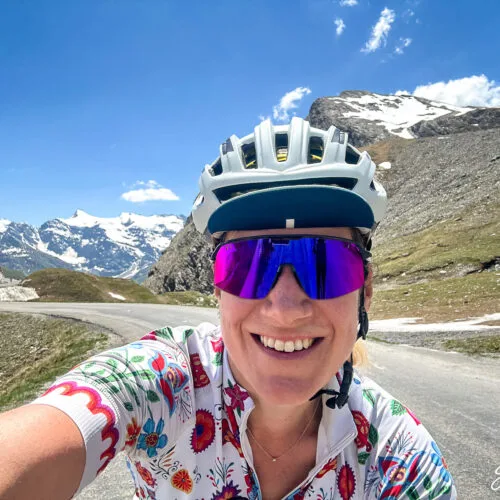
Test video summary
My summary
What I liked
- Great comfort
- Nice and warm
- Easy-to-use system
- Ultra-light and compact
What I liked less
- Carrying bag not included
- High price (but this is always the case with ultralight comforters)
How can Zenbivy’s Ultralight bed be used?
Zenbivy’s Ultralight bed is a sleeping system that replaces a sleeping bag, offering greater comfort. Its particularly light weight and compact size make it an excellent solution forultralight touring, bikepacking or mountaineering.


Features
- Down material: Muscovy Down™ 900 cuin (also available in goose down)
- Sheet material and outer fabric: Pertex® Quantum 10 denier (280x250T) – Uncoated – Wax finish – Durable water-repellent treatment (DWR) without fluorocarbons – Weight: 26 g/m².
- Total weight of tested version (Ultralight bed Muscovy down -4°) in size M: 635g
- Comfort temperature: 2° for the version tested, also available in -7°.
- Temperature limit: -4° for the version tested, -12° for the version tested.
- Sizes: M, L and XL for quilt, M and L for sheet
- Price: between €452.35 and €800.95 depending on model (€506.30 for the version tested)
The Zenbivy brand
Zenbivy is an American brand of outdoor sleeping equipment that reinvents the way people sleep in the great outdoors. Instead of a conventional sleeping bag, it offers a modular system consisting of a sheet and a quilt.
Zenbivy concept
Before we begin the field test, I’d like to explain the Zenbivy concept to you, so that you understand what we’re talking about.
Comment soutenir La Sportive Outdoor?
L'une des façons de nous soutenir est de faire vos achats via nos sites partenaires.
L'idée n'est évidemment pas de vous pousser à la consommation: n'achetez que ce dont vous avez besoin mais, lorsque vous le faites, passer par nos liens nous aide car nous touchons ainsi une petite commission sans aucun coût supplémentaire pour vous.
Vous pouvez par exemple en ajouter certains en favoris pour vos prochains achats. Pensez à accepter les cookies de nos partenaires dès l’arrivée sur leur site.
- i-Run: jusqu'à -50% pour les Running Weeks
- Ekosport: -20% extra sur les nouveautés rando et bivouac
- Intersport: des offres sur la randonnée (notamment)
- Muule: 15% de promo avec le code VIP15
- Decathlon: pas mal de bons plans
- Lyophilisé&Co: lyophilisés, nutrition sportive et matos de bivouac
Pour plus de façons de nous soutenir, c'est ici.
Move more freely
The basic idea behind the Zenbivy brand is to have the sensation of sleeping in a real bed rather than in a sleeping bag. If the idea is to bivouac, don’t get carried away: sleeping in a tent on an inflatable mattress will never be like sleeping in a real bed, in my opinion, but Zenbivy does help to make the experience more comfortable.
If you’ve ever slept in a sleeping bag, you’ll certainly know that it generally feels a little cramped, especially if you tend to move around during the night to sleep on your side, for example. Another problem is that it’s not always very flexible when it comes to temperature: if you get a bit hot during the night, you won’t be able to open up a small opening very easily, or pull out a leg…
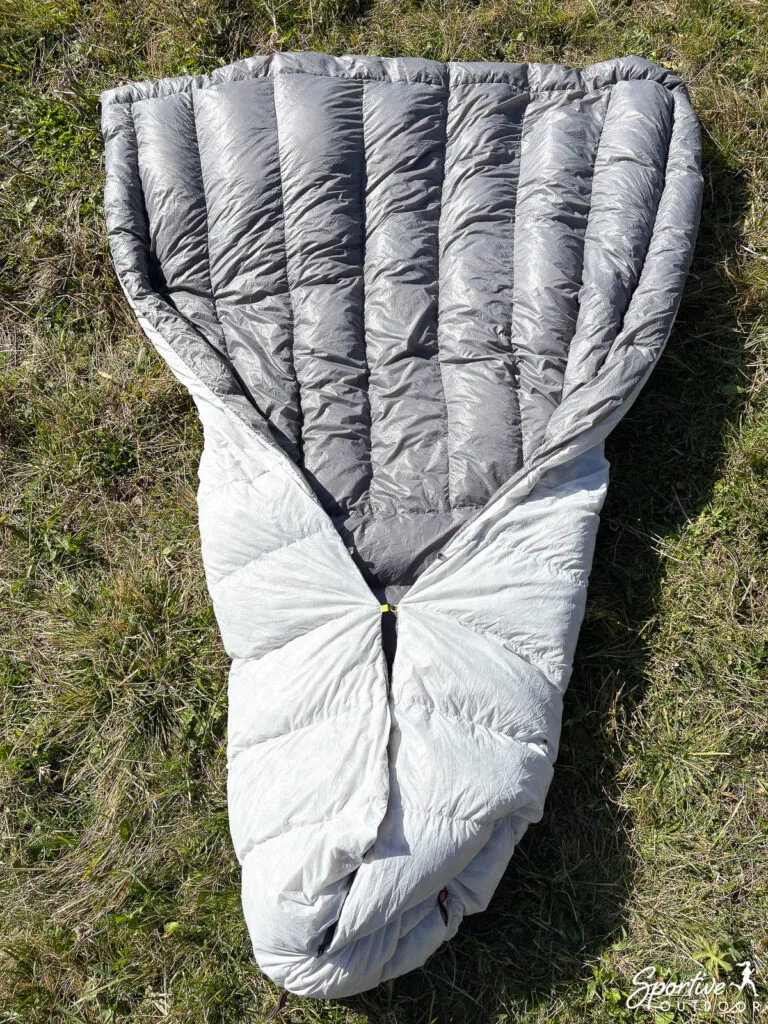
Zenbivy offers an alternative sleeping solution, allowing you to sleep with a quilt that can be combined with asheet to form abed.
The result is: Quilt + Sheet = Bed.
Please note that when they say bed, they don’t mean mattress. The mattress doesn’t have to be a Zenbivy (even if they sell them too). I tested the Zenbivy with my Thermarest mattress, for example. You just need to measure the width of the mattress to choose the size of your sheet, that’s all.

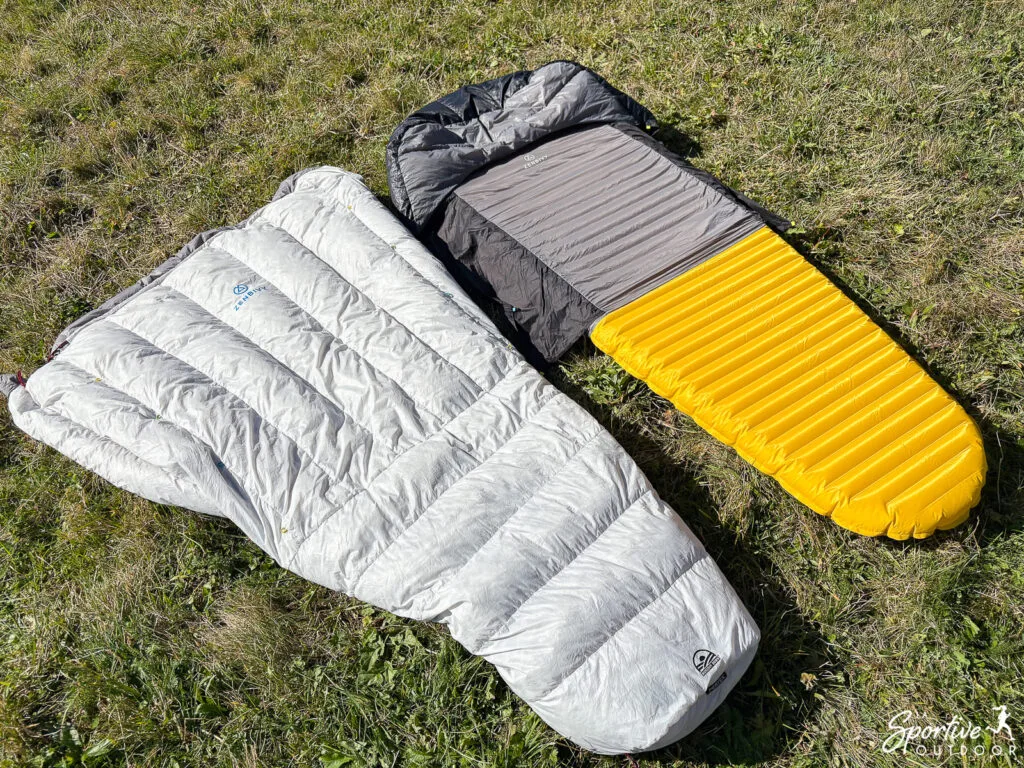
Reduce weight and bulk
The other advantage of the Zenbivy is that it uses less down than a sleeping bag. It’s therefore lighter and less bulky, while sacrificing nothing in the way of comfort, since the sleeping bag’s down, which lies under the body, is actually useless, since it’s completely crushed: there’s no air, the down is no longer inflated and therefore no longer fulfills its role.
The Zenbivy range
Zenbivy offers a range of “beds” adapted to different uses:
- Ultralight bed: the lightest bed for touring, when you want to keep the weight and bulk of your sleeping system to a minimum.
- Light bed: an intermediary between the lightest weight of the ultralight bed and the most affordable price of the core bed.
- Core bed: the simplest and most affordable bed for roaming, but inevitably heavier.
- Zip bed: heavier, for non-hiking camping use
The Light bed and Core bed are available in a double model for couples.
Our full test of the Zenbivy Ultralight bed
I tested the Zenbivy Ultralight Bed Muscovy Down -4° in conditions ranging from a bikepacking trip in Switzerland’s Rhone Valley in summer to a mountain bivouac at 2,500m altitude in early autumn.
Bed installation
The good news is that Zenbivy is easy to install.
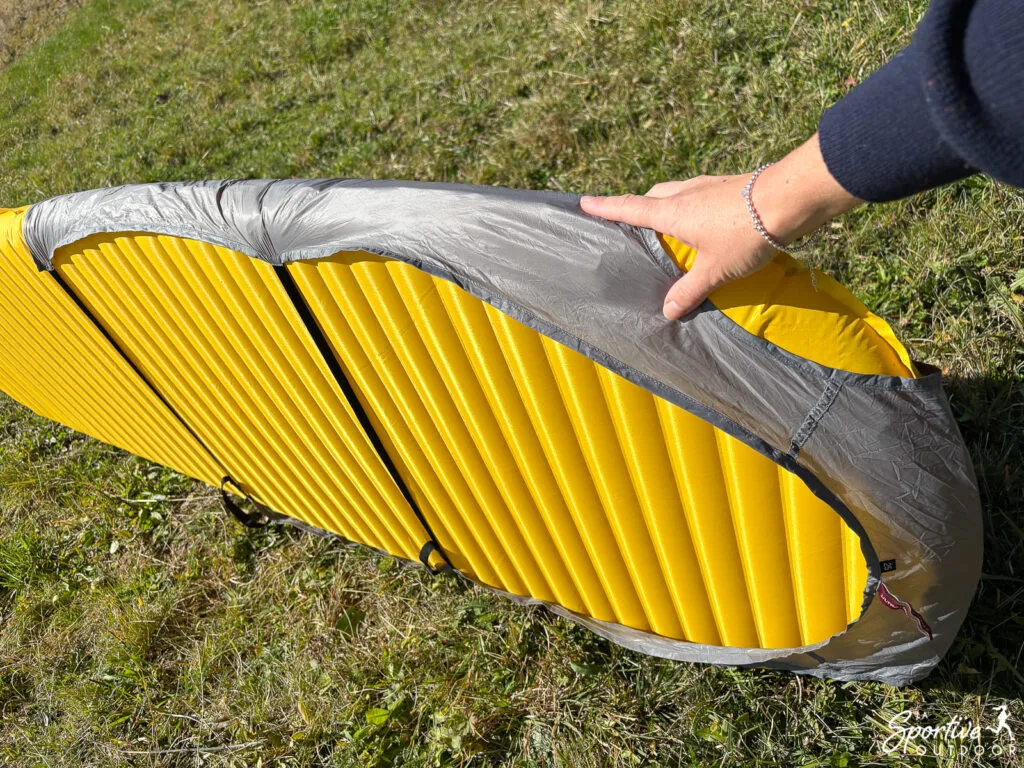
The first step is tofit the sheet over the mattress. Slip it over the top of the mattress like a sock, and fasten it at the back with two straps. I’d just advise you to do it outside the tent, if you’re already inside it’s a bit trickier 😉
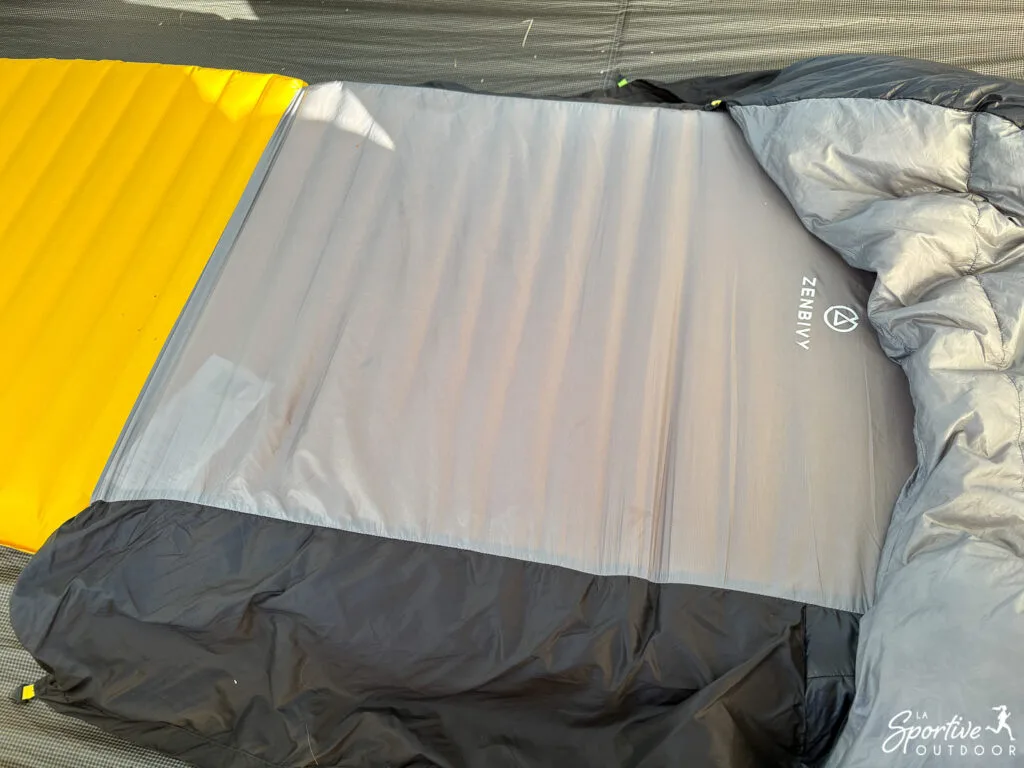
The second step is to put the quilt on your mattress and get into bed! At foot level, the quilt closes slightly , but you can choose to close it to keep your feet warm with a small clip, or leave it open for added freshness.
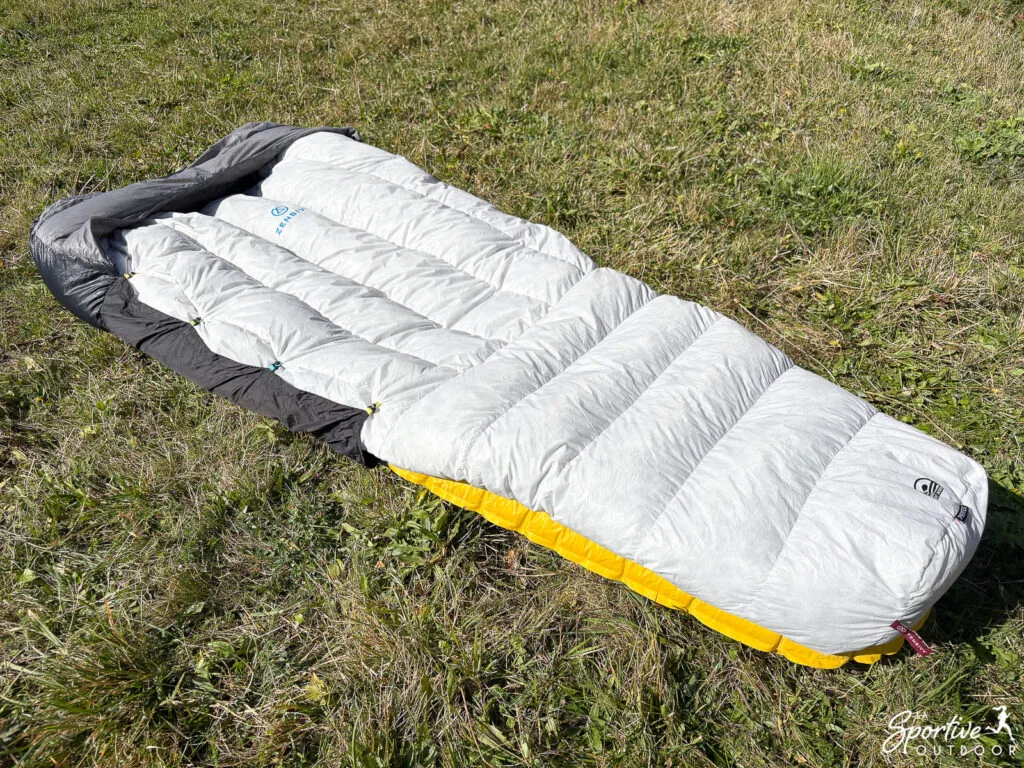

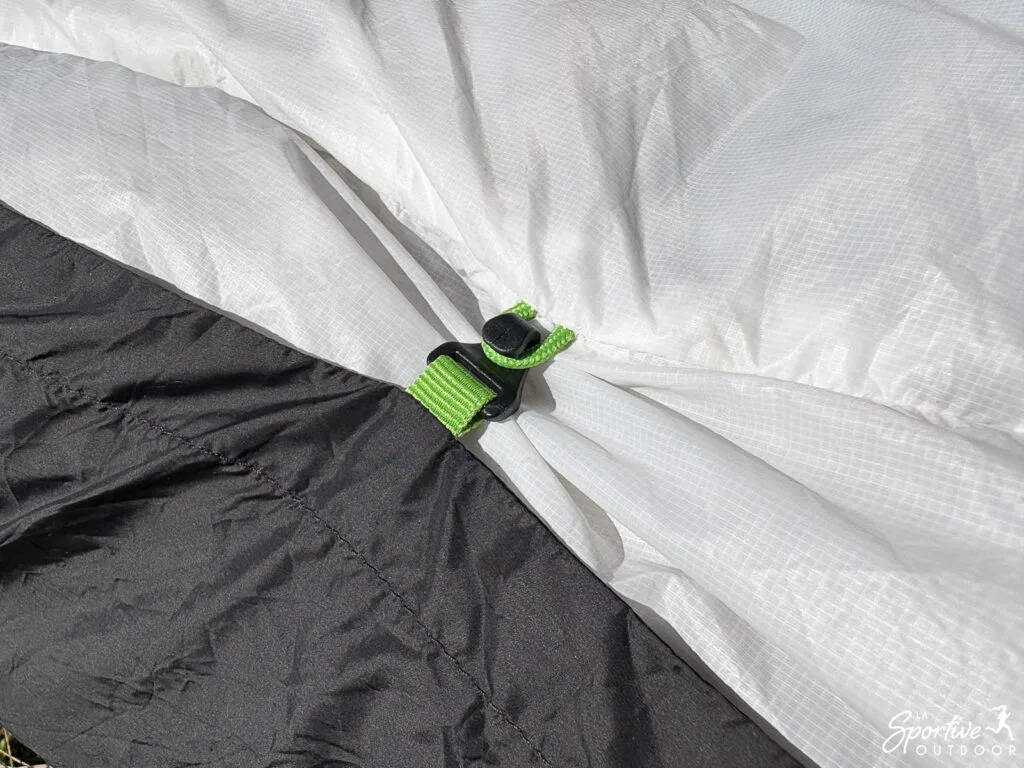
Then, clips are used to attach the quilt to the sheet to prevent draughts. It’s very well thought-out, not only because it’s easy to put on thanks to the colored clips, but also because it works so well that you can really modulate it.
In warm weather, for example, we won’t attach any clips, in cooler weather perhaps a few, and in cold weather all of them. This modularity is clearly one of Zenbivy’s great strengths compared to a conventional sleeping bag.

Overnight comfort
Here’s the big question: is it comfortable? Does it make any difference compared to a sleeping bag? The answer for me is clearly yes.
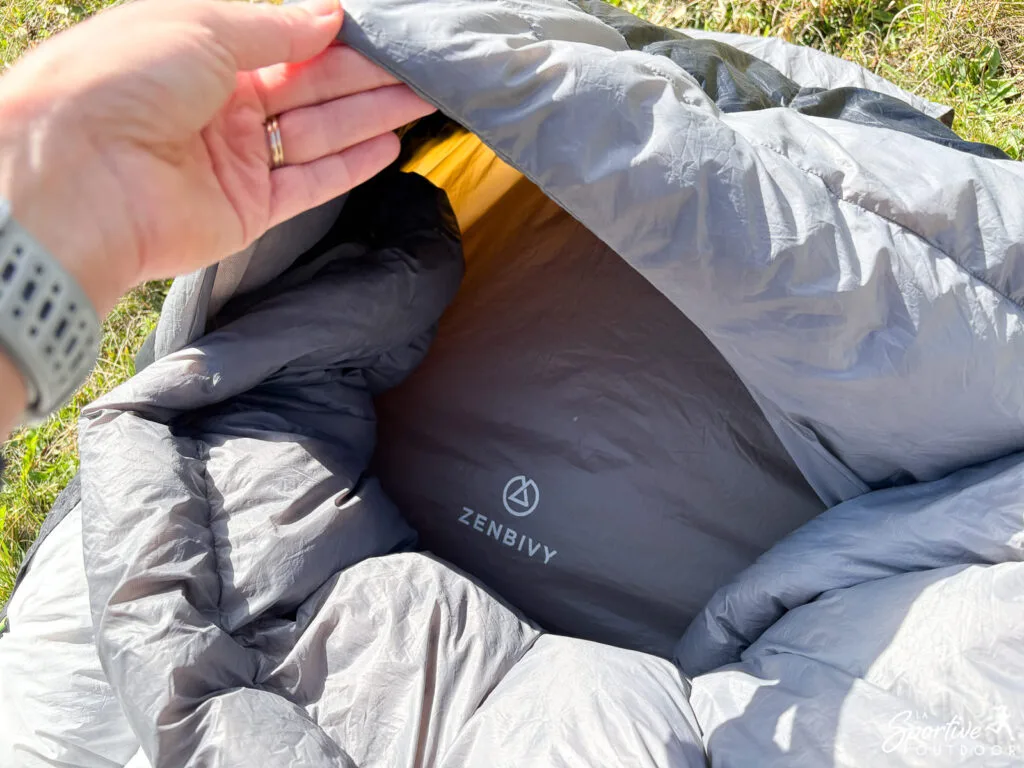
Slipping underneath, the first impression is good: the fabric is pleasant and the down is light, making you feel like you’re under your comforter.
I noticed the difference from the very first night. For me, who sleeps alternately on my side and on my back, it didn’t feel like I was locked in.
Having tested the Zenbivy in a wide range of temperatures (from -2° to 17°), I also appreciated its modularity. Whether you don’t want to close the whole thing to let an arm or leg out easily, or clip it all together to keep out even the slightest draught, you’ve got a choice, and it’s a pleasure to use.
I was also pleasantly surprised by the temperature. The quilt is so light that I was afraid I’d get cold very quickly, but that wasn’t the case.
At head level, the Zenbivy has a hood that allows you to slip a pillow underneath. So you can sleep on it, but if it’s really cold, you can also slip under the hood fabric, which is made of down (unless you’ve opted for the uninsulated sheet).
I even made a bivouac at -2° (4 degrees below comfort temperature). Although I was a little cold at first, which is normal (I had put on an extra down jacket for the beginning of the night), I eventually got warm and took it off because I felt fine. I wouldn’t advise you to go down to this temperature if you have the -4° version, but it did confirm to me that the comfort temperature of 2 degrees seems realistic in any case.

Weight and dimensions
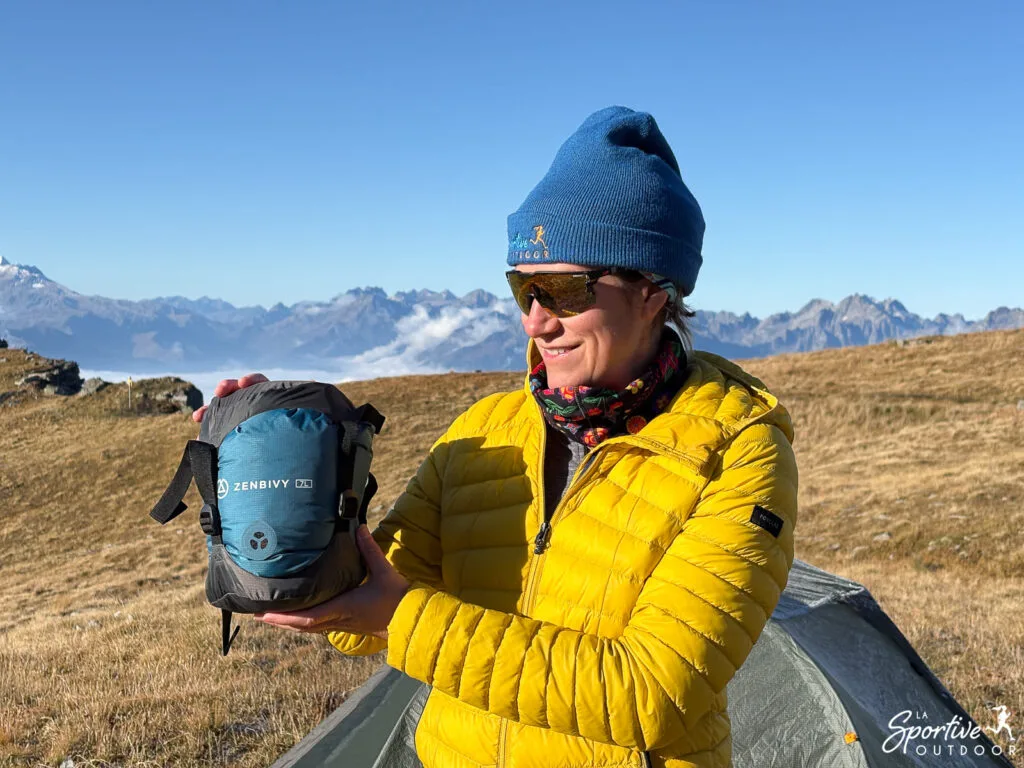
The total weight of the tested version (Ultralight bed Muscovy down -4°) in size M is 635g (482g for the quilt and 153g for the sheet). That’s really light!
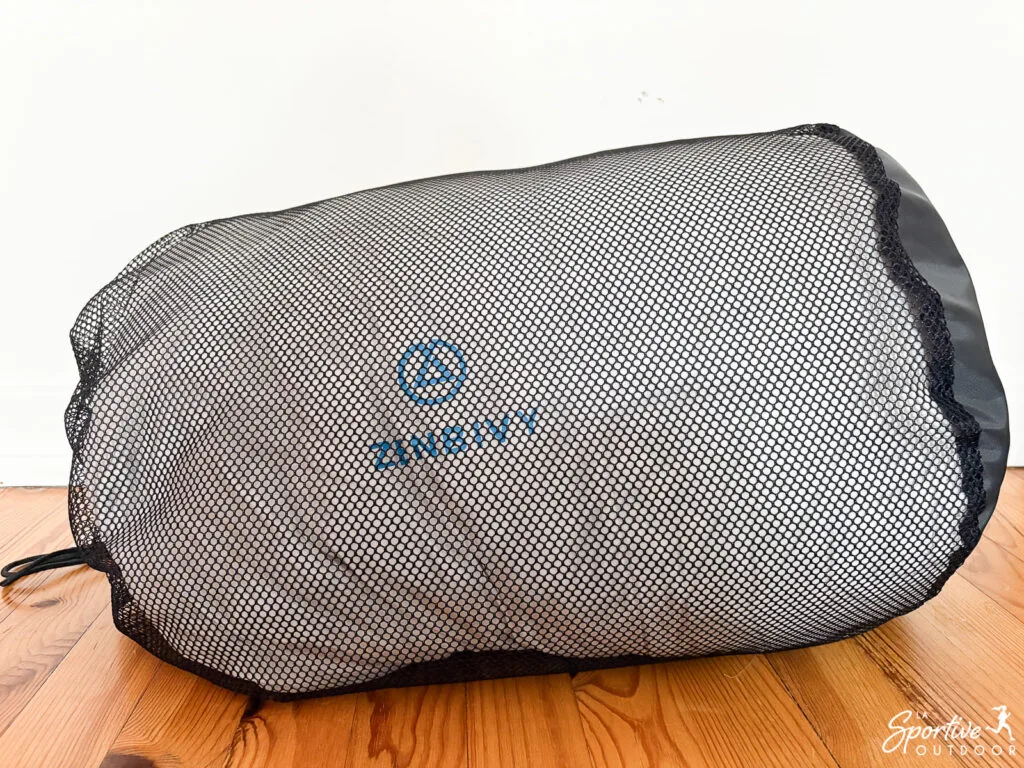
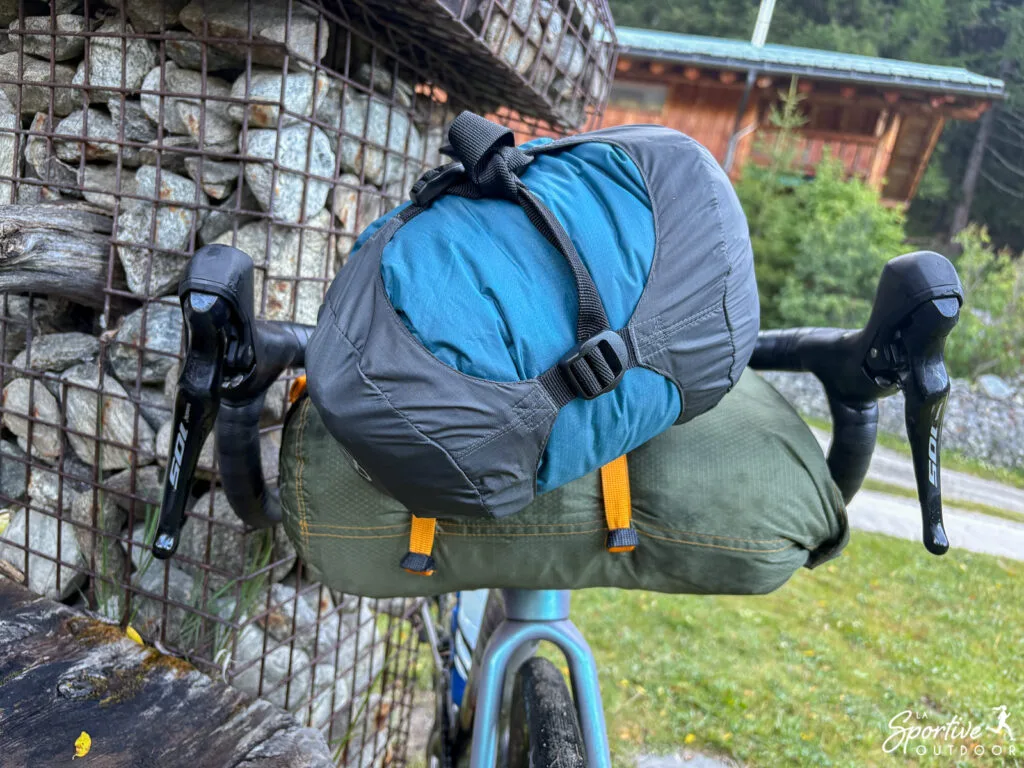
In terms of size, you can pack the whole thing into a waterproof bag. The brand supplied me with a 7L bag, but there’s plenty of room, so I think a 4L would suffice. The bag is well made as it evacuates air very well. I also got the compression caps to compact it even further.
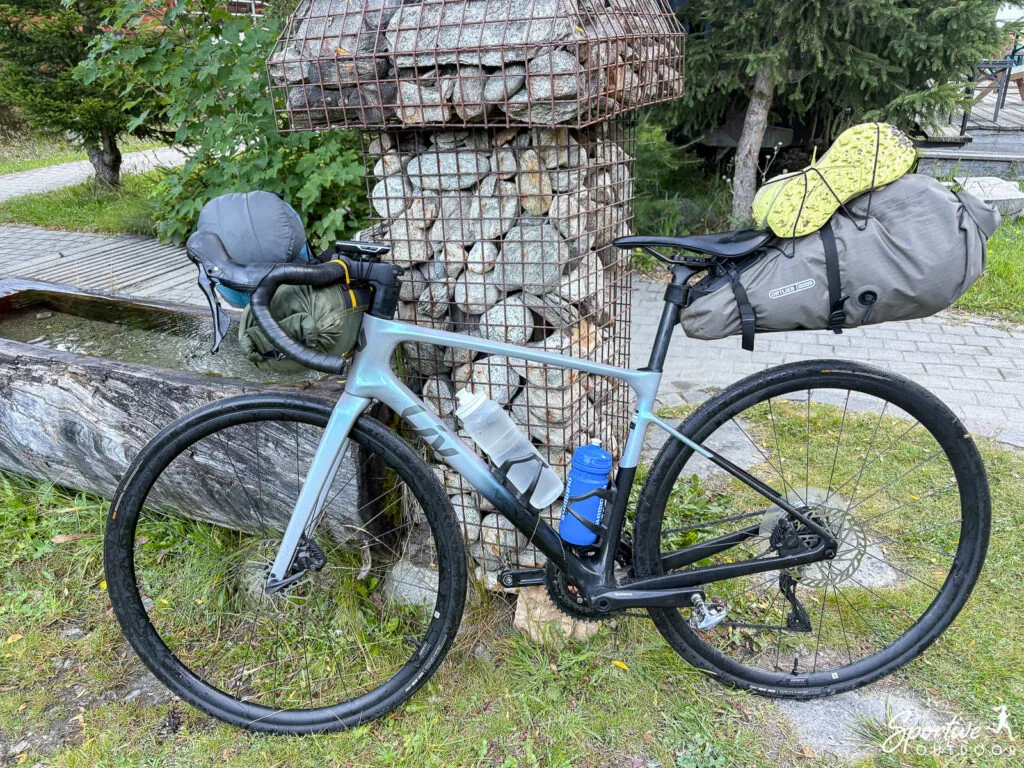
All in all, ittakes up very little space. I was even able to hang it on my bike hanger, above my tent, during a bikepacking trip!
My only regret is that the Ultralight bed doesn ‘t come with a carry bag. Only a mesh bag is supplied (to be used to store the comforter) but nothing to carry it in. It’s a shame, especially as we’re dealing with top-of-the-range, and therefore expensive, equipment: you’d expect a “ready-to-go” pack.
Different types of Ultralight bed
The ultralight bed comes in different versions. It’s easy to get confused, because you can actually choose different options for both the sheet and the quilt, but let me reassure you: in the end, it’s not as difficult as all that. Here’s what you need to bear in mind when making your choice:
- The Ultralight quilt is available in goose down (Ultralight quilt) or Muscovy down (Ultralight quilt Muscovy down), the latter being more affordable for comparable insulation and equivalent weight on both models.
- The ultralight sheet is available as a single, uninsulated sheet , or as down (in -4° or -12° versions).
- The ultralight quilt and ultralight sheet are both available in -4° and -12° versions. Please note that these are the limit temperatures; the comfort temperatures are 2° and -7°.
Limit and comfort temperatures
Two temperatures are given in the comforters’ specifications: the comfort temperature and the limit temperature.
Choose your comforter according to the comfort temperature. The temperature limit is a temperature at which you’ll be curled up and feel cold; it’s just that you shouldn’t end up with hypothermia, but it’s still unpleasant.
It’s up to you to decide how you want to use it. As for me, for a 2/3-season use (summer and spring/autumn depending on the weather) but which really chooses when to go bivouacking (if the weather’s horrible, I’m not going!), with use in the plains and mid-mountains, the 4° version did the trick perfectly, even if I occasionally took it out for a colder autumn bivouac.
Conclusion
I’m really pleased with this Zenbivy Ultralight bed in every way! Clearly it’s a budget item, but that’s not specific to this model: as soon as you’re looking for equipment that’s both warm and ultra-light, you’ve got to pay the price, so it’s up to each person to judge according to their use and budget, but for my part I’m won over.
Le produit nous été envoyé par la marque. Cela ne change rien à notre opinion, les marques avec lesquelles nous travaillons comprennent que l’idée du test est de donner notre avis, avec ses points positifs et négatifs.