


Safety on a bike – My little guide to safe cycling

Are you planning to travel by bike but have questions about safety? In this detailed guide, I'll give you my essential advice on preparation, the equipment you need and the behavior you should adopt to guarantee safe cycling.
Pre-departure preparation
Technical bike check
Before setting off, it’s essential to check your bike: make sure there are no cracks in the frame, that the brakes respond well, that the chain is in good condition, that the cables are neither worn nor slack… You should also check your tires for any signs of wear or cuts, to avoid punctures en route.
In addition to regular maintenance, I advise you to have your bike serviced once a year by a professional (preferably at the start of the season or before your trip!). Your bike mechanic will make sure that everything’s running smoothly, make any necessary adjustments and change any worn parts… It’s better to change a chain at the time of servicing than to have a chain break in the middle of a trip, for example!
Route planning
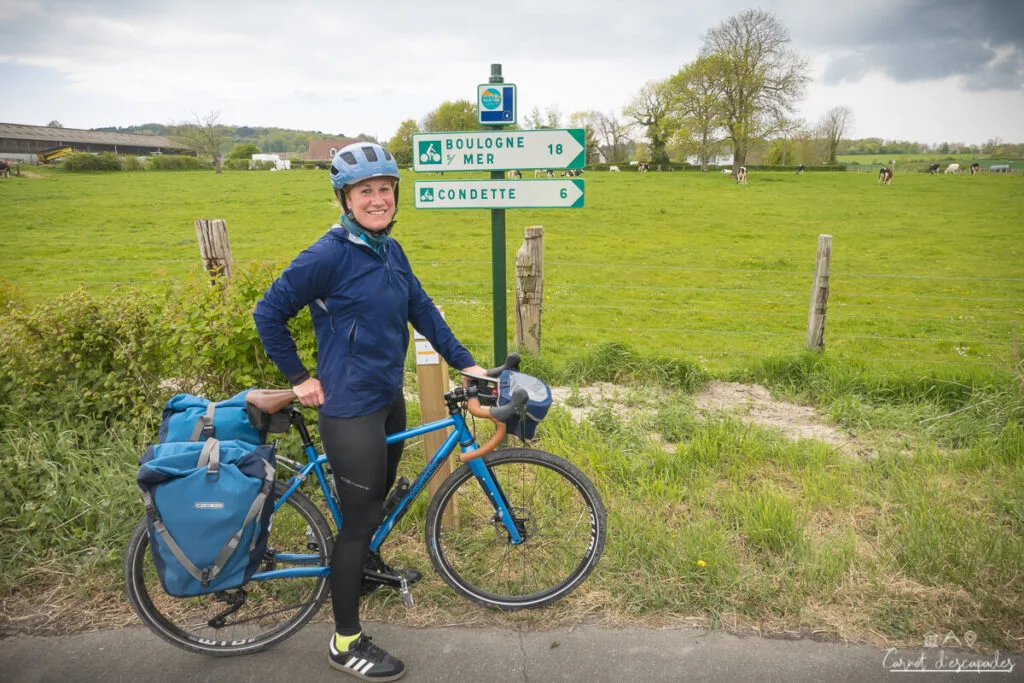
Good route planning is one of the best ways to ensure safe cycling, by choosing roads with less traffic or cycle paths protected from traffic.
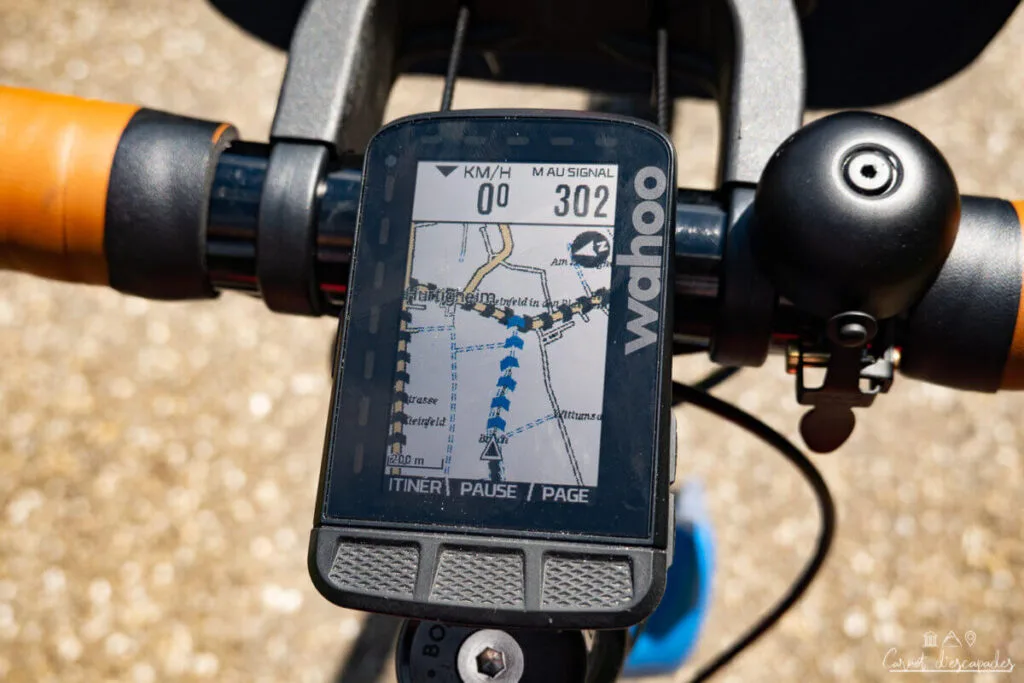
I advise you to use cycling apps, which suggest routes suitable for cyclists, offer information on terrain type, gradient and even road surface quality. Mind you, you should never rely on them 100%, but they work really well overall!
In addition, you can also seek out the opinions of other cyclists who have ridden the same routes on forums or Facebook groups, for example. Admittedly, this takes a little time, but there’s nothing like real-life experience!
Safety equipment for cyclists
Compulsory equipment
In France, compulsory equipment for cyclists is as follows:
- helmets for children under 12 years of age
- a retro-reflective vest when riding outside built-up areas, at night, or in poor visibility.
Bike helmet
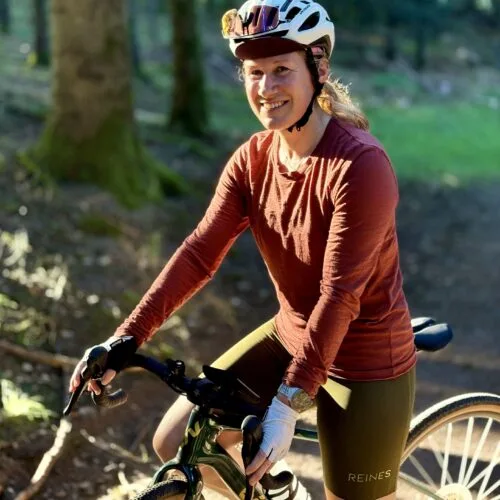
Although not compulsory, helmets are strongly recommended. For my part, I really advise you to wear one. Modern helmets are light and airy, so they’re easy to get used to. The ratio between the strain of wearing a helmet and the protection it offers is not up for debate, in my opinion…
You should also know that many cycling accidents happen on short trips, when you thought you wouldn’t put on a helmet “just to ride a few kilometers”… except that your head almost always suffers a shock if you fall for any reason (and in my experience, this can happen for ridiculous things). My advice is really to adopt the reflex of wearing a helmet on your bike– I assure you, you’ll get used to it!
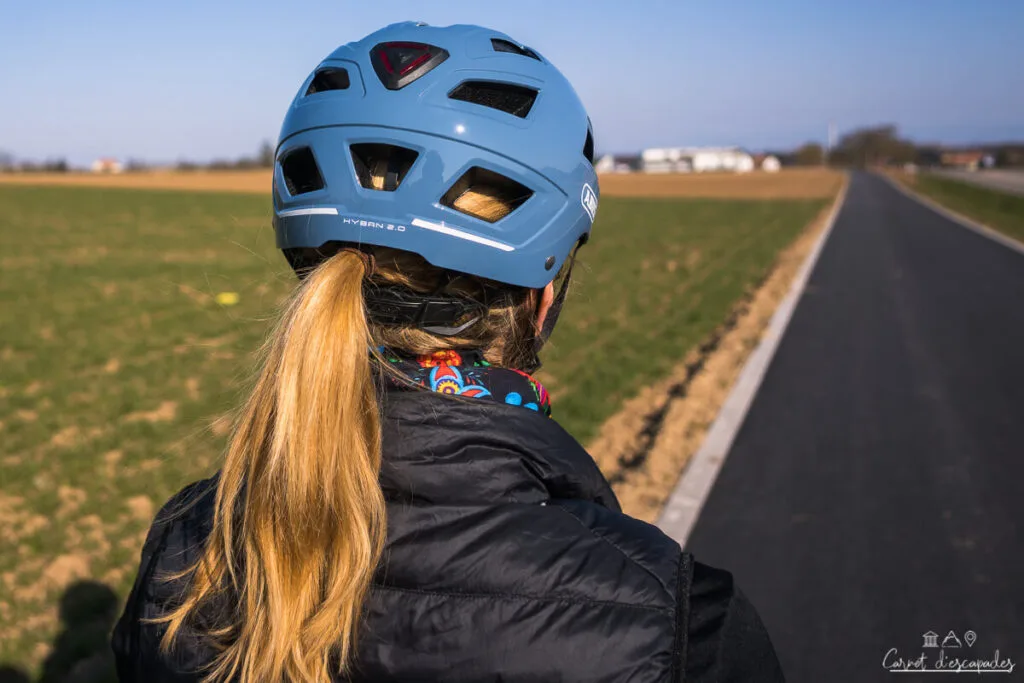
The helmet you choose must comply with international safety standards . It should fit snugly, without tilting on your head, and the straps should be so tight that a finger can barely fit between the strap and your chin. Here’s the helmet I use most often, the Abus Hyban 2.0.
Reflective clothing
Reflective clothing and accessories such as reflective armbands or belts can greatly increase your visibility to drivers, especially during dawn or dusk. Don’t hesitate to carry one with you, to go out when you need to, or even opt for cool reflective vests that you wear all the time , like those from Wowow.
Glasses
Even if goggles aren’t essential, they’re still extremely useful , as they protect you from dust, branches and insects (ah the fly that gets in your eye and makes you lose your balance with an unfortunate movement…). Opt for sunglasses or sunglasses without tint, depending on the weather, and don’t forget to put the helmet straps underneath and not over the temples of the glasses. In the event of a fall, this will prevent the glasses from getting stuck and breaking, and getting shards of glass in your eyes… It’s better to have them thrown around!
Bicycle safety equipment
Compulsory equipment
In France, compulsory equipment for bicycles is as follows:
- 2 brakes, one front and one rear
- a buzzer that can be heard at least 50 meters away (a good doorbell, for example)
- mandatory lighting:
- Red rear reflectors, white or yellow front reflectors, orange side reflectors and orange pedal reflectors.
- Position lights: a yellow or white light at the front and a red light at the rear.
Note that if a bicycle is carrying a trailer wider than 1.30 meters, lighting devices must be added to the trailer.
I confess I discovered while writing this article that all these lights are compulsory and I think many of us don’t have them all (especially on pedals), but at least you know the rules!
Best practices for lighting and signage
Of course, your lighting needs will depend on how you cycle: you won’t sequence in the same way if you’re on a “leisurely” bike trip, or if you’re on a long-distance tour! As for me, I make sure I don’t have to ride at night… But you’re never safe from the unexpected, so you should always have a light with you, just in case!
During the day, having a red light on the rear of the bike can be a good idea to attract the attention of motorists (note, the rear light must be fixed, flashing lighting has been banned on the rear since a decree dated November 19, 2024). Opt for a powerful light to make it useful.
As soon as visibility drops, it’s also essential to have not only a good rear light, but also a sufficiently powerful front light, so that you can see the road ahead and be seen by others. And don’t forget to add reflectors to your pedals (normally mandatory!) and wheels to further improve your visibility.
Do’s and don’ts
The first essential thing, in my opinion, is never to assume that others have seen you. It doesn’t matter if you’re in the right place/right… If you have an accident, not being at fault will be secondary. It’s better to always be vigilant.
Secondly, anticipation is key. Look far ahead to try to anticipate the actions of vehicles, pedestrians and other obstacles. Always be on the alert and ready to react quickly.
Watch out for the headphones!
The use of headphones, earphones or headphones is strictly forbidden, as is holding your phone in your hand. The penalty is a fixed fine of €135.
Here are a few additional tips to ensure your safety when cycling:
- Don’ t drive too close to the edge of the road, to avoid ruts or gravel.
- Don’t hesitate to stand in the middle of your lane in some cases, to let the car behind you know not to try to overtake if visibility is poor or if there is an obstacle in front (such as a median), because if you are too far to the right, some people will try anyway!
- Avoid riding too close to the doors of parked cars (yes, some bike paths run alongside them, and that’s a pity: don’t hesitate to get out of the way anyway), and watch out for the slightest door movement.
- Try to communicate clearly with others, using your arm as a flashing light for example.
- Be careful at intersections, where the majority of collisions occur.
- Always slow down before turning, especially on wet or uneven surfaces.
- On bends, stay in your lane, as cars only see you at the last moment. Don’t cut corners on mountain roads – they’re very dangerous!
- Be extra careful when overtaking a truck: it’s better to put some weight on the handlebars to avoid being thrown off balance by the air draft .
- If you’re riding in a group, ride in pairs abreast or in single file. However, the law stipulates that you must ride in single file at night, when overtaken by a vehicle or when circumstances require it.