
Breathwork: better breathing to boost sport and energy with Candie Trier

In this episode of the podcast La Sportive Outdoor, I welcomed Candie Trier, certified breathwork coach, to explain in more detail what this technique consists of.

Watch the video interview
Listen to the podcast
Episode summary
In today’s podcast episode, we take a look at breathwork. To decipher this method, I’ve invited Candie Trier, a certified breathwork coach and practitioner. She has already spoken to me to share her expertise on bivouacs, and is also the co-creator of the Géonautrices media, dedicated to hiking, trail running, mountain biking and mountain activities.
A passionate advocate of natural health and self-improvement, she explains how to optimize our physical and mental capacities simply by changing the way we breathe.
Candie Trier’s journey: from click to certification
Candie’s interest in conscious breathing began in 2020 after watching an episode of the documentary series Transcendence. Already practicing morning meditation, she then decided toexperiment with this technique on a daily basis for a week. Given the immediate benefits and energy she experienced, she decided to replace her meditation with breathwork for good. In 2022, she first felt the desire to pass on this method, but waited until the summer of 2025 to find the ideal curriculum and officially launch her business at the end of that year.
Her three-month training course, taken entirely online, included practical sessions via videoconferencing, as well as theoretical training on anatomy and gas exchange. Although she specializes in personal development, she explored a wide range of breathing techniques in order to understand exactly what’s going on in the body.
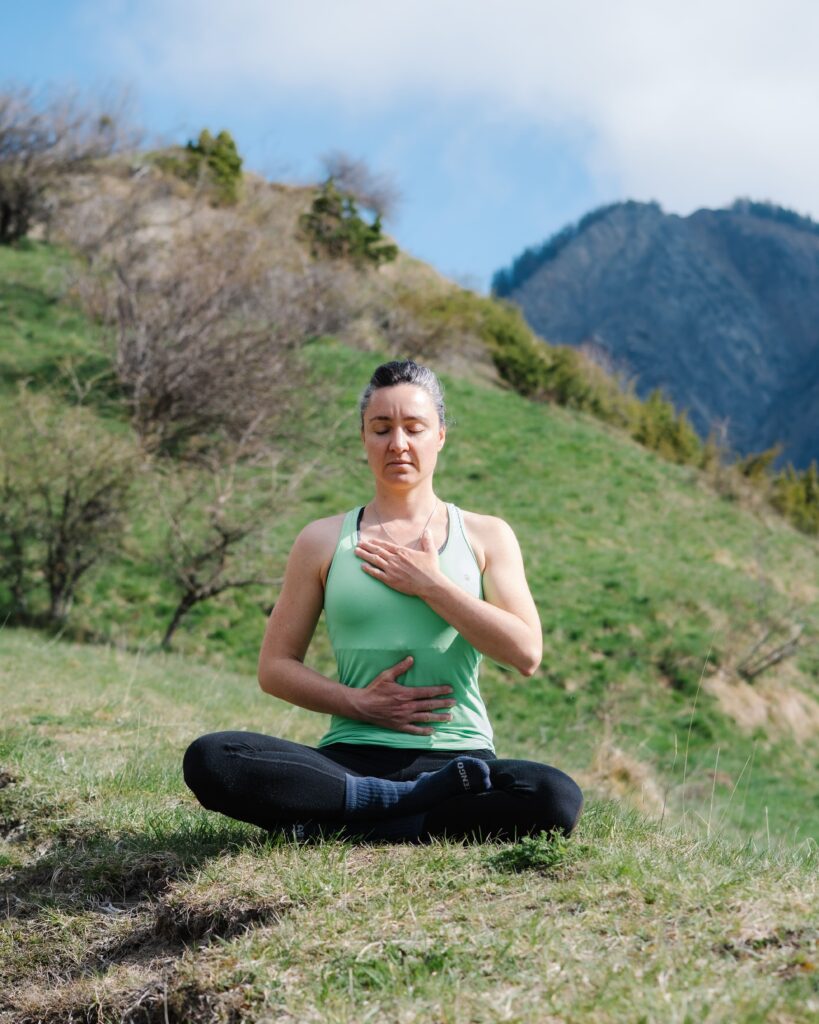
Why do we breathe poorly? The impact of modern life
Breathing is an autonomous and natural act, yet the sedentary lifestyle, accumulated stress, poor posture and intensive use of screens over the last twenty or thirty years have altered this reflex in modern humans. Candie Trier highlights the three most common mistakes made on a daily basis:
- Breathing that’s too fast and shallow: it generates stress, physical tension and a constant feeling of being in “speed” or in the juice.
- Breathing too high: located solely in the chest, it blocks the action of the diaphragm and fills only the upper half of the lungs, neglecting the lower zone where most gas exchange takes place.
- Mouth breathing: very common, it deprives us of nasal filtration against pollution and particles, while preventing the production of a specific gas produced in the nasal passages, essential for optimizing gas exchange.
For sportswomen, these bad habits lead to premature fatigue of the respiratory muscles, a rapid rise in heart rate and a drop in overall energy.
Comment soutenir La Sportive Outdoor?
L'une des façons de nous soutenir est de faire vos achats via nos sites partenaires.
L'idée n'est évidemment pas de vous pousser à la consommation: n'achetez que ce dont vous avez besoin mais, lorsque vous le faites, passer par nos liens nous aide car nous touchons ainsi une petite commission sans aucun coût supplémentaire pour vous.
Vous pouvez par exemple en ajouter certains en favoris pour vos prochains achats. Pensez à accepter les cookies de nos partenaires dès l’arrivée sur leur site.
- i-Run: jusqu'à -50% pour les Running Weeks
- Ekosport: -20% extra sur les nouveautés rando et bivouac
- Intersport: des offres sur la randonnée (notamment)
- Muule: 15% de promo avec le code VIP15
- Decathlon: pas mal de bons plans
- Lyophilisé&Co: lyophilisés, nutrition sportive et matos de bivouac
Pour plus de façons de nous soutenir, c'est ici.
Breathwork mechanisms and techniques
The English term breathwork is used to designate the “work of breathing”. It is the only bodily function that is both autonomous and controllable. While we can’t directly influence our digestion or heart rate, modifying our breath allows us to send a direct signal to our nervous system to change our state.
Slow breathing activates the parasympathetic system, inducing calm and rest, while a more dynamic technique stimulates the sympathetic system, conducive to action.
The applications are numerous and can be adapted to each individual’s needs and objectives. Classic approaches such as cardiac coherence and square breathing focus on reducing mental workload and managing stress.
To energize herself and boost immunity, Candie uses alkaline breathing or “breathof fire” on a daily basis, a technique derived from yogic pranayama that clarifies the mind.
Conversely, to soothe anxiety, facilitate sleep or calm digestive disorders and nausea, she favors anchor breathing. Other protocols can also be used to strengthen the immune system or initiate emotional release.
A major asset for endurance, performance and sports recovery
For endurance sports enthusiasts like trail runners and cyclists, respiratory work transforms effort. Targeted exercises help improve CO2 tolerance and the Bolt score, a key indicator of respiratory capacity. By optimizing oxygen use, athletes delay muscular fatigue and maintain high intensity for longer. What’s more, correct breathing ensures upright body alignment, which stabilizes posture and reduces the risk of injury.
Training is divided into two complementary components:
- work at rest to massage the diaphragm and automate nasal breathing, and
- Exercises during exercise to help you breathe more deeply and synchronize your breath with your movements.
Candie applies these principles to herself. After a month and a half without running, she completed a one-hour split session in the mountains using 100% nasal breathing, noting an accelerated recovery and zero aches and pains the next day. She reminds us that the body is the only equipment required, avoiding any financial investment.
Conversely, mouth-breathing during exercise leads to dehydration, sodium loss and reduced efficiency in the long term, while recovery breathing at the end of a session is all too often neglected.
Accompaniment and the experience of emotional release
Based in the Oisans region of France, Candie Trier offers 1h30 sessions of circular and connected breathwork, delivered online or face-to-face, totally à la carte and with no commitment. The protocol is based on controlled hyperventilation by mouth for 30 minutes, modifying the body’s pH and the balance of gaseous exchanges by increasing oxygen at the expense of CO2. This altered state of consciousness bypasses mental control to release emotional blockages or tensions.
Candie points out that, while tears and laughter may occur, these sessions don’t systematically descend into the spectacular trances and screaming we sometimes hear. Above all, they offer a moment of reconnection and clarity of mind.
Among her projects, the coach is finalizing a program designed to improve the VO2max, mental fitness, resilience and recovery of sportswomen. Ultimately, her ambition is to develop 2-5 day stays in the mountains combining trail running, hiking and exposure to the cold (ice baths or directly in nature), in order to popularize breathwork in France.
Conclusion
To close this introduction to breathwork, Candie invites us to meditate on a quote by the engineer-scientist José Silva: “ The greatest discovery you will ever make is that of your own mind”. Taking the time to decode your body and listen to your mind is a fundamental step towards building confidence, setting limits with others, overcoming fears and living in harmony with yourself.
Follow Candie
- Instagram: https: //www.instagram.com/candie.instinct_toa/
- Youtube: https://www.youtube.com/@candie_instinct_toa