


The Ultimate Guide to Choosing a Tent for Bivouacking and Bikepacking
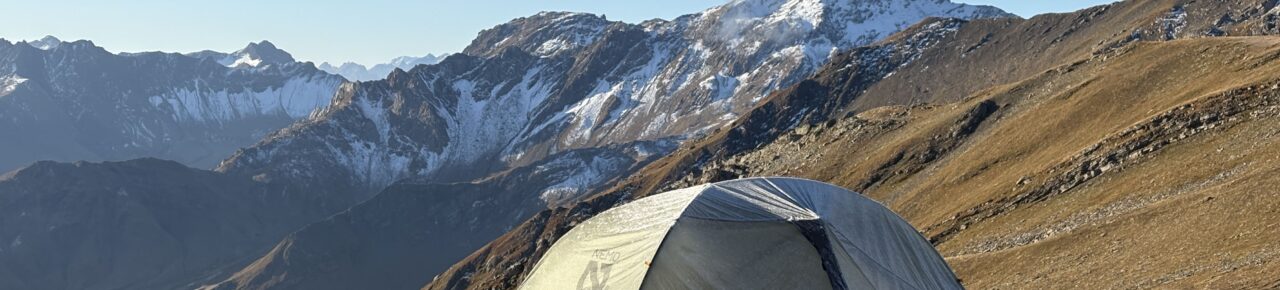
Finding the perfect tent for backcountry camping or bikepacking is a delicate art of compromise. Freestanding or not, lightweight, packed size, wind resistance, or waterproofing—every technical criterion matters, but the best choice is ultimately a personal one. In this comprehensive guide, I’ll help you choose the right tent based on your activities and future outdoor adventures.

Anatomy of a tent
Most tents have an inner tent, called the bedroom. The floor is made of tarpaulin, and the sides are made of mosquito netting. A ground sheet may or may not be placed under the inner tent for added waterproofing and strength. The corners of the inner tent are fixed to the ground with pegs.
A frame holds this inner tent upright (except on some models with an outer frame). The rainfly, or outer tent, is attached above the inner tent and provides protection from the elements. It too is attached to the frame, while maintaining a gap between the two layers of fabric. Finally, guy wires and pegs are used to tension the flysheet, anchoring it to the ground.
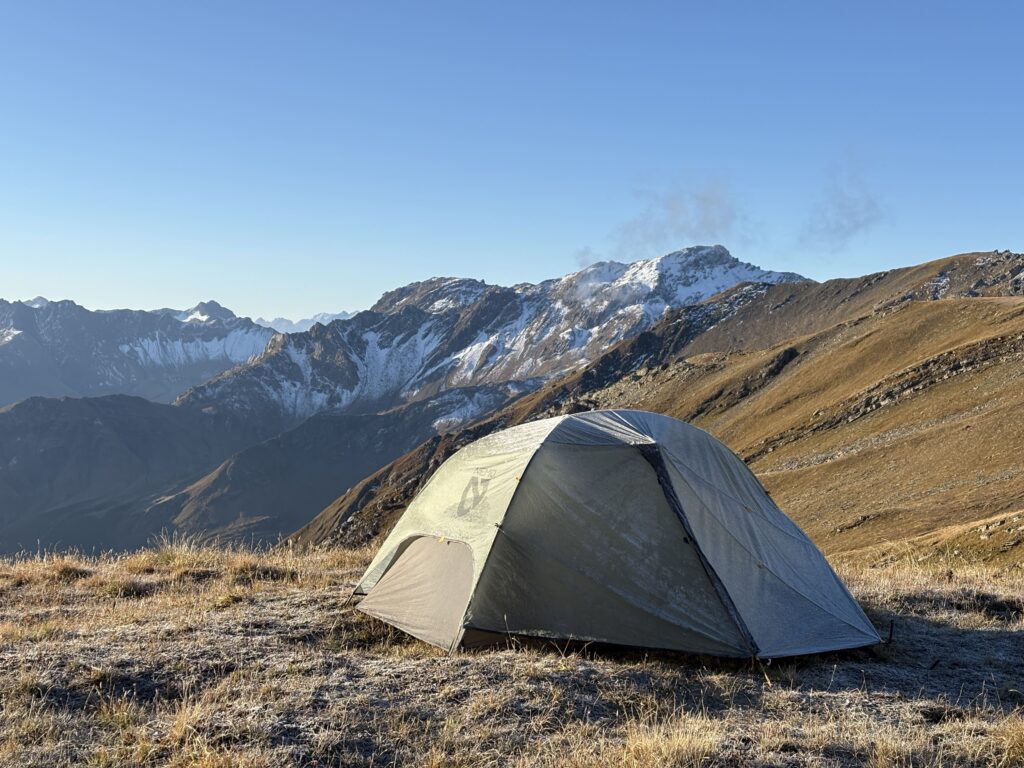
Criteria to consider when choosing a tent
Travel mode and environment
When traveling by bike ( but also on foot, by kayak, on horseback, or by swimming…!), it’s best to choose compact and relatively lightweight tents. The needs are different from those of a road trip by car, during which you can choose a larger, more comfortable tent. These tents are often bulkier when folded, but less expensive because they’re less technically advanced.
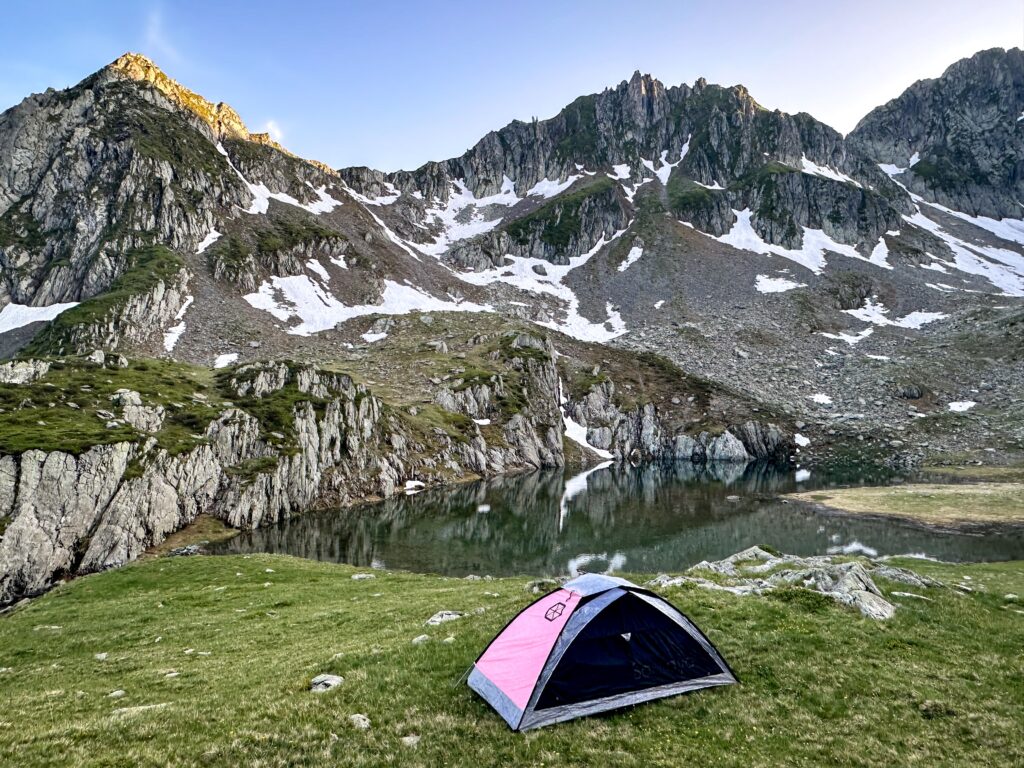
When bivouacking, the color of the tent is also important, depending on the type of environment: choose a tent in natural, neutral tones (dark gray, green…) to go unnoticed, or on the contrary, a brightly colored tent if you want to be sure of being visible and easy to locate by emergency services in case of need.
Size and available space
Tents are available for one person, two people and so on. The choice seems obvious, but on long journeys, the tent becomes a real temporary home. In such cases, it may be a good idea to opt for an extra seat for added comfort. In general, the number of places corresponds to the number of floor mats that can fit side by side in the room, with little or no extra space.
In addition to the size of the room, you also need to consider the existence and size of a vestibule, useful for storing waterproof bags, wet shoes and other items you don’t need with you at night.
Self-supporting or freestanding structure
A tent may or may not be self-supporting, i.e. itcan stand upright without being anchored to the ground. This is the case with dome or geodesic tents. Tunnel, tipi and Canadian tents, on the other hand, require pegs to hold them upright.
Overview of the different types of tents
- Dome: two arches cross at the top of the tent; self-supporting
- Geodesic: hoops cross several times, adding wind resistance; self-supporting
- Tunnel: frame made of two or three parallel arches of different sizes; not self-supporting.
- Tipi: Central rod as sole frame; not self-supporting
- Canadian: two triangular gables, looks like a miniature house; not self-supporting
The tipi and the canadienne are more rarely used as small bivouac tents.
Comment soutenir La Sportive Outdoor?
L'une des façons de nous soutenir est de faire vos achats via nos sites partenaires.
L'idée n'est évidemment pas de vous pousser à la consommation: n'achetez que ce dont vous avez besoin mais, lorsque vous le faites, passer par nos liens nous aide car nous touchons ainsi une petite commission sans aucun coût supplémentaire pour vous.
Vous pouvez par exemple en ajouter certains en favoris pour vos prochains achats. Pensez à accepter les cookies de nos partenaires dès l’arrivée sur leur site.
- i-Run: Jusqu'à - 50% pour les soldes
- Ekosport: Jusqu'à -70% pour les Soldes
- Intersport: -50% sur une large sélection outdoor pour les Soldes
- Decathlon: Jusqu'à -50% pour les soldes d'été
- Muule: Jusqu'à -70% sur une sélection outdoor pour les soldes
Pour plus de façons de nous soutenir, c'est ici.
The internal shape of dome and geodesic tents is similar.
Tunnel tents have a more elongated shape and a lower profile. They generally offer a more spacious vestibule and are lighter in weight. They do, however, have two disadvantages:
- they are not self-supporting, i.e. you have to be able to plant stakes to erect them
- they offer less height in the middle. In other words, it’s more difficult to dine or play cards on them without curling up.
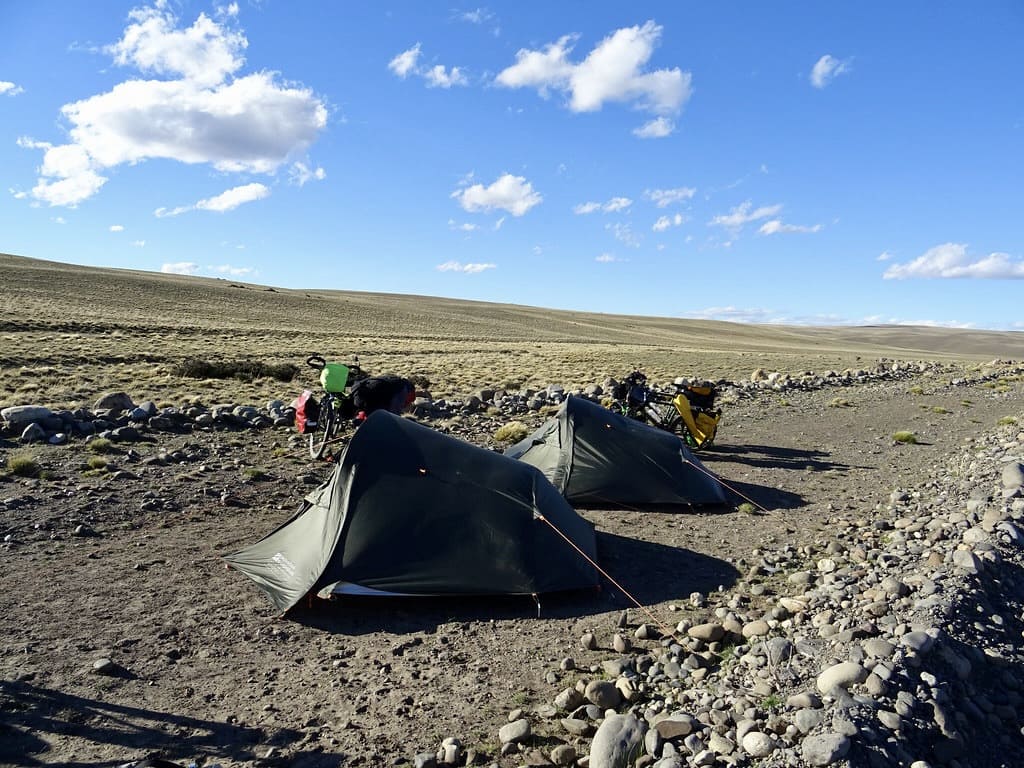
And self-supporting tents are no magic wand when the surface makes it difficult to anchor pegs, since the double roof must be stretched to keep the whole structure watertight and windproof.
Practical advice
Tunnel tents can generally be made to stand without staking the poles in the ground by tying the guy wires (the strings attached to the flysheet) to poles, hooks or surrounding objects (hiking bag, bicycle, tree trunk…).
The canvas won’t be as taut, but at least the tent will be usable. This is also useful when bivouacking on a very hard surface like a rocky slab, or a very loose one like sand.
Weather
Waterproofing
Tents are generally sold as 3-season or 4-season. 3-season tents protect against wind and rain, while 4-season tents protect against heavy snowfall. The latter meet a very specific need, are heavier and less breathable, so should be avoided in summer. In most cases, a 3-season tent is the right choice.
3-season tents come in various degrees of waterproofness. The manufacturer often specifies a waterproof rating for the tent fabric, measured in mm (called theSchmerber rating, or water column).
- Below 1,000 mm, double-roof protection is minimal or average.
- Between 1,000 mm and 2,000 mm, the fabric can withstand very heavy rains, provided it is well stretched and does not touch the internal structure…
But not all tents with similar waterproof ratings are created equal! You also need to consider the waterproofness of the fabric seams and the waterproofness of openings (zippers, Velcro, etc.).
2-season tents are often lighter and less expensive. Suitable only for summer travel in very dry regions, they are far less versatile.
Wind
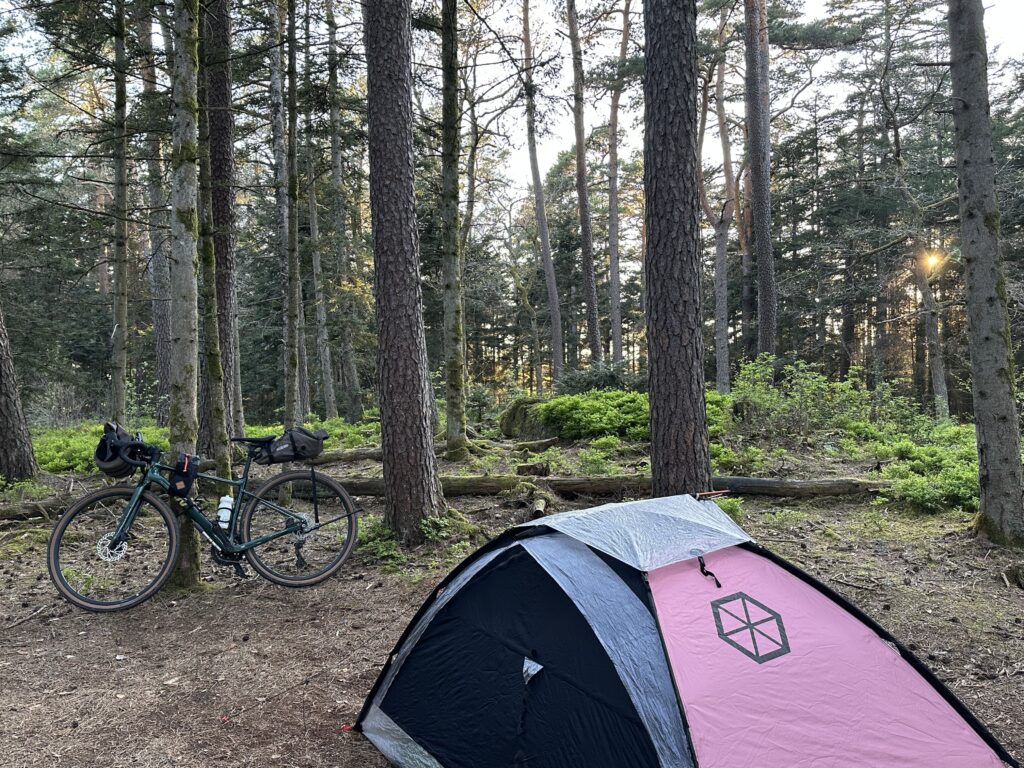
Tunnel tents are more resistant to strong winds than freestanding dome tents, provided they are pitched with the smaller of the two ends facing the wind. Conversely, a tunnel tent incorrectly pitched relative to the wind direction is likely to be noisy and lose waterproofing if the inner tent and rainfly touch.
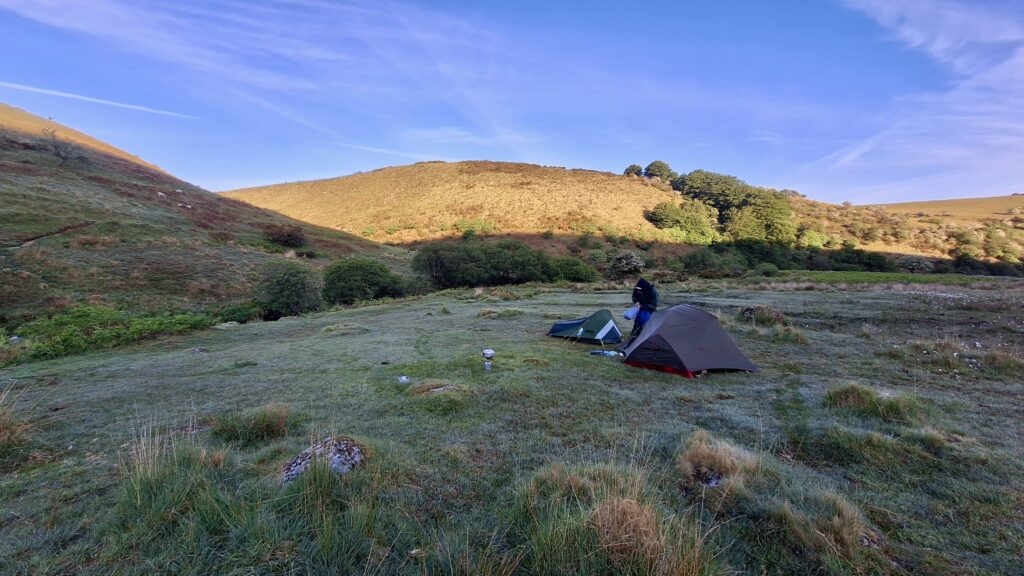
Geodesic tents are also very wind-resistant, and are often a better choice for bivouacking in the mountains above the treetops, where the nature of the ground can make anchoring difficult.
Weight
The weight of a tent depends:
- its size
- the material of its components, and
- single-roof or double-roof configuration.
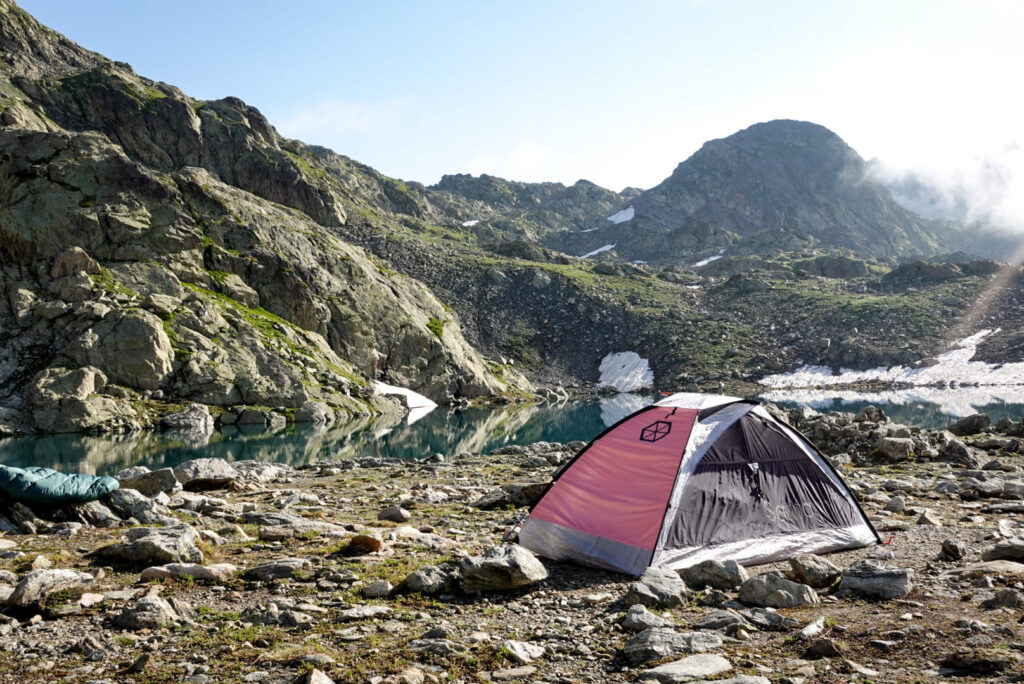
Most tents have an internal structure with breathable walls and a double roof, but there are also mono-canvas tents with a single layer of fabric. Used mainly by mountaineers who keep the weight of their gear to a minimum, they tend to trap condensation, but are lighter and more compact.
Storage
While weight is a factor that instinctively comes to mind when planning a cycling tour, the folded volume of items can be just as important.
With a tent, the folded volume is determined by the fabric, but also by the length of the tent pole sections.
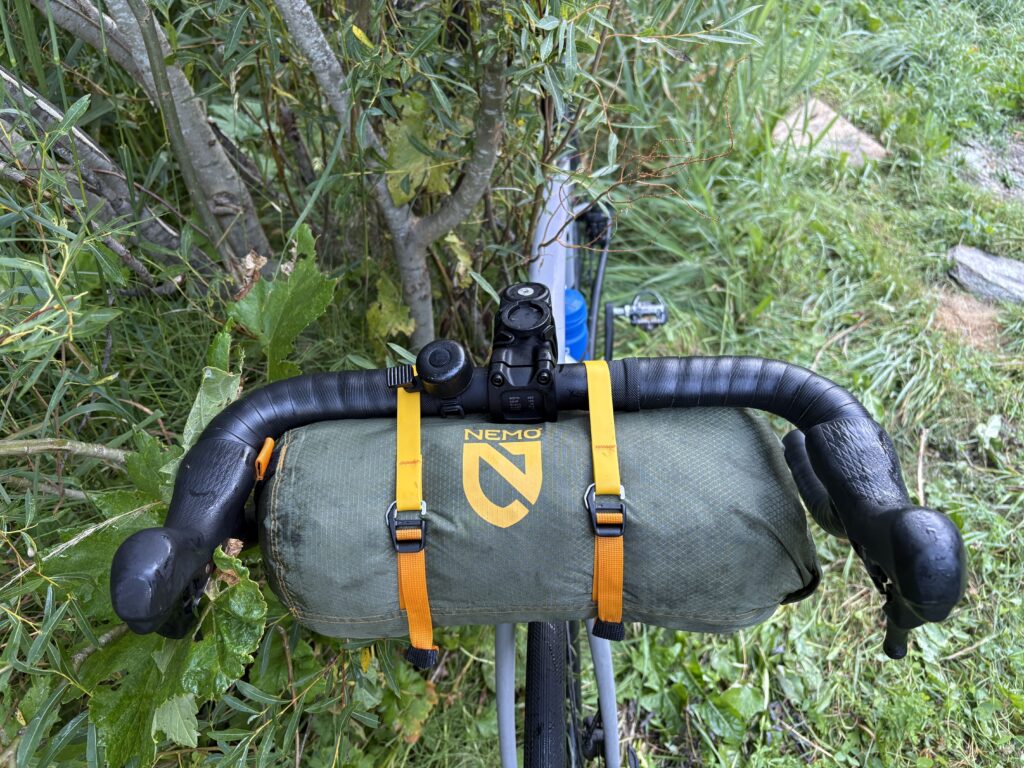
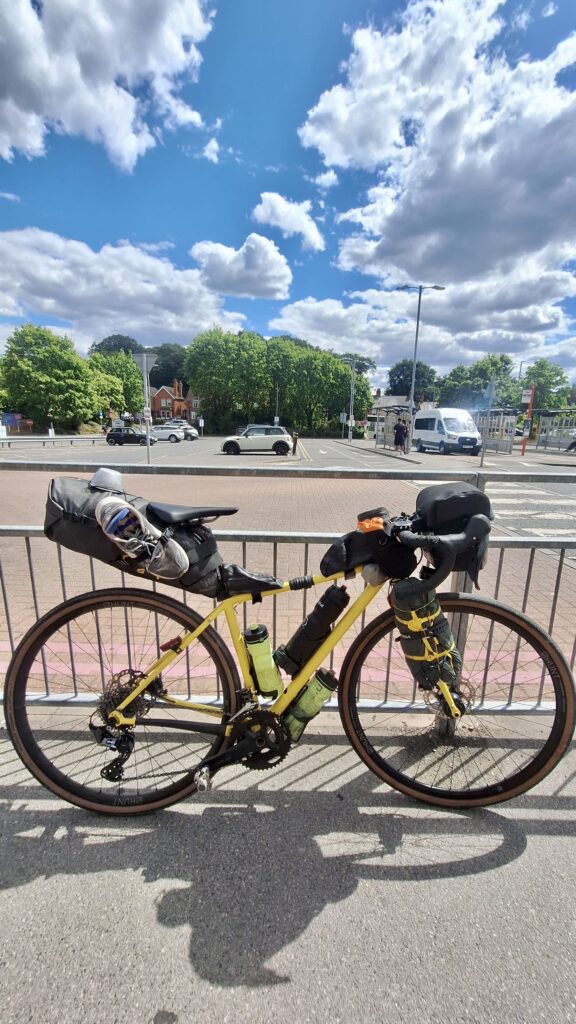
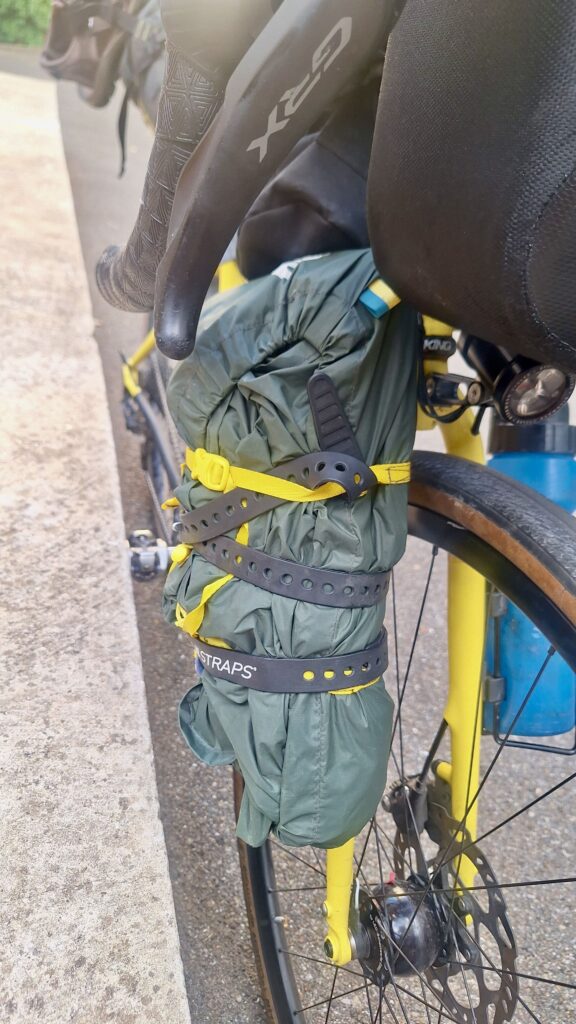
While many bikepackers attach their tents along the bike’s frame or fork, those with small frames may struggle to find a suitable space. There are tents with shorter pole sections, which are easier to attach to a bike (Bikepacking models).
Practical advice
When bikepacking, it’s often more practical to separate the tent components and store them separately, rather than finding a place to fix everything together. When traveling with several people, this technique also balances the load of each.
The more expensive, the better?
More expensive tents generally benefit from better warranties, reliable after-sales service and repair facilities. They often offer greater traceability of materials and employee working conditions.
Another cost factor is lightness, which can come at a high price. A very thin, lightweight fabric can achieve the same result in a waterproof test as a heavier, more expensive tent, but will wear out more quickly.
So there’s no easy substitute for finding the best tent. You’ll need to delve into the technical data on a number of models and choose the tent best suited to your needs.
A few recommendations
- THE tent when you’re planning a long backpacking trip (which also comes in a a bikepacking version): Hubba Hubba NX
- Another ultralight tent recommended by Laurène: Nemo Dragonfly Bikepack
- A very compact 1-person tent with short poles, great for female bikepackers with small-frame bikes (note: the ceiling is low!): Sierra Design High Side
- A discreet, affordable tunnel tent: Ferrino Lightpath
Alternatives to tents
The bivouac bag
A bivy sack is suitable for occasional use or for activities with very strict space or weight constraints (such as ultra-endurance events). In its simplest form, it looks like a nylon body bag 😉
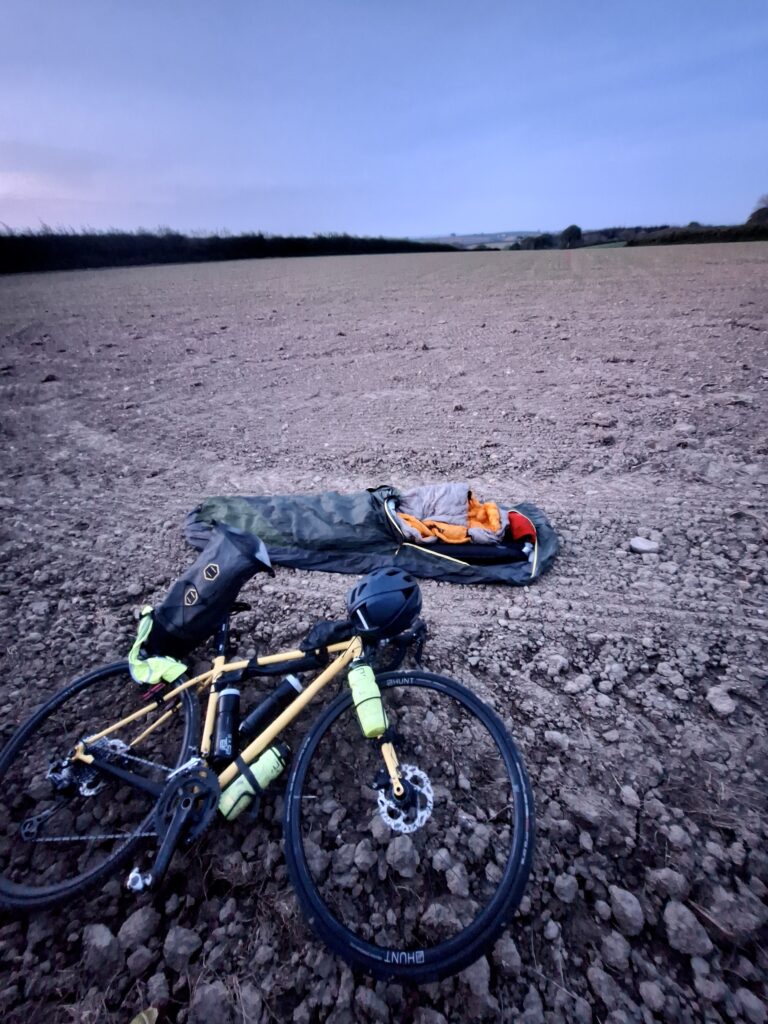
Like tents, there are more or less waterproof models. Some have a hoop over the head. This doesn’t make it a small tent, however: the hoop simply prevents the fabric from sagging against the camper’s face.
- Advantages: weight, volume, rapid deployment, space-saving.
- Disadvantages: condensation in the bag, too small to change inside.
The hammock
The hammock is ideal in the forest, and indispensable in areas where dangerous crawling animals live or might be tempted to nibble the tent fabric (as in tropical and equatorial forests), where a tent is not an option.
The hammock eliminates the need for a ground sheet. Full protection from the elements, however, requires theaddition of a tarpaulin to stretch over the roof and a mosquito net.
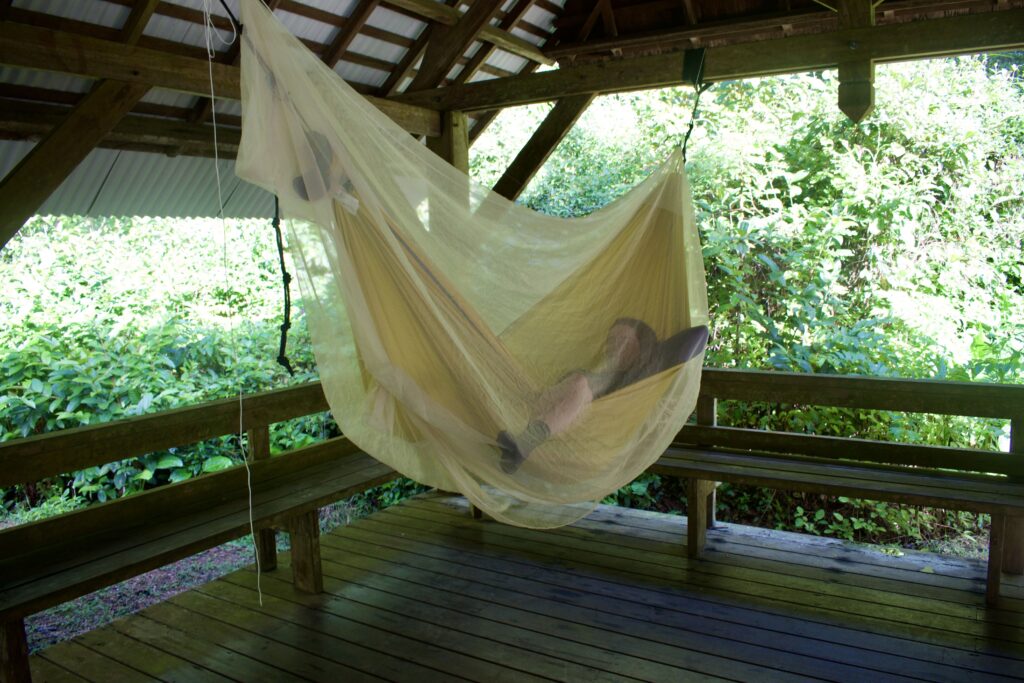
The main constraint of the hammock is the need for two trees or poles located at the right distance from each other. Any hammock lover in Europe will remember a night when she couldn’t find such a spot and had to use her hammock as a makeshift shelter, sleeping on a hard floor without a mattress.
- Advantages: no mattress required, necessary in certain environments
- Disadvantages: sometimes harder to find a place to sleep once you leave the forest
Practical advice
To sleep well in a hammock, you need to stretch it out as far as possible and lie down diagonally, so you don’t spend the night with your body in a banana shape. Once you get used to it, it’s very comfortable.
Sleeping under the stars
Can you do without a shelter? Some do, but you have to be resigned to some uncomfortable nights. You can seek shelter from the rain, but you’ll still be vulnerable to cold, damp, dew and insects.
Sleeping under the stars sometimes means having to remove a multitude of slugs from your sleeping bag in the early hours of the morning. A tarpaulin protects you from the rain, but not from the elements. At your peril.
Conclusion
To choose the right tent for you, you need to think about the way you travel, the dimensions of the tent, both folded and erected, and find the right balance for your needs. Of the following three elements, you’ll need to choose two, as it’s impossible to combine them all:
- 1) lightweight and compact
- 2) affordable price for the general public
- 3) high performance and quality.
This article contains affiliate links.